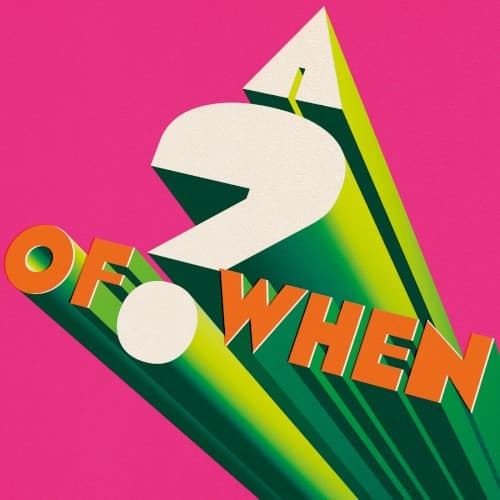
Somewhere in the multiverse exists an alternate dimension where Sook-Yin Lee has already won herself the Canadian cultural equivalent of an EGOT. As a well-established musician, director, actor and broadcaster in our realm, the Vancouver-born artist has carved an incomparable path as a modern renaissance woman for many years leading up to 72RHR, arguably her finest work yet.Skimming through the milestones and achievements in her unfathomable career in the arts reads like a wish list of cool things anyone would wish they did. Among other high-profile duties on radio and TV, Lee practically became a household name as the host of The Wedge on MuchMusic throughout the late '90s, famously ending her tenure with an impromptu on-air mooning before going on to host Definitely Not the Opera on CBC from 2002 to 2016.As an actor, Lee starred in John Cameron Mitchell's 2006 comedy-drama Shortbus, and had a cameo in the director's cult classic musical Hedwig and the Angry Inch, but she's also enjoyed prominent roles beyond his work, winning a Canadian Screen Award for her portrayal of Olivia Chow in a TV biopic about Jack Layton. She dabbled in theatre as well, choreographing multi-media stage performances about memory (2013's How Can I Forget?) and censorship (2019's Unsafe).Her efforts as a director have been even more impressive than her many acting roles. She came out swinging with her debut Year of the Carnivore, the 2009 rom-com starring Cristin Milioti, and she's seemingly picked up more acclaim with each subsequent effort: from ghost story Octavio is Dead! and pandemic feature Death and Sickness to her 2024 adaptation of ex-boyfriend Chester Brown's graphic novel Paying for It, she has consistently toured festivals with beautifully shot, incredibly vulnerable, wonderfully inventive films.All of that takes care of the E, O and T portion of our alternative EGOT, and that's just scratching the surface of her credits in those avenues — yet it's Sook-Yin Lee's musicianship that's the true connective tissue of her artistic career. Surviving a tough childhood that left her living on the streets of Vancouver in her mid-teens, she eventually surfaced as the lead singer and guitarist for indie experimentalists Bob's Your Uncle in the mid-1980s.That band dissolved after a few albums, but Lee kept going. She released a couple of solo lo-fi bedroom indie pop albums on Zulu Records in the mid-1990s, and a trip-hop collaboration with Black Europeans (a.k.a. Maximum and Rumble) called Slan, which dropped its only album, Electric Blues, on Last Gang Records in 2003. For some time, Lee's musical output became entangled with then-partner Adam Litovitz. Together, they crafted the score for Year of the Carnivore with Buck 65, and the score for Octavio is Dead! with Alia O'Brien; both received award nominations. They also produced the art-pop Jooj album in 2015, licensed by Last Gang along with those soundtracks. Sadly, Litovitz died in 2019, leaving their final collab jooj two for posthumous release by Mint Records in 2021.Other than her cover of Marianne Faithfull's "Broken English" last year, Lee hasn't put out many tunes since Litovitz left this world. Seemingly out of nowhere, she has created her greatest musical achievement with 72RHR — perhaps the greatest work of art in her entire multi-disciplinary career. While her music has been widely appreciated over the years, covered by Neko Case and landing on a couple of Brandon Cronenberg soundtracks, 72RHR is the album that deserves to win every JUNO, Polaris, or whatever you want to count as the Canadian Grammy. This is her EGOT-clinching moment.True to her renaissance nature, all of the songs on this album were written, arranged, performed, produced, engineered and recorded by Sook-Yin Lee herself. It was mixed by Steve Chahley (U.S. Girls, Guv), but almost everything else — all the words, electronics, guitars, woodwinds, percussion, samples and style — was Lee.For how avant-garde so much of her catalogue has been, there's a surprising ease to 72RHR. The title is a reference to the resting heart rate of a human being, which is a naturally calming sound; our mother's heartbeat is the first thing any of us mammals hear, a steady thump-thump breakbeat that we instinctually return to as we hump speakers at the rave.The first sound you hear on "Mending Wall," the opening song on 72RHR, is a chunky downtempo house beat. It establishes the pulse that throbs throughout the album. Lee's vocals glide in, riding on a similar processing as the synth leads and pads evolving around her to create a dreamlike aura. Her voice warped by parallel drones, cerebral lyrics viscerally enhance the surreal feel. While none of it sounds quantized, it all lands where it's supposed to, sluggishly chopped and screwed to hit slightly behind the beat.With those otherworldly cinematics present throughout, the album almost has the essence of a DJ mix. That downtempo 4/4 beat carries over into "A Hollow" and "Digital Fire" seamlessly, the songs flowing smoothly from one to another, giving the overall impression of hearing one beat rather than individual tracks. It makes the whole album so easy to put on repeat; like if King Gizzard and the Lizard Wizard's Nonagon Infinity had the opposite vibe. But make no mistake: every song on 72RHR is a standout."Digital Fire" experiments with vocal pitch-shifting in a way that absurdly evokes "You!" by the Creatures, and features synth work from Hot Garbage's Dylan Gamble, the only instrumentation on this LP which is not credited to Lee herself. (Gamble also did the album art, and plays with Lee in Lee & Gamble Unlimited.) "Green Tara" drops the house down into more of an afterparty acid dub, but the continued use of alien vocals maintains a spiritual flow on the otherwise bombastic track."Unlock the Pain" emerges as something of a palette cleanser: it's the only song that doesn't kick with a crisp beat, abstracting itself from something to slowly bump to into more of a fractal Laurie Anderson ambient vein. The song still has a lot of bass and presence, though, with Lee's vocals sounding shocked and repetitive, expressing the sensation of a chest tightening more than describing it."Travelogue without Moving" has the uplifting, pastoral ambiance of a calming Beverly Glenn-Copeland track cut with the youthful psychedelia of the squirrelly clavioline line from "Baby You're a Rich Man" by the Beatles. A rambling spoken-word monologue of partial memories, it's one of the most lyrically intense moments, including a passing reference to Litovitz's roses wrapped up for winter.Continuing the time-travelling feel of "Travelogue" in fewer words, the album ends on "I Want to Tell You." When my father died on my living room floor, the thing that drove me the most mad were all the questions running through my head that I wanted to ask, all the things I wanted to tell him. These lyrics express a similar sentiment, with a weird flute-laden beat bringing back the woozy Creatures vibe while Lee's vocals evoke the haunting, lovelorn power of Beth Gibbons — quite an exclamation point to cap off the record.Even at its most experimental and ambient, the downtempo dance floor momentum of 72RHR is still audible, a natural rhythm of being alive impelling you to hit play over and over again. In a long, outstanding career, it's Lee's most impressive achievement to date.

Wavelength
Rate and discover music with friends