

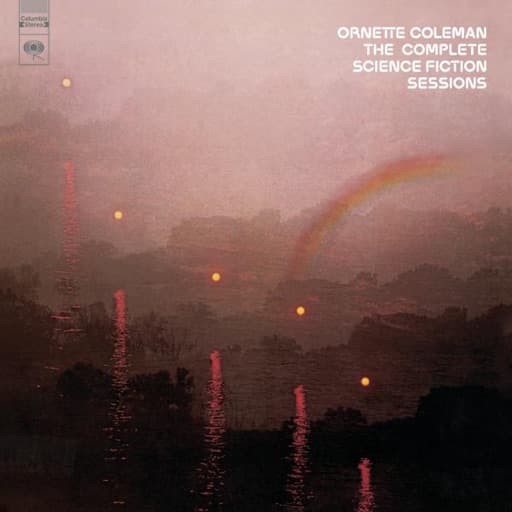
A decade after he arrived in New York and reshaped jazz to come, Ornette Coleman purchased a co-op. He wasn’t searching for valuable real estate when he bought two stories of a former factory on Prince Street, in the bloodless heart of the then-barren post-industrial neighborhood known as SoHo. It was 1968, and the saxophonist, who laid the foundation for free jazz, wanted a place where he could compose, sleep, shoot pool, and host friends’ concerts. His 10,000-square-foot residence on the third floor was sparsely furnished, in true downtown bohemian fashion, with an inflatable raft he used as his couch and a myna bird who greeted guests. On the ground level was a concert and practice space he called “Artists House,” which he lent to fellow musicians nearly for free. Just a few years later, in the 1970s, jazz players galore began moonlighting apartments, storefronts, galleries, and warehouses as live venues, birthing the genre’s legendary loft scene. Artists House presaged this generous ethos and its paper-thin walls between home and work. A 1972 album Coleman made while living at his urban perch anticipated the movement’s aesthetic: Science Fiction’s style-agnostic, Afrofuturist vision thrums with city life, logging an unusual moment in time that rippled far into the future.
The native Texan had already indelibly influenced the loft generation with his mythic run between 1959 and 1962 on Atlantic, during which he all but rewrote the language of his medium. Coleman abandoned fixed tonal centers and scaffolded the chromatic scale with quarter tones, sometimes while playing a plastic, flamboyantly white alto. He flouted the expected but based his originality in a wide range of musical traditions. Coleman’s upbringing in Fort Worth, where he was born in 1930 and grew up in a series of tiny, rented shotgun shacks, inundated him with big bands, bebop, and a kind of expanded American songbook—spirituals, ragtime, blues, R&B, Tejano, Western swing—that either predated jazz or molded it into a regional vernacular. When he was 14 his mother gave him his first horn, which soon became a way of making cash. As Maria Golia discusses in her terrific biography Ornette Coleman: The Territory and the Adventure, he gigged around his hometown’s vibrant scene during the late 1940s, helping out in a single-parent household. Coleman’s father had died when he was 7. His sister found him work as a musician in clubs that catered to varied clientele yet remained starkly segregated.
Coleman hated most of these performances, which felt racially and creatively conservative, although he went along with whatever she rustled up. He rebelled on other stages; his high school band booted him for improvising during a traditional Sousa march. In 1948, while soloing at an all-white joint, he had a revelation: What if he left the melody behind entirely on “Stardust,” pulling instead from the bounty of other notes he heard in the chord changes—wouldn’t that make a tired standard less boring? The dancers who led the crowd in their revelry froze, confused by his improvisations, and the club owner fired him. Soon after, Coleman taught another player bebop while he traveled the South with a variety tent show, performing for audiences who were more accustomed to ragtime and Dixieland than the compositional modernism in vogue among New York’s edgier audiences. He was ejected from the bandstand and left penniless in Natchez, Mississippi, where cops harassed and chased him out of town. Downriver in Baton Rouge, belligerent locals beat him up and smashed his instrument beyond repair. They found the 18 year old’s long hair offensive, and his strange sax styling—a preview of how he soon outgrew bebop’s complex harmonies in favor of the more open-ended and dissonant music that the world deemed “free jazz”—freaked them out, too.
Such tales often come with the implication that Coleman fled the South and Texas—which he did, but merely in terms of geography. In Los Angeles, during the 1950s, and in Manhattan, where he made a home for himself from the decade’s end until he died in 2015, Coleman stayed close to his roots. His small crew of collaborators included a couple of high school friends, saxophonist Dewey Redman and drummer Charles Moffett. A cousin from Fort Worth, James Jordan, produced Science Fiction; Coleman’s son, Denardo, drummed frequently for his father, beginning on 1966’s The Empty Foxhole, when he was just 10 years old. Other mainstays in Coleman’s numerous groups had backgrounds in the gradient of Black culture that bridged the Lone Star State and the Southeast, which gave glimpses of a wider, freer musical universe. His perennial right-hand man, Don Cherry, was born in Oklahoma; another trumpeter, Bobby Bradford, hailed from Dallas; drummer Ed Blackwell came up in the musically fertile crescent of New Orleans. Coleman’s sound was otherworldly, but he never left Texas behind.
Science Fiction is a welcome return to the singable, quintessentially Southern melodicism that counterbalanced his dauntless early oeuvre, but was increasingly absent from his more recent work. It also reflects the palette-broadening connections he forged at Artists House. By the dawn of the ’70s, free jazz had been a fixture for a decade. Fusion, which mixed jazz with electrified funk and rock, looked like a fertile new frontier. Science Fiction isn’t strictly a fusion record, but it is etched with the zeitgeist. Coleman incorporates vocals, poetry, amplifiers, overdubs, and a bevy of jazz customs he refracts through the trick mirror of his characteristically wonky arrangements. This seemingly shaggy digest from mid-life is in fact one of his most eloquent, succinct, and consequential statements: The album is a chronicle of a culturally fecund era, a diary of where Coleman had been since his Fort Worth days, and a star chart for where he wanted to navigate next.
Coleman had been criminally underpaid throughout the 1960s, like other avant-minded peers, and so he stopped touring domestically in the decade’s middle and reduced his recording to a trickle, allowing his collaborators to move on to other bands and projects. Artists House offered an answer to both his resulting creative fallow period and his constant fury at being cheated by club owners. The germ of loft jazz was the recognition that playing challenging music didn’t mean you had to be a victim of other people’s business models: Coleman and his acolytes may have lost money by putting on their own shows, but at least they lost on their own terms.
Science Fiction is fully on Coleman’s terms—it’s a kaleidoscopically personal experience, like a new home filled with old furniture and beloved mementos. Several compositions resuscitate and twist foundational traditions of his youth: blues (the opening bass figure on “Law Years”), bop (the frenzied horn races of “Civilization Day”), Dixieland (the staggered lead lines of “Street Woman”). Coleman reunited his early quartet of Cherry, Charlie Haden, and Billy Higgins for the latter two tracks, which from a different bandleader might scan as nostalgic, or otherwise like a glib marketing hook. But Coleman extends and upends their nuclear family by bringing new folks into the fold from song to song, replacing familiarity with the splatter of possibility.
The composer engages in a brilliant dialogue with his era, an exchange and not a prescription for change. On 1961’s Free Jazz, the release that named the genre, he employed two quartets playing at once. Science Fiction abounds with overstuffed, misshaped ensembles, but they feel like notions of what a band might be, not final destinations. Blackwell and Higgins pound at their drum kits simultaneously on the clamorous title track and a couple of spiritually soaring vocal features, “What Reason Could I Give” and “All My Life.” Fusion takes hold on “Rock the Clock,” which forefronts a multi-reed attack, as Redman blows a musette along with his tenor. The song deals in overdubs and, for the first time in Coleman’s recorded output, electric instruments: Haden’s wah-wah bass enters midway, accompanied by Coleman’s untutored violin, a shoutout to the fiddle customs of the American West. Yet “Rock the Clock,” like the surrounding record, refuses to lean on fusion’s signature 4/4 backbeat. Instead, Science Fiction offers a blend of approaches, temporalities, and traditions, melding the old with the new, the Texan and the Yankee, and especially the cosmopolitan and the rural. At heart, this is a suite of urban transplant songs, tracing a variety of styles that people—particularly people of color—brought to the cultural melting pot of Lower Manhattan.
Opener “What Reason Could I Give” features Asha Puthli, a fresh-faced New Yorker from India who would go on to be an eclectic and frequently sampled disco diva. Coleman had never recorded with a singer in the studio, but in proto-loft spirit he elevated an archetype from a prior iteration of jazz, the once-prized role of the vocalist, which was often eschewed by composers in the late 1960s and ’70s. Puthli brings to her two songs the embellishments of raga tradition, and also simmering, hungry emotion. Her vocals on “What Reason Could I Give” sound like the lamentations of a recent arrival in the city sitting on their fire escape after a tough day: weary, homesick, welling with melancholy. She sighs alongside a doubled-up brass section, toggling between dissonance and sweet harmony, her melody in search of a resting place. The title track layers samples of a baby’s wails, a sound familiar to any denizen of a cramped tenement. “My mind belongs/To civilization,” the phenomenal Harlem-raised poet David Henderson recites beneath the fray, a man trying to hear his own thoughts by speaking them out loud.
“All My Life” gleams with rosier fortunes: The love song feels like living someplace new long enough that it begins to seem hopeful. “To wait for you, I’m glad,” Puthli sings, and later, “Joy that I never knew.” Coleman, Redman, and New York Philharmonic trumpeters Gerard Schwarz and Carmine Fornarotto restate her vocals triumphantly on their horns. The presence of classical musicians is yet another example of Science Fiction’s uneasy relationship with jazz, its zigs and zags into space-age lieder, spoken word, and sound collage. Coleman’s initial innovations can seem quaint today, if you’ve absorbed enough of the avant-garde music that came in their wake. Science Fiction shocks, paradoxically, because it didn’t generate a totalizing revolution: It envisions culture as a field in which multiple strains could thrive under the wide umbrella of the vanguard, like fellow travelers making room for each other in the mountingly inhospitable landscape of ’70s New York.
The set is never laser focused, unlike Coleman’s own frame-shifting breakout albums, or other saxophonist-turned-auteur masterworks like A Love Supreme. The composer’s mid-career opus proffers a patchwork of celestial dreams, hurried bits of supernatural musical chemistry, and aesthetic left turns. Even the more “typical” jazz compositions push out toward impending styles. “Street Woman” is ostensibly orthodox because it centers around a head, squawked by Coleman’s sax and Cherry’s pocket trumpet. The song’s blues conjures an image, as though Coleman is observing a desperate scene from a park bench—a frantic counterpoint to the gentle melancholy of its spirit sister “Lonely Woman,” perhaps the best-known composition from Coleman’s early repertoire. But the solo sections on “Street Woman” unsettle expectation, miring us in Haden’s swampy bass and Higgins’ exclamatory drumming. This bottom-heavy minimalism reflects the stripped-down grooves of funk, and even predicts, albeit obliquely, disco’s eventual turn toward the grittier rhythms of techno and house.
Coleman’s economical renderings of urban claustrophobia echoed throughout the next decade of experimental music. All eight compositions sound like brief, profound sketches that point to the prospect of future expansion. Each style gets a moment in the sun; every ostinato repeats just enough times to imprint its contours on our minds. The album’s marriage of urbane resignation and wide-eyed artistic possibility points toward David Bowie and Brian Eno’s 1977 collaboration Low, which similarly introduced a slew of novel notions without harping on them, as well as Suicide’s self-titled debut, also a product of the downtown loft era. These projects forefront a metropolis’ buzz and refuse to either compromise or indulge: All that contradicts their conceptual severity is a frazzled, searching beauty.
Coleman continued to unspool Science Fiction’s aesthetic knot throughout his life. In 1988, the twangy Virgin Beauty again reached into the regional sounds of his childhood, and his dabbles with electric instruments and large, layered bandstands blossomed with the jazz-funk group Prime Time, who joined Coleman from the late ’70s until the ’90s. Perhaps the best proof that Science Fiction was the catalyst for Coleman’s second act is a long-unused session highlight, “School Work,” which he saved for 1982’s companion LP Broken Shadows. Its horn motif kept popping up, morphing into a symphonic arrangement on the superb Skies of America later in ’72, before it became the basis for much of 1977’s repetition-obsessed Dancing in Your Head. The exclusion of “School Work” from the original release is less a liability than a sign of Coleman’s vision. The tune may have continued to reverberate in his head, but its refrain-centric structure was perhaps one nod too many to bebop for the thrillingly motley Science Fiction.
In the mid-’70s, when loft jazz was at its peak, Coleman was forced out of Artists House. Prejudiced communities often used eviction, just Jim Crow wearing Northern garb, to persecute even the most exalted jazz musicians. His neighbors complained about noise, and the courts pushed Coleman from the ground floor, seizing on the semi-licit, predatory grounds of the original sale in the former industrial area. The law tried to strip his apartment from him, too, but after an excruciating legal battle Coleman managed to sell it. Unlike many of the jazz visionaries who followed him, Coleman had indeed made money from music—he was able to buy Artists House in the first place because he was one of the first composers without a classical music pedigree to receive a Guggenheim grant, in 1967. Yet by choice, habit, or maybe a less conscious impulse, Coleman spent the late ’70s flitting between cheap hotels and cold-water flats, a touch-and-go lifestyle he knew well from his first decade in NYC. Sometimes he slept in the back room of his manager’s office. Coleman invested much of his income back into his practice, and he gave to the poor and to people in his life; his exuberant, glorious wardrobe aside, he was unlikely to shell out on personal luxury.
He tried home ownership again in 1982, acquiring a building on Rivington Street near the East River, a former elementary school he envisaged as an “art embassy”—another benevolent dream in an unsympathetic society—that happened to be located at the epicenter of the Lower East Side’s drug trade. Well into middle age and eminent, Coleman was beaten multiple times and held hostage in his property during the several years he stayed there. The IRS targeted him simultaneously, claiming that he owed considerable back taxes, investigations he ultimately managed to skirt. Coleman had left behind the dangerous path of playing jazz in the South, only to face a new set of perils as a famous, eccentric Black composer in the largest cultural and financial hub of the North. Science Fiction is the most diverse and enduringly wild dispatch from an imagination that found joy and sustenance in itself, and was hardly wanting for public recognition—but also one that understood firsthand how the United States turns misery and terror into a persistent fact of life. Coleman’s art contains experiences that clash with the unwieldy brilliance of two quartets playing at once: a celebration of Afrofuturist reverie, a wallop of American realism.