Wavelength
Wavelength
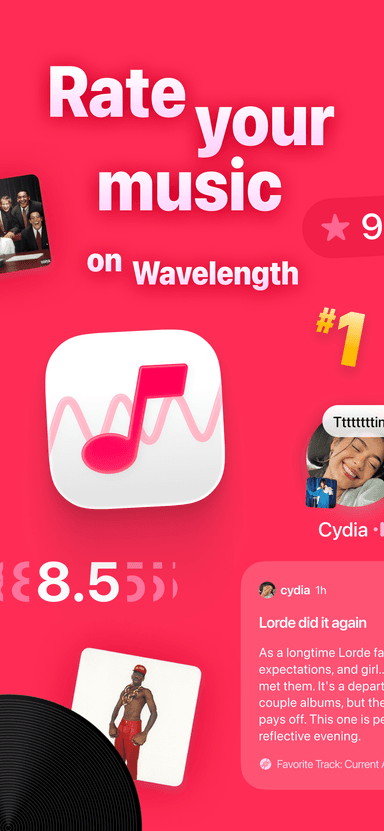
Rate and discover music with friends
pitchfork

pitchfork

3 Feet High and Rising

3 Feet High and Rising

De La Soul (1989)

10/ 10

Each Sunday, Pitchfork takes an in-depth look at a significant album from the past, and any record not in our archives is eligible. Today, we revisit the groundbreaking 1989 debut album from hip-hop legends De La Soul.

Their aim had simply been to make some space to raise their own voices. At that moment, in 1989, when hip-hop seemed surer of its destiny than at any time since, De La Soul gave us a glimpse into their coming-of-age, and let us listen to the sound of three (well, four) Americans working out how to hear each other and move forward together in a cruel world.

Consider that in the preceding 12 months, It Takes a Nation of Millions to Hold Us Back, Straight Outta Compton, Critical Beatdown, Lyte As a Rock, and In Full Gear had made a massive impact in hip-hop. All of these records commanded attention, wore their sizable ambitions on their jackets. But while their New School peers stood tall, offering righteousness (Public Enemy), rebellion (N.W.A.), street wisdom (MC Lyte), style-war futurism (Ultramagnetic MC’s) and crowd-pleasing showmanship (Stetsasonic) to hip-hop’s expanding audiences, De La Soul were the quiet kids lingering at the edge of the cipher, withdrawn and a little mysterious, conversing in coded language meant to distance themselves from all the big personalities jockeying for position around them.

They were largely known as a trio—Kelvin “Posdnous” Mercer, Dave “Trugoy the Dove” Jolicoeur, and Vincent “Pasemaster Mase” Mason—a little left-field, a lot obsessed. As thoughtful and opinionated students of the culture, their wainscoted suburban rooms were strewn with rare dusty records plundered from their parents’ collections, and they financed their passions as janitors who came to their jobs rocking gold fronts. In 1987, the three young men enlisted a ringleader and mentor in Stetsasonic’s DJ Paul “Prince Paul” Huston, who could match their kookiness pound-for-pound. With his yuk-yuk scatology, technical skill, and bottomless trove of pop-cult records, Prince Paul stepped in like a madcap hybrid of Malcolm McLaren and George Martin.

All four of them had gone to Amityville Memorial High in the Black Belt of Long Island, between the white-fled city and the whites-mostly exurbs, the same socio- and psycho-geography that produced Public Enemy, Rakim, Biz Markie, and MF DOOM. They made music with an abiding trust in each other and an intense devotion to craft. Their process was: OK, we’ve made this beat, joke, metaphor, rhyme style, now how do we take it up another level?

3 Feet High and Rising emerged fully formed, offering a world as richly imagined as anything American pop has ever produced. Just as hip-hop was firmly establishing itself as the most avant of pop’s garde, the best of their peers—from smooth operator Big Daddy Kane to Blastmaster KRS-One to Living Colour’s Vernon Reid—showed up at their release party to salute their achievement. Even KRS, who had just dropped what would come to be recognized as one of the best albums in hip-hop history, said it couldn’t compare what De La Soul had just made. While huddled in Los Angeles to finish their own sample-heavy Paul’s Boutique, the Beastie Boys reportedly listened to 3 Feet High, despaired, and briefly considered starting all over again.

What they all heard in it was an unprecedented assemblage of sound. Four years before, Marley Marl had accidentally unlocked the power of the sampler—a technology that allowed time to be captured and manipulated. The sampler vaulted hip-hop out of its inferiority complex. Now it too could meet the sonic ambitions of rock, funk, jazz, and soul. Like their peers, Prince Paul and De La Soul set about using it to build a world.

The album sounded like a hip-hop version of the novelist Dos Passos’ America, crowded with voices, rhythms, rhymes, and the wit, joy, and pain of becoming aware of one’s power to change the world. And De La Soul felt like the closest hip-hop equivalent to Parliament and Funkadelic: high-concept, hilariously genuine, generously human.

Along with their Native Tongues peers, they were as generative as sunshine, spawning fertile new scenes around the world, including LA’s True School, the Bay Area’s indie underground, Atlanta’s Dungeon Family, Detroit’s network of Dilla and his acolytes, and subsequent generations of self-identified indie rappers, including Mos Def, Talib Kweli, and Common. More broadly, 3 Feet High and Rising helped secure a new alignment of hardcore street heads with an emerging global audience of fans, the foundation of the soon-to-be-named “hip-hop nation.” Thirty years later, it remains one most influential records of the storied class of 1988-89.

But the narrative of the album is still framed by a tired contrast between the rise of N.W.A. and the West Coast gangsta rap and that of De La Soul and the Native Tongues’ ”completely unthreatening” “message of positivity.” De La never asked to be the saviors of hip-hop, much less to answer for all the supposed pathologies that critics wanted to put on Black masculinity and Black popular culture. Instead, De La Soul defined their outsiderness through a weird, wild, and wholly self-referential creativity. Their MC names were “Sounds Op” and “Yogurt” spelled backwards. Their album would be full of inside jokes, invented slang (“A phrase called talk” was their rhyme style, “Public Speaker” was a dope emcee, “Buddy” was a hot body, and “Strictly Dan Stuckie” meant “awesome”), and an odd mix of preoccupations ranging from TV to Aesop’s fables to Luden’s cough drops to, of course, sex. The culture wars were raging all around them, the central fact defining N.W.A.’s work. But De La’s world was small, insular, and, in many ways, refreshingly naïve.

While he was still in high school in 1984, Prince Paul had been recruited into the Brooklyn crew, Stetsasonic, to serve as their showcase DJ. Stet sold itself as the first hip-hop band, a live act with studio chops, even predating the Roots. But as the scene evolved away from Old School showpeople toward New School bedroom lyricists and producers, Stetsasonic changed its style. Their 1988 album In Full Gear offered one path forward for hip-hop: a slick, high-def sound. Paul had become a key member of the production team, but he felt under-credited, and he also knew that the New York sound was shifting toward dusty sampler aesthetics. (Polish and sheen would not return to the forefront until Dr. Dre’s 1992 debut The Chronic.) He felt creatively stifled.

At the same time, Posdnous, Trugoy, and Mase were putting together “Plug Tunin’,” a song that had evolved out of a live routine the crew rocked over the “Impeach the President” break. But then Pos pulled from his father’s collection a rare doo-wop record by the Invitations called “Written on the Wall.” (Later, Tommy Boy stirred a small frenzy among the nascent crate-digging community when it offered $500 to the first person who could identify the sample. The prize went unclaimed for a long while, firmly establishing De La Soul and Prince Paul as beat-diggers par excellence.)

In the Long Island tradition of leaving no record unturned, “Written on the Wall” was on the B-side. Printed on the flip were helpful instructions for radio DJs needing to know what to play: “Plug Side.” From this odd detail, De La Soul developed an album concept: They were transmitting their music live from Mars through microphones—Pos on Plug One, Trugoy on Plug Two. It was an audacious step away from both Old School party-rocking and New School realism. Their lyrics didn’t lean too heavily on Five-Percenter cosmology or Afrocentric ideology for conceptual depth. They were striving for their own new rap language.

Armed with this obscure 45, a cassette deck, and a lo-fi Casio RZ-1, the crew slowed the routine to a toddler crawl and recorded it. They rocked head-scratching metaphors (Plug One: “Dazed at the sight of a method/Dive beneath the depth of a never-ending verse”) and odd riddles (Plug Two: “Vocal in doubt is an uplift/And real is the answer that I answer with”) in neatly matched cadences. When Paul heard the hissy demo, he knew he had found kin. He took them to re-record “Plug Tunin’” at the hip-hop hotspot, Calliope Studios, and they were on their way. Tommy Boy signed them to an album contract soon after and De La Soul began building their sonic world on a shoestring budget of $25,000. Over a two-month period, they learned how to work the expensive studio gear as they made the record.

The Black suburban imagination of Long Island rappers offered a distinctive kind of street romance and horror. Public Enemy rapped about cruising the boulevards in muscle cars, their adrenaline amping up their politics of provocation. De La Soul’s second single, “Potholes In My Lawn,” was a battle rhyme refracted through the brutal status consciousness of the ‘burbs. De La played the family on the block coming into success, only to be met with the envious rage of the Joneses next door. Trugoy complained, “I don’t ask for a barbed wire fence, B, but my dwellin’ is swellin’.” Meanwhile, imitating wannabes lurked in the bushes. These rhyme-biting rappers took the form of vermin leaving unsightly craters all over the front yard. The crew repatched the potholes with daisies. Individuality trumped suburban conformity.

As De La Soul and Prince Paul moved deeper into recording, they developed a kind of one-upmanship, trying to shock each other by procuring deeper records to thicken a song’s gumbo. The tracks became dense with info, opened up to jarring risk and surprise. Their lyrical ambitions also multiplied, as the group sought new ways to retell timeless adolescent tales.

Built on a sample of ’60s bombshell Maggie Thrett’s “Soupy,” “Jenifa Taught Me (Derwin’s Revenge)” was interrupted by an energetic Liberace performance of “Chopsticks.” The hormonal frenzy and awkwardness of teen lust were summed up in the half-terrified, half-grateful cry Maseo let out after his first kiss: “And I hollered!” These were not suave girl-stealing Old School or New School lovermen. When Jenifa inevitably moved on, Pos dropped his head in shame: “Don’t flaunt that the candy’s good, unless you can get plenty.”

As buzz built in advance of the album’s release, the label gave the group’s image a full makeover. De La Soul already had style—the gold fronts had given way to funky fades, Afrocentric fabrics, and African medallions. But their new look was designed by the hip London and New York-based Grey Organisation, who heightened the crew’s difference from their peers by giving them neon palettes and flattening them into Keith Haring-like 2-D. In the words of designer Toby Mott, the Grey Organisation wanted to critique “the prevailing macho hip-hop visual codes which dominate to this day.”

But as Dave, who dropped his stage name “Trugoy” somewhere after the second album, recounted to Rob Kenner in the documentary De La Soul Is Not Dead, “I think, for me, it was just the photo shoots. I mean, every damn photo shoot you could bet there was a florist hanging around with flowers. And I mean, come on man, flowers? That’s not what it’s really about.” The Black suburban crew had set out to express their difference, but now they began to realize that their pop success was making them into something they were not. On their subsequent albums, the tension between the joy of release and the control over their image—especially as Black men—would lead them to make some of the most important records in American pop.

Late in the recording process, Tommy Boy label head Tom Silverman asked for a radio-friendly unit shifter. Maseo obliged by suggesting they sample Parliament’s 1979 hit single “(Not Just) Knee Deep” for “Me Myself and I.” Paul agreed and flipped the track into an irresistible crowd mover. Trugoy did the bulk of the lyric writing, working from the Jungle Brothers’ “Black is Black” rhyme pattern and responding to the now proliferating “hip-hop hippie” articles with a “let us live” message. He rapped,

Proud I’m proud of what I amPoems I speak are Plug Two typePlease oh please let Plug Two beHimself, not what you read or writeWrite is wrong when hype is writtenOn the Soul, De La, that isStyle is surely our own thingNot the false disguise of show-biz

Their aim had simply been to make some space to raise their own voices. At that moment, in 1989, when hip-hop seemed surer of its destiny than at any time since, [De La Soul](https://pitchfork.com/artists/1028-de-la-soul/) gave us a glimpse into their coming-of-age, and let us listen to the sound of three (well, four) Americans working out how to hear each other and move forward together in a cruel world. Consider that in the preceding 12 months, [It Takes a Nation of Millions to Hold Us Back](https://pitchfork.com/reviews/albums/19997-public-enemy-it-takes-a-nation-of-millions-to-hold-us-backfear-of-a-black-planet/), *Straight Outta Compton*, [Critical Beatdown](https://pitchfork.com/reviews/albums/8383-critical-beatdown/), *Lyte As a Rock*, and *In Full Gear* had made a massive impact in hip-hop. All of these records commanded attention, wore their sizable ambitions on their jackets. But while their New School peers stood tall, offering righteousness ([Public Enemy](https://pitchfork.com/artists/3411-public-enemy/)), rebellion ([N.W.A.](https://pitchfork.com/artists/3086-nwa/)), street wisdom ([MC Lyte](https://pitchfork.com/artists/8345-mc-lyte/)), style-war futurism ([Ultramagnetic MC’s](https://pitchfork.com/artists/4438-ultramagnetic-mcs/)) and crowd-pleasing showmanship (Stetsasonic) to hip-hop’s expanding audiences, De La Soul were the quiet kids lingering at the edge of the cipher, withdrawn and a little mysterious, conversing in coded language meant to distance themselves from all the big personalities jockeying for position around them. They were largely known as a trio—Kelvin “Posdnous” Mercer, Dave “Trugoy the Dove” Jolicoeur, and Vincent “Pasemaster Mase” Mason—a little left-field, a lot obsessed. As thoughtful and opinionated students of the culture, their wainscoted suburban rooms were strewn with rare dusty records plundered from their parents’ collections, and they financed their passions as janitors who came to their jobs rocking gold fronts. In 1987, the three young men enlisted a ringleader and mentor in Stetsasonic’s DJ Paul “Prince Paul” Huston, who could match their kookiness pound-for-pound. With his yuk-yuk scatology, technical skill, and bottomless trove of pop-cult records, Prince Paul stepped in like a madcap hybrid of [Malcolm McLaren](https://pitchfork.com/artists/15049-malcolm-mclaren/) and [George Martin](https://pitchfork.com/artists/14507-george-martin/). All four of them had gone to Amityville Memorial High in the Black Belt of Long Island, between the white-fled city and the whites-mostly exurbs, the same socio- and psycho-geography that produced Public Enemy, [Rakim](https://pitchfork.com/artists/3519-rakim/), [Biz Markie](https://pitchfork.com/artists/2902-biz-markie/), and [MF DOOM](https://pitchfork.com/artists/2751-mf-doom/). They made music with an abiding trust in each other and an intense devotion to craft. Their process was: OK, we’ve made this beat, joke, metaphor, rhyme style, now how do we take it up another level? *3 Feet High and Rising* emerged fully formed, offering a world as richly imagined as anything American pop has ever produced. Just as hip-hop was firmly establishing itself as the most avant of pop’s garde, the best of their peers—from smooth operator [Big Daddy Kane](https://pitchfork.com/artists/7623-big-daddy-kane/) to Blastmaster [KRS-One](https://pitchfork.com/artists/7234-krs-one/) to [Living Colour](https://pitchfork.com/artists/10622-living-colour/)’s Vernon Reid—showed up [at their release party](https://www.youtube.com/watch?v=R8t08zWBKyg) to salute their achievement. Even KRS, who had just dropped what would come to be recognized as one of the best albums in hip-hop history, said it couldn’t compare what De La Soul had just made. While huddled in Los Angeles to finish their own sample-heavy [Paul’s Boutique](https://pitchfork.com/reviews/albums/12671-pauls-boutique/), the [Beastie Boys](https://pitchfork.com/artists/19278-beastie-boys/) reportedly listened to *3 Feet High,* despaired, and briefly considered starting all over again. What they all heard in it was an unprecedented assemblage of sound. Four years before, Marley Marl had accidentally unlocked the power of the sampler—a technology that allowed time to be captured and manipulated. The sampler vaulted hip-hop out of its inferiority complex. Now it too could meet the sonic ambitions of rock, funk, jazz, and soul. Like their peers, Prince Paul and De La Soul set about using it to build a world. The album sounded like a hip-hop version of the novelist Dos Passos’ America, crowded with voices, rhythms, rhymes, and the wit, joy, and pain of becoming aware of one’s power to change the world. And De La Soul felt like the closest hip-hop equivalent to [Parliament](https://pitchfork.com/artists/3256-parliament/) and [Funkadelic](https://pitchfork.com/artists/1505-funkadelic/): high-concept, hilariously genuine, generously human. Along with their Native Tongues peers, they were as generative as sunshine, spawning fertile new scenes around the world, including LA’s True School, the Bay Area’s indie underground, Atlanta’s Dungeon Family, Detroit’s network of Dilla and his acolytes, and subsequent generations of self-identified indie rappers, including [Mos Def](https://pitchfork.com/artists/2838-mos-def/), [Talib Kweli](https://pitchfork.com/artists/2348-talib-kweli/), and [Common](https://pitchfork.com/artists/806-common/). More broadly, *3 Feet High and Rising* helped secure a new alignment of hardcore street heads with an emerging global audience of fans, the foundation of the soon-to-be-named “hip-hop nation.” Thirty years later, it remains one most influential records of the storied class of 1988-89. But the narrative of the album is still framed by a tired contrast between the rise of N.W.A. and the West Coast gangsta rap and that of De La Soul and the Native Tongues’ [”completely unthreatening](https://www.theguardian.com/music/2011/jun/13/de-la-soul-daisy-age)” “[message of positivity.](http://www.bbc.co.uk/music/reviews/nmw6/)” De La never asked to be the saviors of hip-hop, much less to answer for all the supposed pathologies that critics wanted to put on Black masculinity and Black popular culture. Instead, De La Soul defined their outsiderness through a weird, wild, and wholly self-referential creativity. Their MC names were “Sounds Op” and “Yogurt” spelled backwards. Their album would be full of inside jokes, invented slang (“A phrase called talk” was their rhyme style, “Public Speaker” was a dope emcee, “Buddy” was a hot body, and “Strictly Dan Stuckie” meant “awesome”), and an odd mix of preoccupations ranging from TV to Aesop’s fables to Luden’s cough drops to, of course, sex. The culture wars were raging all around them, the central fact defining N.W.A.’s work. But De La’s world was small, insular, and, in many ways, refreshingly naïve. While he was still in high school in 1984, Prince Paul had been recruited into the Brooklyn crew, Stetsasonic, to serve as their showcase DJ. Stet sold itself as the first hip-hop band, a live act with studio chops, even predating the Roots. But as the scene evolved away from Old School showpeople toward New School bedroom lyricists and producers, Stetsasonic changed its style. Their 1988 album *In Full Gear* offered one path forward for hip-hop: a slick, high-def sound. Paul had become a key member of the production team, but he felt under-credited, and he also knew that the New York sound was shifting toward dusty sampler aesthetics. (Polish and sheen would not return to the forefront until [Dr. Dre](https://pitchfork.com/artists/4817-dr-dre/)’s 1992 debut *The Chronic*.) He felt creatively stifled. At the same time, Posdnous, Trugoy, and Mase were putting together “Plug Tunin’,” a song that had evolved out of a live routine the crew rocked over the “[Impeach the President](https://www.youtube.com/watch?v=3DIcxtsUML4)” break. But then Pos pulled from his father’s collection a rare doo-wop record by the Invitations called “[Written on the Wall](https://www.youtube.com/watch?v=F3110op68w8).” (Later, Tommy Boy stirred a small frenzy among the nascent crate-digging community when it offered $500 to the first person who could identify the sample. The prize went unclaimed for a long while, firmly establishing De La Soul and Prince Paul as beat-diggers *par excellence*.) In the Long Island tradition of [leaving no record unturned](https://www.scribd.com/doc/136322987/B-Side-Wins-Again), “Written on the Wall” was on the B-side. Printed on the flip were helpful instructions for radio DJs needing to know what to play: “Plug Side.” From this odd detail, De La Soul developed an album concept: They were transmitting their music live from Mars through microphones—Pos on Plug One, Trugoy on Plug Two. It was an audacious step away from both Old School party-rocking and New School realism. Their lyrics didn’t lean too heavily on Five-Percenter cosmology or Afrocentric ideology for conceptual depth. They were striving for their own new rap language. Armed with this obscure 45, a cassette deck, and a lo-fi Casio RZ-1, the crew slowed the routine to a toddler crawl and recorded it. They rocked head-scratching metaphors (Plug One: “Dazed at the sight of a method/Dive beneath the depth of a never-ending verse”) and odd riddles (Plug Two: “Vocal in doubt is an uplift/And real is the answer that I answer with”) in neatly matched cadences. When Paul heard the hissy demo, he knew he had found kin. He took them to re-record “Plug Tunin’” at the hip-hop hotspot, Calliope Studios, and they were on their way. Tommy Boy signed them to an album contract soon after and De La Soul began building their sonic world on a shoestring budget of $25,000. Over a two-month period, they learned how to work the expensive studio gear as they made the record. The Black suburban imagination of Long Island rappers offered a distinctive kind of street romance and horror. Public Enemy rapped about cruising the boulevards in muscle cars, their adrenaline amping up their politics of provocation. De La Soul’s second single, “Potholes In My Lawn,” was a battle rhyme refracted through the brutal status consciousness of the ‘burbs. De La played the family on the block coming into success, only to be met with the envious rage of the Joneses next door. Trugoy complained, “I don’t ask for a barbed wire fence, B, but my dwellin’ is swellin’.” Meanwhile, imitating wannabes lurked in the bushes. These rhyme-biting rappers took the form of vermin leaving unsightly craters all over the front yard. The crew repatched the potholes with daisies. Individuality trumped suburban conformity. As De La Soul and Prince Paul moved deeper into recording, they developed a kind of one-upmanship, trying to shock each other by procuring deeper records to thicken a song’s gumbo. The tracks became dense with info, opened up to jarring risk and surprise. Their lyrical ambitions also multiplied, as the group sought new ways to retell timeless adolescent tales. Built on a sample of ’60s bombshell Maggie Thrett’s “[Soupy](https://www.youtube.com/watch?v=t5q_njIj3PE),” “Jenifa Taught Me (Derwin’s Revenge)” was interrupted by an energetic Liberace performance of “Chopsticks.” The hormonal frenzy and awkwardness of teen lust were summed up in the half-terrified, half-grateful cry Maseo let out after his first kiss: “And I *hollered*!” These were not suave girl-stealing Old School or New School lovermen. When Jenifa inevitably moved on, Pos dropped his head in shame: “Don’t flaunt that the candy’s good, unless you can get plenty.” As buzz built in advance of the album’s release, the label gave the group’s image a full makeover. De La Soul already had style—the gold fronts had given way to funky fades, Afrocentric fabrics, and African medallions. But their new look was designed by the hip London and New York-based Grey Organisation, who heightened the crew’s difference from their peers by giving them neon palettes and flattening them into Keith Haring-like 2-D. In the words of designer Toby Mott, the Grey Organisation wanted to critique “the prevailing macho hip-hop visual codes which dominate to this day.” But as Dave, who dropped his stage name “Trugoy” somewhere after the second album, recounted to Rob Kenner in [the documentary De La Soul Is Not Dead](https://www.youtube.com/watch?v=8i346sS-_8Q), “I think, for me, it was just the photo shoots. I mean, every damn photo shoot you could bet there was a florist hanging around with flowers. And I mean, come on man, flowers? That’s not what it’s really about.” The Black suburban crew had set out to express their difference, but now they began to realize that their pop success was making them into something they were not. On their subsequent albums, the tension between the joy of release and the control over their image—especially as Black men—would lead them to make some of the most important records in American pop. Late in the recording process, Tommy Boy label head Tom Silverman asked for a radio-friendly unit shifter. Maseo obliged by suggesting they sample Parliament’s 1979 hit single “(Not Just) Knee Deep” for “Me Myself and I.” Paul agreed and flipped the track into an irresistible crowd mover. Trugoy did the bulk of the lyric writing, working from the Jungle Brothers’ “[Black is Black](https://www.youtube.com/watch?v=YuxEWLjGy-U)” rhyme pattern and responding to the now proliferating “hip-hop hippie” articles with a “let us live” message. He rapped, Proud I’m proud of what I amPoems I speak are Plug Two typePlease oh please let Plug Two beHimself, not what you read or writeWrite is wrong when hype is writtenOn the Soul, De La, that isStyle is surely our own thingNot the false disguise of show-biz

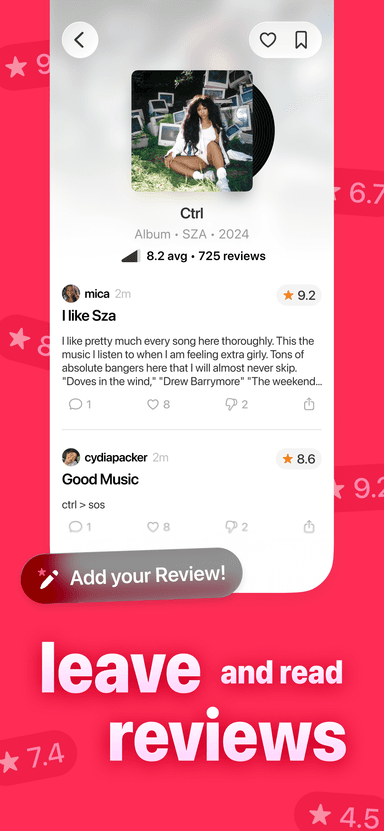
Rate music on Wavelength

Download Wavelength to share your own reviews and see what your friends think.

Rate music on Wavelength

A free place to rate albums and write reviews with friends. Letterboxd-style, for music.

Download on the App Store