Wavelength
Wavelength
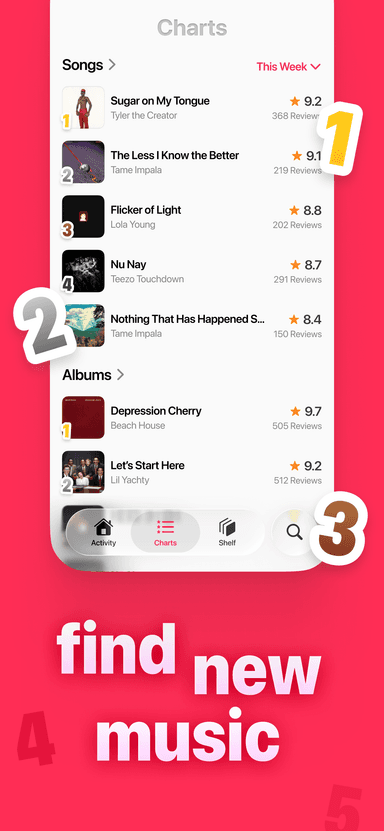
Rate and discover music with friends
pitchfork

pitchfork

Solo-Concerts Bremen / Lausanne (Live)

Solo-Concerts Bremen / Lausanne (Live)

Keith Jarrett (1973)

9.2/ 10

Each Sunday, Pitchfork takes an in-depth look at a significant album from the past, and any record not in our archives is eligible. Today we revisit a career-defining jazz masterpiece, collecting two hours of improvised solo performances from the piano virtuoso.

“My first experience composing was adding a note to the last chord of a Mozart concerto,” Keith Jarrett told Down Beat Magazine. “I’d play it right at the teacher’s house and the other way at home.” It’s a quintessential anecdote from the pianist, confirming his early years as a prodigy and an innate belief that he might improve upon the work of the composer that many consider the greatest who ever lived. For Jarrett, a boy growing up in Allentown, Pennsylvania in the 1950s, who so loved his piano he wished to sleep underneath it at night, a single note, placed perfectly, could make all the difference. And he never underestimated his own talent. One imagines that in his mind, he was maybe the only person who could find that note and place it precisely where it belonged.

In 1973, a couple of decades after that youthful foray into composition, Jarrett was touring Europe, playing solo piano concerts, and traveling with his friend, the producer and founder of the ECM label, Manfred Eicher. Together they were embarking on and recording a new idea for a live album—evening-length shows in concert halls where classical pieces are typically presented, in which a pianist plays no predetermined material, but rather improvises for 60 to 80 minutes. Two of those gigs—Lausanne, Switzerland on March 20, and Bremen, Germany, on July 12—would be gathered in a 3xLP box set called Solo-Concerts on ECM in November. This release, which Down Beat named Jazz Album of the Year in 1974, fully established Jarrett as the kind of musician who is both admired by his peers and also has great appeal to the general public, many of whom were not especially familiar with jazz.

Jarrett was already 10 years into his classical studies by the time he discovered jazz around age 14. He graduated high school early and was accepted at Berklee College of Music in Boston, though he didn’t finish his degree. After moving to New York, he sat in briefly at the Village Vanguard one night, and drummer Art Blakey was in the audience. He joined the Jazz Messengers shortly after and eventually connected with saxophonist Charles Lloyd, who invited him to play with his group in 1966.

The pianist’s three years with Lloyd, in a quartet that also included young drummer Jack DeJohnette, put him on the jazz world’s map. The group was a major live draw, one that won over enthusiastic crowds in rock venues such as the Fillmore in San Francisco. Lloyd was a charismatic figure who firmly embraced the budding new age spiritualism of the hippie movement. In a time when many jazz artists would still show up on stage in a coat and tie, Lloyd’s quartet wore colorful shorts and beaded necklaces, and their albums had names like The Flowering (1971) and Love-In (1967). They also threw the occasional Beatles cover into their live sets.

Lloyd recognized Jarrett’s talent and was shrewd enough to know he needed to indulge the young pianist’s creative whims to keep him in the group. He gave Jarrett ample space to build solos live, and the band played a handful of his compositions alongside Lloyd’s. On Jarrett pieces like the buoyant gospel jam “Sunday Morning” from Love-In, distinctive elements that would crop up regularly in his solo work in the decade after—funky left-hand grooves paired with ringing, melodic, and instantly memorable right-hand leads—are easily identifiable.

Lloyd, who would later become a devotee of transcendental meditation, also made an impression on Jarrett’s spirituality, turning him on to the work of early 20th-century mystic George Gurdjieff. Besides his writing, Gurdjieff composed hymns for piano, and Jarrett would eventually cut an album’s worth of them for release by ECM in 1980. By that time, recordings of his solo concerts, especially 1975’s The Köln Concert, which went gold, had been so wildly successful he could record whatever he wanted.

But that was later. While Jarrett was still working with Lloyd, both he and DeJohnette caught the ear of Miles Davis, who was riding a wave of adulation and controversy following Bitches Brew and was putting together a band to take his new vision of jazz on the road. Jarrett was resistant to the idea of electric instruments, but after playing with the band in 1969, he quickly changed his tune, and he and DeJohnette were in the group and on record by the time of October 1970’s Miles Davis at Fillmore. While Jarrett was in Davis’ group, Eicher wrote asking if he would record for his new label, ECM. Where Miles was experimenting with density—more keyboards, more percussion, more electrification—Eichner’s label, as embodied by its famous motto, had a different ethos: “the most beautiful sound next to silence.”

Jazz was changing rapidly in the late ’60s and early ’70s, and by some measures it was in trouble. Rock and soul were ascendant in youth culture, jazz labels were struggling, and clubs were closing down. To adapt, many artists, following Davis’ lead, were incorporating rock rhythms and instrumentation into their music, and fusion would develop a healthy audience in the first half of the ’70s.

But labels also adapted to market pressures by issuing records that only made sense in a jazz context. The post-free-jazz avant-garde was well-established and flourished on smaller imprints and in communities like the loft scene in New York. It even made inroads with the majors, as with releases by the likes of Anthony Braxton, the Revolutionary Ensemble, and the Art Ensemble of Chicago on Arista, the A&M offshoot Horizon, and Atlantic.

Jazz as “art music” was a point of differentiation, and solo albums were on the rise. Braxton’s For Alto (1971) and Lee Konitz’s Lone-Lee (1975) were two of many records, featuring a single horn that required a very particular kind of listening to resonate. Along with Facing You, other highly regarded solo piano ECM releases were Chick Corea’s Piano Improvisations Vol. 1 (1971) and Paul Bley’s Open, to Love (1972). In 1973 and ’74, the Newport Jazz Festival hosted for the first time concert showcases for solo pianists specifically, including performances by Jarrett and McCoy Tyner.

In this milieu, with the audience changing and the market scrambled between jazz as a “serious” art form and jazz that returns to its populist roots, Jarrett was positioned to make an impact. His musical interests ranged widely between folk tunes you could hum, Western classical forms, the mystical end of spiritual jazz informed by non-Western music, and jazz proper of every kind. In the coming years, he’d write pieces that could be seamlessly incorporated into pop (see “Long as I Know You’re Living Yours,” which Steely Dan lifted wholesale for “Gaucho”) and music that captured a soothing mood so well it was absorbed into new age (“pipe in a little Keith Jarrett” was an important component of Tony Blundetto’s plan to open a massage studio in season 5 of The Sopranos). And with his solo piano concerts, these developments were brought to bear in a spontaneous expression. Each night, as first heard on these European tours, he would sit down with no idea what he would play, and the music would come out of him.

When you first encounter Jarrett’s solo work, it feels a little like a trick. Did he really not know what was going to happen ahead of time? Did it really come to him at the moment? In one sense, what he does could be considered “free improvisation,” because there are no pre-set restrictions on where a piece might lead, no fixed tempo or harmonic structure that determines its shape. But free improvisation is not the same as non-idiomatic improvisation. At the piano, Jarrett is steeped in idiom, and after many years of listening to them you think, “Here’s the funky groove section,” “Here’s the nod to Harlem stride,” “Here’s the atonal passage,” and so on. Rather than tuning into someone inventing something from nothing, we’re hearing a musician who has absorbed a great deal from across genres, who assembles what he’s borrowed into something new and all his own.

In 1970, psychologist Mihály Csíkszentmihályi introduced the concept of the “flow state,” and it easily maps onto our perception of what Jarrett is doing (at least one dissertation connects the psychologist’s ideas to the latter’s playing). Csíkszentmihályi’s 1990 mass-market book, Flow: The Psychology of Optimal Experience, was popular in part because its central idea seemed so obvious: We all know what it’s like to be so immersed in an activity that we lose track of time, where a certain amount of our conscious awareness falls away and we’re operating from a more instinctive place. And if you’ve known and identified this state, it might inform how you hear an album like Solo-Concerts. At its best, this album is the flow state on wax, an auditory expression of how it feels to be deep in the zone, where one’s relationship to time shifts or dissolves altogether.

Part of the Jarrett legend is that important solo works are created under less-than-ideal conditions. For The Köln Concert, it was lack of sleep from touring paired with a substandard piano. Here, his health was the problem. Though both evenings on Solo-Concerts have extended passages of serenity, during this period, he often found himself in excruciating pain because of a nagging back injury that had never fully healed. At the Bremen show, in particular, he wore a brace and was in such rough shape it was unclear if the show could happen at all. He was on a regimen of painkillers, and at each new stop on the tour, he followed a careful routine of bedrest and minimal exertion until showtime.

Because of his presence on the piano bench and his own constitution, music has always been hard on Jarrett’s body. That would be true of anyone playing an instrument at this level of frequency and intensity, but he had some quirks that exacerbated his problems. The way he sat and his penchant for rising, falling, twisting, and contorting his frame when he plays is part of that. Watch videos of Jarrett performing when he’s feeling the music—he scrunches his face, shakes his head, stands up. He’s dancing, more or less.

The structural coherence of these lengthy improvisations across two one-hour sets is astonishing. Jarrett and the audience agreed to share the space for 64 minutes, and his role, to paraphrase Frank Zappa, was to take this fixed unit of time and decorate it. There are sections that channel the array of genres and idioms mentioned above, but almost everything flows as if it’s been carefully mapped out in advance. A melodic motif that’s hinted at may not fully blossom until 10 or 15 minutes later, and when it finally arrives it feels inevitable, as if this were the only possible outcome of the seed planted earlier.

Where Jarrett’s improvisational skill and talent might suggest music described as “effortless,” some of the beauty of his solo piano work is that you can hear the exertion. It “flows,” yes, but you hear the guiding hand of the maker, and sometimes he has to give the music a push to set it off in a new direction. “Bremen, Pt. 1” opens with a tender ballad section that at first seems like a rendition of some barely remembered standard, and it has a melody clear enough to imagine that it was once sung. It’s so gentle, it’s an invitation to lean in a little, maybe turn the volume up a touch, to better share in this period of time. After about four minutes, Jarrett picks up the pace and dynamics with his left hand and shifts the harmonic structure from something song-like to a repeating cycle, but the rhythmic drive grows and decays, like he’s climbing a hill and pauses periodically to rest.

As “Pt. 1” gains strength, Jarrett throws in some high-speed trills and lets the dissonance build with his left hand. The bass clef of a piano played with the sustain pedal down has always conveyed the feeling of meteorological systems—a crashing chord low on the keyboard thunders, and the harmonics that gather and multiply and dissipate are often described as “clouds.” Such are the weather patterns of “Pt. 1,” where the pianist zigzags between light and darkness.

The early passages of “Pt. 2” are a fascinating exploration of thick, earthy gospel chords, every one of which seems to involve all 10 of Jarrett’s fingers extending the root notes up to heaven. Where he typically uses such material as the basis for a rhythmic vamp, in the first few minutes here he sounds as if he’s trying to wrestle them into shape, discovering their harmonic contours and then figuring out how to craft it into a new song. Eventually, the chords congeal into a syncopated beat, which he wallows in while exploring how he can subvert the bounce with a pretty melodic digression. Here and there, this passage, like many of Jarrett’s blues/gospel vamps, makes me think of Vince Guaraldi’s “Linus and Lucy,” the primordial banger that so many children internalized before they had ever heard the word “jazz.” And there’s a childlike delight in bopping your head and moving your body, twisting it into the kinds of shapes that we imagine him adopting as well as those colorful two-dimensional figures we absorbed from the television.

About 16 minutes in, Jarrett locks into a drone-heavy pattern that recalls Philip Glass, with a steady-state left-hand pulse whose repetition makes it sound like electronic music in the vein of Tangerine Dream. It’s a heady passage that makes you think of the physical properties of the matter that surrounds us, the mathematics behind shapes and angles and the gravity holding everything together, and then he explodes this digression with a deeply funky boogie-woogie section halfway through. From there, he moves through a neo-classical section redolent of a Chopin nocturne and then another pulsing minimalist piece that feels more orchestral in scale. When that builds and then crashes down, he offers a brief encore built around a folky tune, something you could imagine in a Cat Stevens song, bringing the evening back to the easeful melodicism where it began.

“My first experience composing was adding a note to the last chord of a Mozart concerto,” Keith Jarrett told [Down Beat Magazine](https://downbeat.com/microsites/ecm-jarrett/post_3-inner-octaves-of-jarrett.html). “I’d play it right at the teacher’s house and the other way at home.” It’s a quintessential anecdote from the pianist, confirming his early years as a prodigy and an innate belief that he might improve upon the work of the composer that many consider the greatest who ever lived. For Jarrett, a boy growing up in Allentown, Pennsylvania in the 1950s, who so loved his piano he wished to sleep underneath it at night, a single note, placed perfectly, could make all the difference. And he never underestimated his own talent. One imagines that in his mind, he was maybe the *only* person who could find that note and place it precisely where it belonged. In 1973, a couple of decades after that youthful foray into composition, Jarrett was touring Europe, playing solo piano concerts, and traveling with his friend, the producer and founder of the ECM label, Manfred Eicher. Together they were embarking on and recording a new idea for a live album—evening-length shows in concert halls where classical pieces are typically presented, in which a pianist plays no predetermined material, but rather improvises for 60 to 80 minutes. Two of those gigs—Lausanne, Switzerland on March 20, and Bremen, Germany, on July 12—would be gathered in a 3xLP box set called *Solo-Concerts* on ECM in November. This release, which *Down Beat* named Jazz Album of the Year in 1974, fully established Jarrett as the kind of musician who is both admired by his peers and also has great appeal to the general public, many of whom were not especially familiar with jazz. Jarrett was already 10 years into his classical studies by the time he discovered jazz around age 14. He graduated high school early and was accepted at Berklee College of Music in Boston, though he didn’t finish his degree. After moving to New York, he sat in briefly at the Village Vanguard one night, and drummer Art Blakey was in the audience. He joined the Jazz Messengers shortly after and eventually connected with saxophonist Charles Lloyd, who invited him to play with his group in 1966. The pianist’s three years with Lloyd, in a quartet that also included young drummer Jack DeJohnette, put him on the jazz world’s map. The group was a major live draw, one that won over enthusiastic crowds in rock venues such as the Fillmore in San Francisco. Lloyd was a charismatic figure who firmly embraced the budding new age spiritualism of the hippie movement. In a time when many jazz artists would still show up on stage in a coat and tie, Lloyd’s quartet wore colorful shorts and beaded necklaces, and their albums had names like *The Flowering* (1971) and *Love-In* (1967). They also threw the occasional Beatles cover into their live sets. Lloyd recognized Jarrett’s talent and was shrewd enough to know he needed to indulge the young pianist’s creative whims to keep him in the group. He gave Jarrett ample space to build solos live, and the band played a handful of his compositions alongside Lloyd’s. On Jarrett pieces like the buoyant gospel jam “[Sunday Morning](https://www.youtube.com/watch?v=yRSzrSwIqjE&ab_channel=CharlesLloyd-Topic)” from *Love-In*, distinctive elements that would crop up regularly in his solo work in the decade after—funky left-hand grooves paired with ringing, melodic, and instantly memorable right-hand leads—are easily identifiable. Lloyd, who would later become a devotee of transcendental meditation, also made an impression on Jarrett’s spirituality, turning him on to the work of early 20th-century mystic George Gurdjieff. Besides his writing, Gurdjieff composed hymns for piano, and Jarrett would eventually cut an album’s worth of them for release by ECM in 1980. By that time, recordings of his solo concerts, especially 1975’s *The Köln Concert*, which went gold, had been so wildly successful he could record whatever he wanted. But that was later. While Jarrett was still working with Lloyd, both he and DeJohnette caught the ear of [Miles Davis](https://pitchfork.com/artists/1023-miles-davis/), who was riding a wave of adulation and controversy following [Bitches Brew](https://pitchfork.com/reviews/albums/14623-bitches-brew-legacy-edition/) and was putting together a band to take his new vision of jazz on the road. Jarrett was resistant to the idea of electric instruments, but after playing with the band in 1969, he quickly changed his tune, and he and DeJohnette were in the group and on record by the time of October 1970’s *Miles Davis at Fillmore*. While Jarrett was in Davis’ group, Eicher wrote asking if he would record for his new label, ECM. Where Miles was experimenting with density—more keyboards, more percussion, more electrification—Eichner’s label, as embodied by its famous motto, had a different ethos: “the most beautiful sound next to silence.” Jazz was changing rapidly in the late ’60s and early ’70s, and by some measures it was in trouble. Rock and soul were ascendant in youth culture, jazz labels were struggling, and clubs were closing down. To adapt, many artists, following Davis’ lead, were incorporating rock rhythms and instrumentation into their music, and fusion would develop a healthy audience in the first half of the ’70s. But labels also adapted to market pressures by issuing records that only made sense in a jazz context. The post-free-jazz avant-garde was well-established and flourished on smaller imprints and in communities like the loft scene in New York. It even made inroads with the majors, as with releases by the likes of [Anthony Braxton](https://pitchfork.com/artists/11316-anthony-braxton/), the Revolutionary Ensemble, and the [Art Ensemble of Chicago](https://pitchfork.com/artists/136-art-ensemble-of-chicago/) on Arista, the A&M offshoot Horizon, and Atlantic. Jazz as “art music” was a point of differentiation, and solo albums were on the rise. Braxton’s *For Alto* (1971) and Lee Konitz’s *Lone-Lee* (1975) were two of many records, featuring a single horn that required a very particular kind of listening to resonate. Along with *Facing You*, other highly regarded solo piano ECM releases were Chick Corea’s *Piano Improvisations Vol. 1* (1971) and Paul Bley’s *Open, to Love* (1972). In 1973 and ’74, the Newport Jazz Festival hosted for the first time concert showcases for solo pianists specifically, including performances by Jarrett and McCoy Tyner. In this milieu, with the audience changing and the market scrambled between jazz as a “serious” art form and jazz that returns to its populist roots, Jarrett was positioned to make an impact. His musical interests ranged widely between folk tunes you could hum, Western classical forms, the mystical end of spiritual jazz informed by non-Western music, and jazz proper of every kind. In the coming years, he’d write pieces that could be seamlessly incorporated into pop (see “Long as I Know You’re Living Yours,” which Steely Dan [lifted wholesale for “Gaucho”](https://www.youtube.com/watch?v=AfVSLdfP1Y8)) and music that captured a soothing mood so well it was absorbed into new age (“[pipe in a little Keith Jarrett](https://www.reddit.com/r/jazzcirclejerk/comments/ngfmvt/buscemi_is_a_keith_jarrett_fan/)” was an important component of Tony Blundetto’s plan to open a massage studio in season 5 of *The Sopranos*). And with his solo piano concerts, these developments were brought to bear in a spontaneous expression. Each night, as first heard on these European tours, he would sit down with no idea what he would play, and the music would come out of him. When you first encounter Jarrett’s solo work, it feels a little like a trick. Did he *really* not know what was going to happen ahead of time? Did it *really* come to him at the moment? In one sense, what he does could be considered “free improvisation,” because there are no pre-set restrictions on where a piece might lead, no fixed tempo or harmonic structure that determines its shape. But free improvisation is not the same as non-idiomatic improvisation. At the piano, Jarrett is steeped in idiom, and after many years of listening to them you think, “Here’s the funky groove section,” “Here’s the nod to Harlem stride,” “Here’s the atonal passage,” and so on. Rather than tuning into someone inventing something from nothing, we’re hearing a musician who has absorbed a great deal from across genres, who assembles what he’s borrowed into something new and all his own. In 1970, psychologist Mihály Csíkszentmihályi introduced the concept of the “[flow state](https://positivepsychology.com/mihaly-csikszentmihalyi-father-of-flow/),” and it easily maps onto our perception of what Jarrett is doing (at least one [dissertation](https://cdr.lib.unc.edu/downloads/h128nf609?locale=en) connects the psychologist’s ideas to the latter’s playing). Csíkszentmihályi’s 1990 mass-market book, *Flow: The Psychology of Optimal Experience*, was popular in part because its central idea seemed so obvious: We all know what it’s like to be so immersed in an activity that we lose track of time, where a certain amount of our conscious awareness falls away and we’re operating from a more instinctive place. And if you’ve known and identified this state, it might inform how you hear an album like *Solo-Concerts*. At its best, this album is the flow state on wax, an auditory expression of how it feels to be deep in the zone, where one’s relationship to time shifts or dissolves altogether. Part of the Jarrett legend is that important solo works are created under less-than-ideal conditions. For *The Köln Concert*, it was lack of sleep from touring paired with a substandard piano. Here, his health was the problem. Though both evenings on *Solo-Concerts* have extended passages of serenity, during this period, he often found himself in excruciating pain because of a nagging back injury that had never fully healed. At the Bremen show, in particular, he wore a brace and was in such rough shape it was unclear if the show could happen at all. He was on a regimen of painkillers, and at each new stop on the tour, he followed a careful routine of bedrest and minimal exertion until showtime. Because of his presence on the piano bench and his own constitution, music has always been hard on Jarrett’s body. That would be true of anyone playing an instrument at this level of frequency and intensity, but he had some quirks that exacerbated his problems. The way he sat and his penchant for rising, falling, twisting, and contorting his frame when he plays is part of that. Watch videos of [Jarrett performing when he’s feeling the music](https://www.youtube.com/watch?v=F2m5tBHXLQY)—he scrunches his face, shakes his head, stands up. He’s *dancing*, more or less. The structural coherence of these lengthy improvisations across two one-hour sets is astonishing. Jarrett and the audience agreed to share the space for 64 minutes, and his role, to paraphrase Frank Zappa, was to take this fixed unit of time and decorate it. There are sections that channel the array of genres and idioms mentioned above, but almost everything flows as if it’s been carefully mapped out in advance. A melodic motif that’s hinted at may not fully blossom until 10 or 15 minutes later, and when it finally arrives it feels inevitable, as if this were the only possible outcome of the seed planted earlier. Where Jarrett’s improvisational skill and talent might suggest music described as “effortless,” some of the beauty of his solo piano work is that you can hear the exertion. It “flows,” yes, but you hear the guiding hand of the maker, and sometimes he has to give the music a push to set it off in a new direction. “Bremen, Pt. 1” opens with a tender ballad section that at first seems like a rendition of some barely remembered standard, and it has a melody clear enough to imagine that it was once sung. It’s so gentle, it’s an invitation to lean in a little, maybe turn the volume up a touch, to better share in this period of time. After about four minutes, Jarrett picks up the pace and dynamics with his left hand and shifts the harmonic structure from something song-like to a repeating cycle, but the rhythmic drive grows and decays, like he’s climbing a hill and pauses periodically to rest. As “Pt. 1” gains strength, Jarrett throws in some high-speed trills and lets the dissonance build with his left hand. The bass clef of a piano played with the sustain pedal down has always conveyed the feeling of meteorological systems—a crashing chord low on the keyboard thunders, and the harmonics that gather and multiply and dissipate are often described as “clouds.” Such are the weather patterns of “Pt. 1,” where the pianist zigzags between light and darkness. The early passages of “Pt. 2” are a fascinating exploration of thick, earthy gospel chords, every one of which seems to involve all 10 of Jarrett’s fingers extending the root notes up to heaven. Where he typically uses such material as the basis for a rhythmic vamp, in the first few minutes here he sounds as if he’s trying to wrestle them into shape, discovering their harmonic contours and then figuring out how to craft it into a new song. Eventually, the chords congeal into a syncopated beat, which he wallows in while exploring how he can subvert the bounce with a pretty melodic digression. Here and there, this passage, like many of Jarrett’s blues/gospel vamps, makes me think of Vince Guaraldi’s “Linus and Lucy,” the primordial banger that so many children internalized before they had ever heard the word “jazz.” And there’s a childlike delight in bopping your head and moving your body, twisting it into the kinds of shapes that we imagine him adopting as well as those [colorful two-dimensional figures we absorbed from the television](https://www.youtube.com/watch?v=c1OBMF1V_q4). About 16 minutes in, Jarrett locks into a drone-heavy pattern that recalls [Philip Glass](https://pitchfork.com/artists/6177-philip-glass/), with a steady-state left-hand pulse whose repetition makes it sound like electronic music in the vein of [Tangerine Dream](https://pitchfork.com/artists/4171-tangerine-dream/). It’s a heady passage that makes you think of the physical properties of the matter that surrounds us, the mathematics behind shapes and angles and the gravity holding everything together, and then he explodes this digression with a deeply funky boogie-woogie section halfway through. From there, he moves through a neo-classical section redolent of a Chopin nocturne and then another pulsing minimalist piece that feels more orchestral in scale. When that builds and then crashes down, he offers a brief encore built around a folky tune, something you could imagine in a [Cat Stevens](https://pitchfork.com/artists/6660-cat-stevens/) song, bringing the evening back to the easeful melodicism where it began.

Rate music on Wavelength

Download Wavelength to share your own reviews and see what your friends think.

Rate music on Wavelength

A free place to rate albums and write reviews with friends. Letterboxd-style, for music.

Download on the App Store