Wavelength
Wavelength
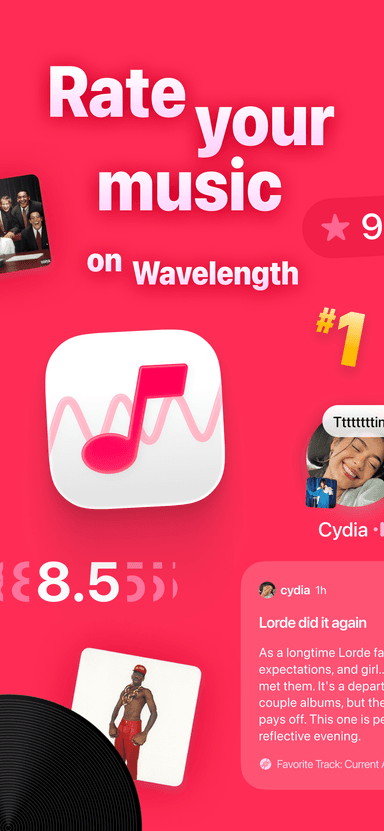
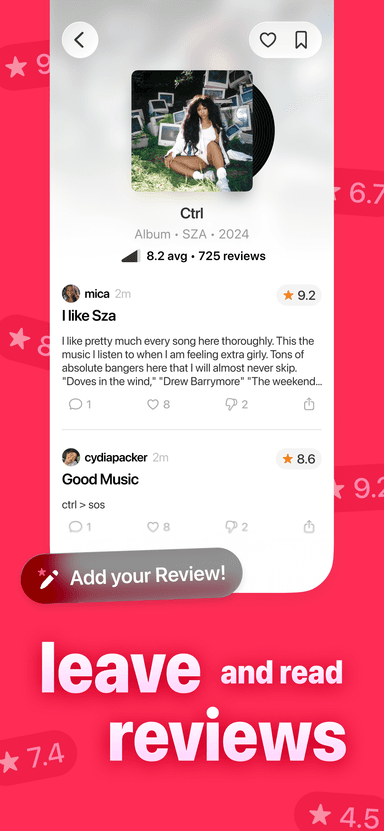
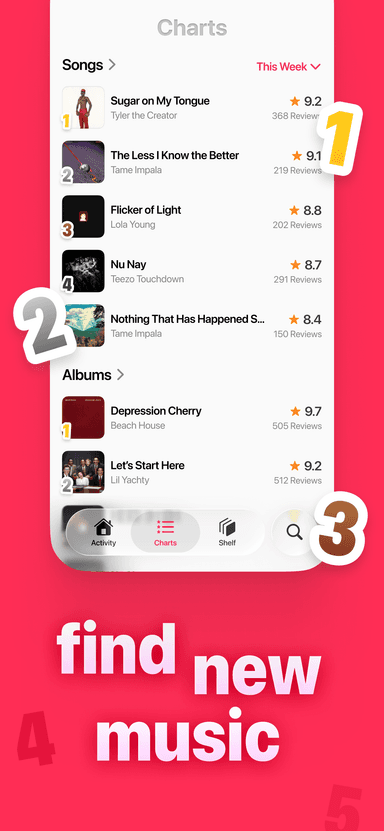
Rate and discover music with friends
pitchfork

pitchfork

Fontanelle

Fontanelle

Babes In Toyland (1992)

9.0/ 10

Each Sunday, Pitchfork takes an in-depth look at a significant album from the past, and any record not in our archives is eligible. Today we revisit Babes in Toyland’s overlooked 1992 album, a raw rock exorcism that connected grunge to the beginning of the riot grrrl sound.

Babes in Toyland’s “Bruise Violet” echoes across the MTV airwaves, as teenage cartoon delinquents Beavis and Butt-Head headbang and air guitar to the song’s music video. “Is that Cindy Brady?” Beavis jokes, taking in frontwoman Kat Bjelland’s whipped platinum blonde hair, white babydoll dress, bright red lipstick, and piercing blue eyes. “Shut up, Beavis, these chicks are cool,” replies Butt-Head. The pair watches for a rare few moments of silence as footage of the Minneapolis three-piece thrashing their way through a set at CBGB alternates with scenes of Bjelland encountering a series of identically dressed doppelgängers. She strangles one of them, played by the renowned photographer Cindy Sherman. (Sherman’s photo of a creepy baby doll adorns the cover of Fontanelle, the album on which “Bruise Violet” appears.)

As Bjelland snarls the song’s refrain of “Liar! Liar! Liar!,” Beavis, mishearing, begins chanting, “Fire! Fire! Fire!” (An exasperated Butt-Head says, “Shut up, assmunch. She said ‘Liar.’”) Beavis continues his “Fire! Fire! Fire!” chant with every chorus, until Butt-Head intervenes: “Don’t make me kick your ass again, Beavis. We’re missing this video, and it doesn’t even suck.”

It was the summer of 1993, and Beavis and Butt-Head was the most popular show on MTV. The animated hooligans were, arguably, the most influential rock critics in America. If an up-and-coming artist’s video made it through their gauntlet of juvenile insults unscathed, a career would be jump-started. Just ask Rob Zombie.

Indeed, the Beavis and Butt-Head endorsement was the apex of Babes in Toyland’s short-lived commercial success. Fontanelle, their major label debut, had been released in August 1992. Despite reams of positive press, and the rising tide of next-Nirvana mania, the album had only sold around 50,000 copies by the start of 1993—a respectable number, but hardly enough to justify the amount of promotional resources Warner/Reprise had been spending on the band. But between the Beavis rave and a booking on the generation-defining Lollapalooza tour, things were looking up for Bjelland, drummer Lori Barbero, and bassist Maureen Herman. The label serviced a “Babes and Beavis and Butt-Head in Toyland” version of “Bruise Violet” to radio and Herman appeared on the Lollapalooza ’93 cover of Entertainment Weekly. Sales began to climb; Fontanelle would go on to sell over 200,000 copies.

In October 1993, a five-year-old boy in Ohio burned down the mobile home his family lived in, killing his younger sister. His mother claimed that Beavis and Butt-Head’s pyromaniac tendencies had inspired her son to play with matches. Almost immediately, MTV altered any episodes that referenced fire, including the one featuring “Bruise Violet.” The Babes video was replaced by a Butthole Surfers video for all subsequent re-airings. Even now, clips of the original version can only be found in obscure corners of the obsessive fan internet.

Babes in Toyland themselves have also nearly faded away, beloved by those few of us who treasure the feral beauty of their discography and revere their pioneering status as inspiration to the riot grrrl movement. To most rock fans, however, they’re little more than a footnote, if they’re known at all.

The hallmark of the Babes in Toyland aesthetic was the chiaroscuro of the good little girl and the big, bad witch. Their videos, album art, and merch design were full of dismembered dolls; their song titles alluded to childhood cruelties and fairytale violence. And Beavis wasn’t totally wrong: With her blonde waves, frilly dresses, and prom queen makeup, Kat Bjelland didn’t not look like the youngest Brady Bunch daughter. But the gates of hell would open when she parted those ruby-red lips. Bjelland’s voice was one of the most formidable instruments of the 1990s, equally capable of operatic leaps, terrifying shrieks, satanic babbling, and gentle coos, often within the same verse.

Kat Bjelland got good at cultivating the creatively fertile coexistence of her angels and demons at a young age. Abandoned by her biological mother as a small child, she was raised in rural Oregon by an abusive stepmother and complicit stepfather. “I was locked into my room all the time,” she told Liz Evans in the 1994 book Women, Sex and Rock’n’Roll: In Their Own Words. “I’m pretty sure being grounded and locked up has a lot to do with the way my imagination developed.” By day, “Kathy” Bjelland was a popular cheerleader who got good grades. By night, “I’d sit in this big overstuffed chair and listen to Billie Holiday, read Sylvia Plath, drink Kahlúa from my dad’s liquor cabinet, and fantasize how I was going to get the fuck out of here,” she told Neal Karlan in his book Babes in Toyland: The Making and Selling of a Rock and Roll Band. (A sign of how high the music industry had set its expectations for Babes in Toyland in the mid-’90s: Random House published a 300-page biography of them in 1994.)

As fate would have it, Bjelland’s metalhead high school boyfriend left his guitar in her basement. At 19, she joined her uncle’s surf-rock band, the Neurotics, then formed her own band, the Venarays, and moved to Portland in 1982. One night in 1984, at the Portland punk club Satyricon, Bjelland met an ambitious scenester named Courtney Love. They bonded over music and drugs, and Love begged Bjelland to be in a band with her. “When I met her, she was really cool and energetic and vibrant, and we were really close from then on,” Bjelland told Evans in 1994. “It was like finding a soulmate, a sister-type person.” “The best thing that ever happened to me, in a way, was Kat,” Love told VH1’s Behind the Music in 2010.

The relationship between Kat Bjelland and Courtney Love was so mythologized by the music press in the ’90s that it’s difficult to discern fact and fiction. As is to be expected from a “soulmate, sister-type” connection between two brilliant, creative, competitive women with traumatic childhoods and addiction issues, the pair fought as bitterly as they bonded. They traded lyrics and dresses and insults in the press. One point of contention, likely overblown in the name of marketing, was the battle over their shared aesthetic, unfortunately dubbed “kinderwhore.” We’ll probably never definitively know if it was Bjelland or Love who first dyed her hair white-blonde, donned a vintage babydoll dress, and picked up a Rickenbacker guitar to create one of the most iconic looks of the 1990s. But given Love’s fame, there’s no doubt who history most associates with the image.

Soon after they met in 1984, Bjelland and Love began playing music and working together at Portland’s strip clubs. They moved to San Francisco and started a band called, at various points, Sugar Babydoll, Sugar Babylon, and Pagan Babies, which also included future L7 bassist Jennifer Finch. In 1987, when Love left San Francisco to pursue an acting career in Los Angeles, Bjelland headed for Minneapolis, lured by the scene that had nurtured the likes of the Replacements and Hüsker Dü.

Bjelland first encountered Lori Barbero from afar, admiring her sense of rhythm as she watched her dance at punk clubs. Barbero was enmeshed in the Twin Cities scene, working at the notorious bar the Longhorn, managing the band Run Westy Run, and letting every touring artist under the sun crash on her floor. She had barely played the drums before Bjelland asked to jam, and taught herself by drumming alongside Bjelland’s riffs. Barbero developed a style mostly played using the butt-end of her drumsticks, a primal, steady thump that acted as an earthbound foil to Bjelland’s sky-scraping vocals and alien riffs.

The pair formed Babes in Toyland in 1987 with singer Cindy Russell and bassist Chris Holetz. That lineup lasted less than a year before Bjelland took the reins as frontwoman. Following a disastrous, aborted reunion with Courtney Love (accounts vary on whether she was ever actually a member of Babes in Toyland, but everyone agrees it ended badly), Bjelland and Barbero recruited 19-year-old novice musician Michelle Leon as their bass player.

In 1989, the trio signed with the Twin Cities indie powerhouse Twin/Tone, known for launching the Replacements and Soul Asylum, and released their debut album, Spanking Machine, in Spring of 1990. It’s a whirlwind of no wave dissonance, shockabilly riffs, and Bjelland’s snarling surrealism, gesturing at topics like eating disorders (“Fork Down Throat”), jealousy (“He’s My Thing”), and abandonment (“Pain in My Heart”). Barbero sang one song, the bluesy lament “Dogg.”

The band hit the road hard, building up a following in the U.S. and Europe through their unhinged live sets. Bjelland was known for using a knife as a slide and beating herself up with her guitar. “Sometimes my voice scares me when I’m playing live because I lose myself and I don’t know what’s going on,” she admitted to Liz Evans in Women, Sex and Rock’n’Roll. “It’s scream therapy. If you let it all out, you feel better,” she told Simon Reynolds in The New York Times in 1992.

Spanking Machine also garnered the band fans in high places in the indie world. The influential British DJ John Peel named the album his favorite of 1990, and Babes would go on to record four different live Peel Sessions between 1990 and 1992. Sonic Youth tapped Babes to open their European Goo tour in September 1990. While in London on that tour, the band recorded their second album. As bassist Michelle Leon wrote in her 2016 memoir I Live Inside: “Shortly after we arrive [in London], Kat finds out that her birth mother died of pancreatic cancer. She doesn’t cry, at least not in front of us, saying she already did that. She stays in her room and writes.” They titled the album To Mother.

On May 19, 1990, Warner Bros. A&R rep Tim Carr happened upon a late-night Babes in Toyland set at the Pyramid Club in Manhattan. Carr was well-respected in the music industry, having successfully guided the careers of Megadeth and Beastie Boys, among others. He was blown away. “I want music that makes me believe in god, in love, in passion,” Carr wrote in his journal at the time (as quoted in Karlen’s 1994 book.) “The closest I get is hearing the Babes purposefully play a lot of things wrong, on purpose.”

Carr spent a year courting the band, finally signing them to the Warner imprint Reprise in June 1991, just before the release of To Mother, their final Twin/Tone album. By most accounts, Babes in Toyland were one of the few ’90s bands who didn’t feel stifled by the major label system. Their contract gave them complete creative control of their sound and image, and Carr’s enthusiasm rallied the label’s sizable promotional resources. Decades later, Barbero has continued to refer to Carr as “the fourth member of Babes in Toyland.” (Carr was found dead in Thailand in 2013, stabbed to death under mysterious circumstances.)

Before Babes began recording their major label debut, the band returned to Europe to tour in support of To Mother. Their set at the Reading Festival is immortalized in Dave Markey’s 1992 documentary 1991: The Year Punk Broke, where they shared a bill with their friends in Sonic Youth and Nirvana. Nevermind came out one month later, and in the fall of 1991, everything changed—not only due to Nevermind’s unprecedented commercial success, but also because Kurt Cobain had started dating Courtney Love.

As Bjelland and Babes in Toyland’s stars had risen over the years, so had Love’s. She formed the band Hole in 1989; their debut single, 1990’s “Retard Girl,” features a cover photo of Bjelland hanging upside down on a tree branch. Their September 1991 debut album, Pretty on the Inside, co-produced by Sonic Youth’s Kim Gordon, bears a close aesthetic kinship with Spanking Machine and To Mother. From the similarly abrasive sonics and shared lyrical themes of corrupted girlhood down to the nearly identical handwriting in the album art, it was hard to deny that the two women continued to draw from the same well. This was irresistible to the press, who lumped the bands together in countless “women in rock” trend pieces. By the time Love married Cobain in February 1992, then gave birth to the couple’s child in August, she had become a tabloid staple, and Bjelland a mere talking head in her story.

Babes in Toyland’s “Bruise Violet” echoes across the MTV airwaves, as teenage cartoon delinquents Beavis and Butt-Head headbang and air guitar to the song’s [music video](https://www.youtube.com/watch?v=gCjufvdq_1c). “Is that [Cindy Brady](https://en.wikipedia.org/wiki/List_of_The_Brady_Bunch_characters#Cindy_Brady)?” Beavis jokes, taking in frontwoman Kat Bjelland’s whipped platinum blonde hair, white babydoll dress, bright red lipstick, and piercing blue eyes. “Shut up, Beavis, these chicks are cool,” replies Butt-Head. The pair watches for a rare few moments of silence as footage of the Minneapolis three-piece thrashing their way through a set at CBGB alternates with scenes of Bjelland encountering a series of identically dressed doppelgängers. She strangles one of them, played by the renowned photographer Cindy Sherman. (Sherman’s photo of a creepy baby doll adorns the cover of *Fontanelle*, the album on which “Bruise Violet” appears.) As Bjelland snarls the song’s refrain of “Liar! Liar! Liar!,” Beavis, mishearing, begins chanting, “Fire! Fire! Fire!” (An exasperated Butt-Head says, “Shut up, assmunch. She said ‘Liar.’”) Beavis continues his “Fire! Fire! Fire!” chant with every chorus, until Butt-Head intervenes: “Don’t make me kick your ass again, Beavis. We’re missing this video, and it doesn’t even suck.” It was the summer of 1993, and *Beavis and Butt-Head* was the most popular show on MTV. The animated hooligans were, arguably, the most influential rock critics in America. If an up-and-coming artist’s video made it through their gauntlet of juvenile insults unscathed, a career would be jump-started. Just ask [Rob Zombie](https://pitchfork.com/reviews/albums/21654-it-came-from-nyc/). Indeed, the *Beavis and Butt-Head* endorsement was the apex of Babes in Toyland’s short-lived commercial success. *Fontanelle*, their major label debut, had been released in August 1992. Despite reams of positive press, and the rising tide of next-[Nirvana](https://pitchfork.com/artists/3046-nirvana/) mania, the album had only sold around 50,000 copies by the start of 1993—a respectable number, but hardly enough to justify the amount of promotional resources Warner/Reprise had been spending on the band. But between the *Beavis* rave and a booking on the generation-defining Lollapalooza tour, things were looking up for Bjelland, drummer Lori Barbero, and bassist Maureen Herman. The label serviced a [“Babes and Beavis and Butt-Head in Toyland” version](https://www.youtube.com/watch?v=5QTZUixnQAU) of “Bruise Violet” to radio and Herman appeared on [the Lollapalooza ’93 cover of Entertainment Weekly](https://www.ebay.com/itm/226125195010). Sales began to climb; *Fontanelle* would go on to sell over 200,000 copies. In October 1993, a five-year-old boy in Ohio burned down the mobile home his family lived in, killing his younger sister. His mother claimed that *Beavis and Butt-Head*’s pyromaniac tendencies had inspired her son to play with matches. Almost immediately, MTV altered any episodes that referenced fire, including the one featuring “Bruise Violet.” The Babes video was replaced by a Butthole Surfers video for all subsequent re-airings. Even now, clips of the [original version](https://www.instagram.com/kat.bjelland.gram/reel/C_F3FbNpYJR/?__d=11) can only be found in obscure corners of the obsessive fan internet. Babes in Toyland themselves have also nearly faded away, beloved by those few of us who treasure the feral beauty of their discography and revere their pioneering status as inspiration to the riot grrrl movement. To most rock fans, however, they’re little more than a footnote, if they’re known at all. The hallmark of the Babes in Toyland aesthetic was the chiaroscuro of the good little girl and the big, bad witch. Their videos, album art, and merch design were full of dismembered dolls; their song titles alluded to childhood cruelties and fairytale violence. And Beavis wasn’t totally wrong: With her blonde waves, frilly dresses, and prom queen makeup, Kat Bjelland didn’t *not* look like the youngest *Brady Bunch* daughter. But the gates of hell would open when she parted those ruby-red lips. Bjelland’s voice was one of the most formidable instruments of the 1990s, equally capable of operatic leaps, terrifying shrieks, satanic babbling, and gentle coos, often within the same verse. Kat Bjelland got good at cultivating the creatively fertile coexistence of her angels and demons at a young age. Abandoned by her biological mother as a small child, she was raised in rural Oregon by an abusive stepmother and complicit stepfather. “I was locked into my room all the time,” she told Liz Evans in the 1994 book *Women, Sex and Rock’n’Roll: In Their Own Words*. “I’m pretty sure being grounded and locked up has a lot to do with the way my imagination developed.” By day, “Kathy” Bjelland was a popular cheerleader who got good grades. By night, “I’d sit in this big overstuffed chair and listen to Billie Holiday, read Sylvia Plath, drink Kahlúa from my dad’s liquor cabinet, and fantasize how I was going to get the fuck out of here,” she told Neal Karlan in his book *Babes in Toyland: The Making and Selling of a Rock and Roll Band*. (A sign of how high the music industry had set its expectations for Babes in Toyland in the mid-’90s: Random House published a 300-page biography of them in 1994.) As fate would have it, Bjelland’s metalhead high school boyfriend left his guitar in her basement. At 19, she joined her uncle’s surf-rock band, the Neurotics, then formed her own band, [the Venarays](https://www.youtube.com/watch?v=8NJXuNwH9Y0), and moved to Portland in 1982. One night in 1984, at the Portland punk club Satyricon, Bjelland met an ambitious scenester named [Courtney Love](https://pitchfork.com/artists/2544-courtney-love/). They bonded over music and drugs, and Love begged Bjelland to be in a band with her. “When I met her, she was really cool and energetic and vibrant, and we were really close from then on,” Bjelland told Evans in 1994. “It was like finding a soulmate, a sister-type person.” “The best thing that ever happened to me, in a way, was Kat,” Love [told VH1’s Behind the Music in 2010](https://www.youtube.com/watch?v=u-Hsx3Zizdo&t=114s). The relationship between Kat Bjelland and Courtney Love was so mythologized by the music press in the ’90s that it’s difficult to discern fact and fiction. As is to be expected from a “soulmate, sister-type” connection between two brilliant, creative, competitive women with traumatic childhoods and addiction issues, the pair fought as bitterly as they bonded. They traded lyrics and dresses and insults in the press. One point of contention, likely overblown in the name of marketing, was the battle over their shared aesthetic, unfortunately dubbed “kinderwhore.” We’ll probably never definitively know if it was Bjelland or Love who first dyed her hair white-blonde, donned a vintage babydoll dress, and picked up a Rickenbacker guitar to create one of the most iconic looks of the 1990s. But given Love’s fame, there’s no doubt who history most associates with the image. Soon after they met in 1984, Bjelland and Love began playing music and working together at Portland’s strip clubs. They moved to San Francisco and started a band called, at various points, Sugar Babydoll, Sugar Babylon, and Pagan Babies, which also included future [L7](https://pitchfork.com/artists/2399-l7/) bassist Jennifer Finch. In 1987, when Love left San Francisco to pursue an acting career in Los Angeles, Bjelland headed for Minneapolis, lured by the scene that had nurtured the likes of [the Replacements](https://pitchfork.com/artists/3559-the-replacements/) and [Hüsker Dü](https://pitchfork.com/artists/8693-husker-du/). Bjelland first encountered Lori Barbero from afar, admiring her sense of rhythm as she watched her dance at punk clubs. Barbero was enmeshed in the Twin Cities scene, working at the notorious bar the Longhorn, managing the band Run Westy Run, and letting every touring artist under the sun crash on her floor. She had barely played the drums before Bjelland asked to jam, and taught herself by drumming alongside Bjelland’s riffs. Barbero developed a style mostly played using the butt-end of her drumsticks, a primal, steady thump that acted as an earthbound foil to Bjelland’s sky-scraping vocals and alien riffs. The pair formed Babes in Toyland in 1987 with singer Cindy Russell and bassist Chris Holetz. That lineup lasted less than a year before Bjelland took the reins as frontwoman. Following a disastrous, aborted reunion with Courtney Love (accounts vary on whether she was ever actually a member of Babes in Toyland, but everyone agrees it ended badly), Bjelland and Barbero recruited 19-year-old novice musician Michelle Leon as their bass player. In 1989, the trio signed with the Twin Cities indie powerhouse Twin/Tone, known for launching the Replacements and Soul Asylum, and released their debut album, *Spanking Machine*, in Spring of 1990. It’s a whirlwind of no wave dissonance, shockabilly riffs, and Bjelland’s snarling surrealism, gesturing at topics like eating disorders (“Fork Down Throat”), jealousy (“He’s My Thing”), and abandonment (“Pain in My Heart”). Barbero sang one song, the bluesy lament “Dogg.” The band hit the road hard, building up a following in the U.S. and Europe through their unhinged live sets. Bjelland was known for [using a knife as a slide](https://www.reddit.com/r/grunge/comments/sb7y5j/kat_bjelland_playing_guitar_with_a_knife/) and beating herself up with her guitar. “Sometimes my voice scares me when I’m playing live because I lose myself and I don’t know what’s going on,” she admitted to Liz Evans in *Women, Sex and Rock’n’Roll*. “It’s scream therapy. If you let it all out, you feel better,” she told Simon Reynolds in [The New York Times](https://www.nytimes.com/1992/02/09/arts/pop-music-belting-out-that-most-unfeminine-emotion.html) in 1992. *Spanking Machine* also garnered the band fans in high places in the indie world. The influential British DJ John Peel named the album his favorite of 1990, and Babes would go on to record four different live Peel Sessions between 1990 and 1992. [Sonic Youth](https://pitchfork.com/artists/3872-sonic-youth/) tapped Babes to open their European *Goo* tour in September 1990. While in London on that tour, the band recorded their second album. As bassist Michelle Leon wrote in her 2016 memoir [I Live Inside](https://shop.mnhs.org/products/i-live-inside?srsltid=AfmBOorcjYmI7fI28fimbTstGqD4sai1VqAFI0gRmq5cwe1BPduLqikt): “Shortly after we arrive [in London], Kat finds out that her birth mother died of pancreatic cancer. She doesn’t cry, at least not in front of us, saying she already did that. She stays in her room and writes.” They titled the album *To Mother*. On May 19, 1990, Warner Bros. A&R rep Tim Carr happened upon a late-night Babes in Toyland set at the Pyramid Club in Manhattan. Carr was well-respected in the music industry, having successfully guided the careers of [Megadeth](https://pitchfork.com/artists/9199-megadeth/) and [Beastie Boys](https://pitchfork.com/artists/19278-beastie-boys/), among others. He was blown away. “I want music that makes me believe in god, in love, in passion,” Carr wrote in his journal at the time (as quoted in Karlen’s 1994 book.) “The closest I get is hearing the Babes purposefully play a lot of things wrong, on purpose.” Carr spent a year courting the band, finally signing them to the Warner imprint Reprise in June 1991, just before the release of *To Mother*, their final Twin/Tone album. By most accounts, Babes in Toyland were one of the few ’90s bands who didn’t feel stifled by the major label system. Their contract gave them complete creative control of their sound and image, and Carr’s enthusiasm rallied the label’s sizable promotional resources. Decades later, Barbero has continued to refer to Carr as “the fourth member of Babes in Toyland.” (Carr was found dead in Thailand in 2013, stabbed to death under mysterious circumstances.) Before Babes began recording their major label debut, the band returned to Europe to tour in support of *To Mother*. Their set at the Reading Festival is immortalized in Dave Markey’s 1992 documentary *1991: The Year Punk Broke,* where they shared a bill with their friends in Sonic Youth and Nirvana. [Nevermind](https://pitchfork.com/reviews/albums/15854-nevermind-20th-anniversary-edition/) came out one month later, and in the fall of 1991, everything changed—not only due to *Nevermind*’s unprecedented commercial success, but also because Kurt Cobain had started dating Courtney Love. As Bjelland and Babes in Toyland’s stars had risen over the years, so had Love’s. She formed the band [Hole](https://pitchfork.com/artists/6162-hole/) in 1989; their debut single, 1990’s “Retard Girl,” features a [cover photo](https://upload.wikimedia.org/wikipedia/en/a/ae/Retardgirlcov.jpg) of Bjelland hanging upside down on a tree branch. Their September 1991 debut album, *Pretty on the Inside*, co-produced by Sonic Youth’s [Kim Gordon](https://pitchfork.com/artists/1763-kim-gordon/), bears a close aesthetic kinship with *Spanking Machine* and *To Mother*. From the similarly abrasive sonics and shared lyrical themes of corrupted girlhood down to the nearly identical handwriting in the album art, it was hard to deny that the two women continued to draw from the same well. This was irresistible to the press, who lumped the bands together in countless “women in rock” trend pieces. By the time Love married Cobain in February 1992, then gave birth to the couple’s child in August, she had become a tabloid staple, and Bjelland a mere talking head in her story.

Rate music on Wavelength

Download Wavelength to share your own reviews and see what your friends think.

Other reviews of Fontanelle

Rate music on Wavelength

A free place to rate albums and write reviews with friends. Letterboxd-style, for music.

Download on the App Store