

For a band that hasn’t released new music in 10 years, Radiohead never really went away. For much of the past decade, Thom Yorke and Jonny Greenwood have maintained a constant presence in our feeds with their myriad extracurricular projects; Colin Greenwood’s become an honorary Bad Seed; and Philip Selway has kept busy with solo albums and side hustles. All the while, OK Computer gets strip-mined for TikTok fodder and the band makes headlines for reasons both momentous and contentious. But even as his bandmates turn up everywhere from Oscar-nomination lists to Flea solo albums, Ed O’Brien has lived up to his reputation as Radiohead’s resident enigma. He is the band’s most politically engaged yet most reclusive member, fond of pointed social-media statements while largely avoiding the limelight since releasing his first album, Earth, under the name EOB back in the spring of 2020.
The promotion of that record was stonewalled by the pandemic, but even once it became safer to be among the public, O’Brien wasn’t in any mood to face it. “I went into a deep depression,” he recently told Rolling Stone, as he spent much of 2021 grappling with what he now dubs a “midlife crisis.” While the world started turning again, the band that had governed his life for over 30 years remained at an uncertain impasse, and for the first time in his career, he was staring down a future with no clear path forward. But in that moment of stasis and self-doubt, O’Brien planted the seeds for a far more confident and cohesive work than his hodgepodge of a debut.
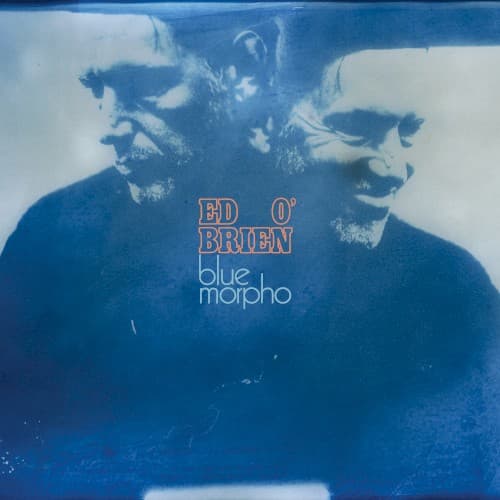
Like its predecessor, O’Brien’s second album (and first under his full name), Blue Morpho, hearkens back to his time living in Brazil in the early 2010s—it’s named for a rare species of butterfly that he spotted during his travels in the country. But where Earth imported Brazilian rhythms to mediate its wild pendulum shifts between rave and reverie, immersive Blue Morpho opener “Incantations” sounds like it was actually birthed in the middle of a rainforest, its dewy acoustic-guitar lines and meditative melodies indicative of an artist finding sanctuary in the subliminal rhythms of nature. Over the course of the song’s nearly eight-minute runtime, “Incantations” intensifies into a ritualistic spectacle of frantic hand percussion and eerie harmonies before suddenly snapping into a taut motorik rock-out, as if plotting O’Brien’s own journey from the fog of depression back into the hustle and bustle of the waking world.
While Blue Morpho actually took shape far from the jungles of South America, O’Brien found equally evocative inspiration in the misty mountainsides of Wales, where he spent his post-lockdown days embarking on long, restorative walks to clear his head. A similar wandering spirit pervades Blue Morpho: Where Earth often sounded like the kind of album Radiohead might’ve made post-Bends had they hopped onto the late-’90s rocktronica bandwagon, Blue Morpho ventures further from the British alt-rock tradition. O’Brien serves less as a typical frontman than an all-seeing auteur who, if not quite willing to disappear completely, maintains a much shadowier presence in its shape-shifting sound world.
Earth hinted at this direction with atmospheric comedown tracks like “Mass” and “Sail On”—songs that felt a little slight and underdeveloped in the context of the record. But on Blue Morpho, that spectral strain of psych-folk is given the space to flower in cinematic splendor. O’Brien works again with some familiar faces (Selway, Earth alum Dave Okumu), but also revamps his supporting cast to include Adele/Paul McCartney producer Paul Epworth, jazz flautist Shabaka Hutchings, and, most crucially, Estonian composer Tõnu Kõrvits and the Tallinn Chamber Orchestra. If making this album was a form of therapy for O’Brien, then Kõrvits and co. were the chief healing practitioners, as their sumptuous string arrangements elevate Blue Morpho’s spectacular title track from earthbound lullaby into heavenly out-of-body experience, and enhance “Sweet Spot” into a radiant vision of Nick Drake covering “Paranoid Android.” But even the songs without symphonic embellishment possess a similarly mercurial and majestic quality: Just as Yves Fernandez’s “Lowdown”-copping bass line on “Teachers” seems to direct O’Brien back to the dance tent, the vibe swiftly shifts from disco party to horror movie, thanks to a 360-degree surge of eerie textures that threaten to swallow the song whole.
Blue Morpho’s big swings are balanced by a couple of ambient instrumentals that execute the guiding music-as-therapy concept in literal terms, with the ’70s-kosmiche synthphony “Solfeggio” and Shabaka-supplied flute of “Thin Places” presenting O’Brien as a firm believer in the 432hz legend. If sequencing these pieces back to back threatens to stymie Blue Morpho’s free-flowing momentum, the closing “Obrigado” showcases the positive aftereffects of all his soul-searching. O’Brien looks once again to Brazil for inspiration as he dreams of the “sunny days” that await. Yet the Tropicalia-tinged song isn’t the happy ending it appears to be: Partway through, it breaks down and is rebuilt as a laser-lit shrine to Pink Floyd, a band that Radiohead always gets compared to, even though they’ve never fully copped to their influence. But here, O’Brien openly embraces the association by stepping onto the scorched ruins of Pompeii to squeeze out a Gilmour-esque guitar solo while backing singer Eska triggers the “Great Gig in the Sky” vocal fireworks. Given all the personal turmoil that brought O’Brien to this moment, the sudden Floydian flashback actually makes perfect sense: After all, despite its cosmic connotations, The Dark Side of the Moon was really more about psychology than astronomy; likewise, Blue Morpho’s transportive ambitions are ultimately a vessel for O’Brien’s innerspace explorations.