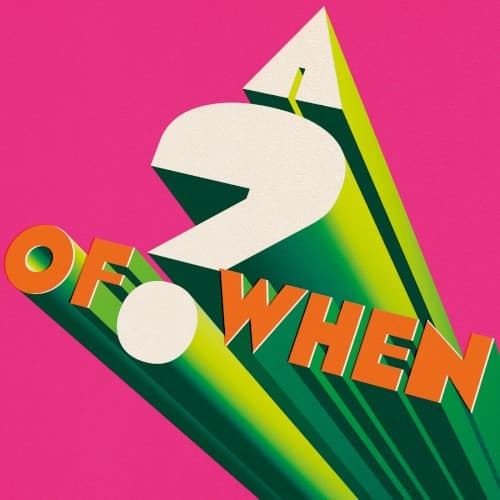


A lot happens in “Bad Moons,” the climactic centerpiece of American Football’s fourth album. In his earnest Midwestern elocution, Mike Kinsella alludes to drug and alcohol abuse, marital infidelity and mid-life sexual awakening, self-harm and suicidal ideation, parts work therapy and a (relatively) happy ending to put the pain in perspective. But all that blood on the page can’t compare to what happens after he stops singing. As the quartet builds toward a post-rock crescendo and a wistful, snowcapped outro that’s lightly accompanied by the sound of children on a playground, Kinsella and his bandmates spin the narrative in a kaleidoscopic language all their own.
These kinds of performances help illustrate why American Football remain peerless. Even after they gradually became one of the most influential and imitated acts of the 21st century, their sound still feels singular, and new generations continue to discover the majesty and melancholy of their pivotal 1999 debut, made when they were unassuming college students in Urbana, Illinois. Since reuniting in 2014 after a decade-and-a-half of solo careers, actual careers, and day jobs, American Football can be counted among the bands who’ve tried picking up where that landmark left off. On 2016’s better-than-you-remember comeback album, they largely abandoned its sense of atmosphere, focusing on more linear songcraft and placing its heartbroken characters a quarter-century down the road. By the time of their 2019 follow-up, they seemed to realize the appeal of their music went beyond the tormented subject matter and wistful sing-alongs and found new inspiration in following each other’s ideas toward unexpected breakthroughs.
On LP4, everything is on the table. This means, in addition to their usual servings of twinkling, polyrhythmic balladry, American Football can sound just like Disintegration on “No Feeling,” or like the Smiths, if they all got their master’s degrees at jazz school instead of breaking up, on “Patron Saint of Pale.” They can write their hookiest pop song yet with “Wake Her Up” and devote two tracks to sparse, instrumental motifs that tug at the momentum like bad news over the phone during an intimate gathering. Kinsella now shows the cracks in his eternally youthful voice, choking through the word “collapsed” in “Bad Moons,” then in “Patron Saint of Pale,” sells an exhausted, off-the-cuff “Fuck it!” before proposing a game of rock-paper-scissors to settle a messy divorce.
For their first album in seven years, American Football look to a lineage of mortality-haunted, late-era landmarks. “To me, it’s like Mule Variations or Time Out of Mind,” guitarist Steve Holmes said of the album in Spin. “It’s got some middle-aged stuff happening and I think there’s a sweep and a grandeur to the music.” Like those albums, LP4 operates with its own sense of logic and time, sounding alternately playful and deadly serious, proudly complex and refreshingly pared back. Consider this: From a band whose legacy might come down to their inventive guitar parts, this record presents their first actual guitar solo—and it mostly consists of just two notes.
Co-produced with Sonny DiPerri, it is an ideal headphones album, designed to sound immersive and textured and meticulous, showing that those synth-strings aren’t the only thing these guys picked up from the Cure. Sonically, musically, compositionally, it’s a triumph. Thematically, it’s another story. In a powerful and disquieting GQ profile, the band and some immediate friends and family unraveled the struggles that have plagued their lucrative but life-altering reunion, a kind of cautionary tale for leveling up after settling down. Even for an artist like Kinsella who’s never been shy about autobiographical literalism in his music, some of the revelations felt shocking. “I used to be insecure, but now it’s like, ‘You cannot kill me. I’m dead,” he explained. “I got divorced with kids, and I’m responsible for that. I’m dead.”
To varying degrees, I’ve found the exploration of masculinity in Kinsella’s lyrics to be uncommonly generous and self-aware as he’s navigated middle age and newfound notoriety. Going back to the formative relationship he mourned on the first American Football record, he’s now offered a fairly comprehensive, unflinching portrait that weaves through young adulthood, marriage, and parenthood, through grief, addiction, divorce, and, eventually, falling in love again. And that last item often puts us closer to those teenage feelings than heartbreak ever can. (“I need a new muse,” he sang at the top of his 2020 solo album, The Avalanche; be careful what you wish for, he seems to preach here.)
In that sense, LP4 shares another quality with the ’90s Tom Waits and Bob Dylan records that Holmes cited: American Football have aged into somewhat unprecedented territory. An emo band whose members might otherwise now be at their most stable and content, they still seem authentically driven by unbridled, urgent emotion—only now their breakups involve lawyers, and the friendship drama occurs between people who rely on each other for income. So even if the songwriting guides the band toward the most impressive, experimental reaches of their sound, it also becomes their record most tethered to the lyric sheet and Kinsella’s role as a frontman. It’s a dizzying effect, as the polish of his surroundings never distracts from the rawness at its core.
“I honestly never planned on getting old,” Kinsella wails in “No Feeling,” repurposing a crucial word from the debut to deliver one of the record’s many gut punches. You believe him, and so by the time we reach the potentially concerning finale of “No Soul to Save,” he earns our pity as he decries choosing a life in the public eye: “I’ve made too many mistakes,” he admits over a shifting drumbeat that sounds like finding your footing while getting knocked over repeatedly by waves.
And yet, here he is, all those mistakes later, sorting through a lifetime of wreckage with guys he’s known since it was just starting to fall apart. For a band whose signature sound arrived when their ambitions were low and their goals were undefined—“If you asked us at the time if we actually finished the songs,” he confessed to Last Donut of the Night about the debut, “we would’ve said they were 70% done?”—American Football still finds their purest inspiration in figuring it all out together. As hopeless as things get, there’s comfort in knowing the story is still being written.