Wavelength
Wavelength
Rate and discover music with friends
pitchfork

pitchfork

Ripped and Torn

Ripped and Torn

Lifeguard (2025)

7.9/ 10

The young Chicago band crams its debut album with streamlined hooks and a reverence for pop, punk, and post-punk history.

Kai Slater, the 20-year-old guitarist and co-vocalist of rising post-punk band Lifeguard, edits and produces a zine called Hallogallo. Named after a song by Krautrock pioneers Neu! and inspired by punk and mod revival zines from the ’80s, it is painstakingly handmade, detailing and in turn fueling a brilliant young DIY art-punk scene in Chicago that’s generated bands like Horsegirl, Friko, and Post Office Winter. Lifeguard’s debut album Ripped and Torn—itself named after an early and influential British punk zine—is curious and exciting in all the same ways as Hallogallo. Though its medium and methods might be familiar, the album is made with such intensity and conviction that it feels essential: This is the rare modern album that makes indie rock sound life-changingly important.

The thrills emerge suddenly and don’t let up. “It Will Get Worse” begins with a lazy guitar and haymaker cymbal crashes that could easily have been borrowed from the last album by young post-punk prodigies to feel this vital, Parquet CourtsLight Up Gold. But the pace changes on a dime and races forwards, propelled by Isaac Lowenstein’s skittish drums and Asher Case’s devastatingly simple bassline. Slater’s guitar is a serrated blade, top-end and atonal, but he pulls back the moment it’s called for, switching to sliding octaves like a spindly young Tom DeLonge. He sings “no one around here” over and over again, a mysterious but simple lyric that sticks to the song like freshly gored chewing gum. Halfway through he eschews lyrics entirely and replaces them with la-la-las, demonstrating a refreshing and well-earned confidence in a three-note melody.

It would be easy for a band like Lifeguard, particularly one so young, to fall into noise for noise’s sake, hammering the same atonality to mask a lack of imagination. Instead, they focus on their hooks, which often appear from nowhere. The shifty monotone of “Like You’ll Lose” stutters into a surprisingly mournful-sounding chorus, while the harder-edged “France And” breaks into a refrain consisting of two notes and three individual words: “Oh, oh/I am, I am.”

In fact, a theme throughout the album is how good both Slater and Case are at singing “oh” sounds, either as part of a word or just on its own. Slater’s voice is higher and raspier, better suited to the power pop he channels and the music he makes alone as Sharp Pins; Case’s deeper, icier voice is directly influenced by the ’80s new wave bands he loves. But they both pronounce “oh” with a cultivated nonchalance that bursts through the compression on the mics. It ties them to the history of this music—evidence of pop and punk having gone back and forth across the Atlantic countless times over the past 50 years. But it’s also evidence of a truth Lifeguard seem to understand on an elemental level: There’s no need to clutter up a mix or overwrite a song when you can make a vowel sound that good on its own.

An encyclopedia’s worth of reference points has already been lobbed at Lifeguard’s music, and, thumbing through Hallogallo and reading interviews with the band members, it’s clear they’ve not stumbled on their sound by accident. But there are so many ideas coming together on Ripped and Torn that it reads more like a Rorschach test than a bibliography. “Under Your Reach,” for example, opens with a descending dub bass that calls to mind UK sound system culture of the ’70s and ’80s. But over the past couple of years, the members of Lifeguard have been bonding over a shared love of British dance-punk revival and new rave. That bassline and the shouty, open hi-hat syncopations of “How To Say Deisar” will sound instantly familiar to anyone who heard Klaxons around the time the members of Lifeguard were born.

Ripped and Torn could have been a lot longer than this half-hour; the tracklist originally revolved around a spliced-together 12-minute song inspired by British experimentalists This Heat and Ladio Bolocko. Instead they mete out bursts of noise across three short interludes, acrid little palate cleansers. That in itself shows impressive restraint and an understanding of dynamics that very few bands, no matter how old or experienced, ever come to. So while Lifeguard can sound reckless, atonal, and jagged, they’re smart enough not to follow those impulses to the point of self-indulgence. Ripped and Torn is the sound of a band making music with the care and attention of a kid standing over a Risograph, printing up the interviews his friends have typed up for their zine, leaving fingerprints on every page.

Kai Slater, the 20-year-old guitarist and co-vocalist of rising post-punk band [Lifeguard](https://pitchfork.com/artists/lifeguard), edits and produces a zine called *Hallogallo*. Named after a song by Krautrock pioneers [Neu!](https://pitchfork.com/artists/3024-neu) and inspired by punk and mod revival zines from the ’80s, it is painstakingly handmade, detailing and in turn fueling a brilliant young DIY art-punk scene in Chicago that’s generated bands like [Horsegirl](https://pitchfork.com/artists/horsegirl), [Friko](https://pitchfork.com/artists/friko), and Post Office Winter. Lifeguard’s debut album *Ripped and Torn*—itself named after an early and influential British punk zine—is curious and exciting in all the same ways as *Hallogallo*. Though its medium and methods might be familiar, the album is made with such intensity and conviction that it feels essential: This is the rare modern album that makes indie rock sound life-changingly important. The thrills emerge suddenly and don’t let up. “It Will Get Worse” begins with a lazy guitar and haymaker cymbal crashes that could easily have been borrowed from the last album by young post-punk prodigies to feel this vital, [Parquet Courts](https://pitchfork.com/artists/30832-parquet-courts)’ [Light Up Gold](https://pitchfork.com/reviews/albums/17405-light-up-gold). But the pace changes on a dime and races forwards, propelled by Isaac Lowenstein’s skittish drums and Asher Case’s devastatingly simple bassline. Slater’s guitar is a serrated blade, top-end and atonal, but he pulls back the moment it’s called for, switching to sliding octaves like a spindly young Tom DeLonge. He sings “no one around here” over and over again, a mysterious but simple lyric that sticks to the song like freshly gored chewing gum. Halfway through he eschews lyrics entirely and replaces them with *la-la-la*s, demonstrating a refreshing and well-earned confidence in a three-note melody. It would be easy for a band like Lifeguard, particularly one so young, to fall into noise for noise’s sake, hammering the same atonality to mask a lack of imagination. Instead, they focus on their hooks, which often appear from nowhere. The shifty monotone of “Like You’ll Lose” stutters into a surprisingly mournful-sounding chorus, while the harder-edged “France And” breaks into a refrain consisting of two notes and three individual words: “Oh, oh/I am, I am.” In fact, a theme throughout the album is how good both Slater and Case are at singing “oh” sounds, either as part of a word or just on its own. Slater’s voice is higher and raspier, better suited to the power pop he channels and the music he makes alone as [Sharp Pins](https://pitchfork.com/artists/sharp-pins); Case’s deeper, icier voice is directly influenced by the ’80s new wave bands he loves. But they both pronounce “oh” with a cultivated nonchalance that bursts through the compression on the mics. It ties them to the history of this music—evidence of pop and punk having gone back and forth across the Atlantic countless times over the past 50 years. But it’s also evidence of a truth Lifeguard seem to understand on an elemental level: There’s no need to clutter up a mix or overwrite a song when you can make a vowel sound that good on its own. An encyclopedia’s worth of reference points has already been lobbed at Lifeguard’s music, and, thumbing through *Hallogallo* and reading interviews with the band members, it’s clear they’ve not stumbled on their sound by accident. But there are so many ideas coming together on *Ripped and Torn* that it reads more like a Rorschach test than a bibliography. “Under Your Reach,” for example, opens with a descending dub bass that calls to mind UK sound system culture of the ’70s and ’80s. But over the past couple of years, the members of Lifeguard have been bonding over a shared love of British dance-punk revival and new rave. That bassline and the shouty, open hi-hat syncopations of “How To Say Deisar” will sound instantly familiar to anyone who heard [Klaxons](https://pitchfork.com/artists/4964-klaxons/) around the time the members of Lifeguard were born. *Ripped and Torn* could have been a lot longer than this half-hour; the tracklist originally revolved around a spliced-together 12-minute song inspired by British experimentalists [This Heat](https://pitchfork.com/artists/4216-this-heat) and [Ladio Bolocko](https://pitchfork.com/artists/2406-laddio-bolocko). Instead they mete out bursts of noise across three short interludes, acrid little palate cleansers. That in itself shows impressive restraint and an understanding of dynamics that very few bands, no matter how old or experienced, ever come to. So while Lifeguard can sound reckless, atonal, and jagged, they’re smart enough not to follow those impulses to the point of self-indulgence. *Ripped and Torn* is the sound of a band making music with the care and attention of a kid standing over a Risograph, printing up the interviews his friends have typed up for their zine, leaving fingerprints on every page.

Rate music on Wavelength

Download Wavelength to share your own reviews and see what your friends think.

Rate music on Wavelength

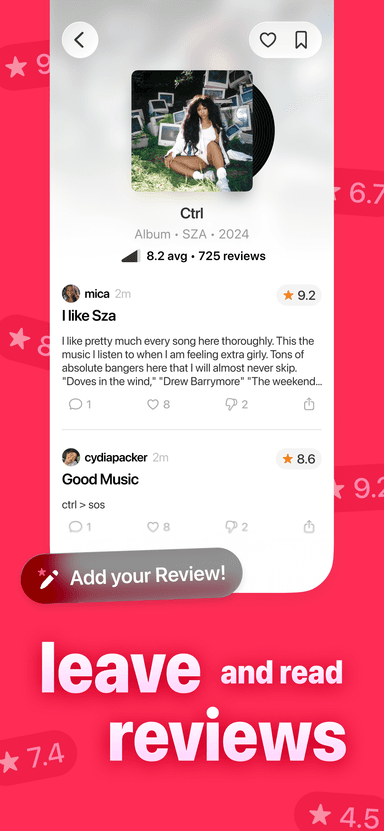
A free place to rate albums and write reviews with friends. Letterboxd-style, for music.

Download on the App Store