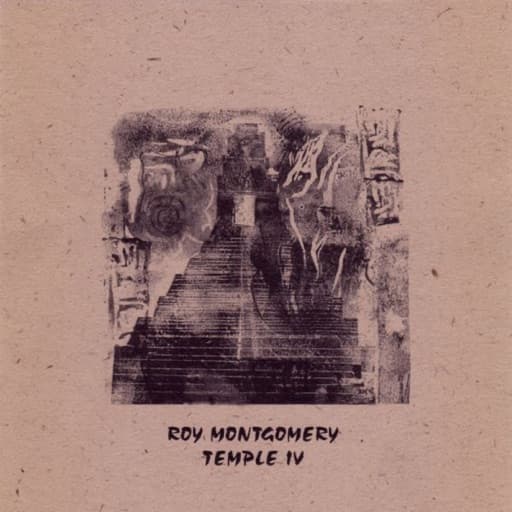
It’s a common misconception that the cult New Zealand indie label Flying Nun launched with the Clean’s 1981 single “Tally Ho!.” The Dunedin band’s debut would make sense as a shot across the bow: a jaunty, bratty organ choogle declaring “yesterday’s another day” to shake off the gray drudgery of the nation’s ’70s—of rugby, racing, and pubs teeming with cover bands. In fact, FN001 was that year’s “Ambivalence” by Christchurch trio the Pin Group, a flinty post-punk rumble about two would-be lovers each baffled by the other’s inscrutability.
Unlike the Clean, the Pin Group would have made terrible ambassadors for Flying Nun, their attitude fairly summed up by the title of that first single. They refused to be photographed and struggled to convey their sound in the recording studio, even going so far as attempting to prevent copies of “Ambivalence” from getting to local reviewers, and apologizing for their sonic limitations in the sleeve to the follow-up single. By the time they released their third and final 7", “Go to Town,” their mercurial frontman and guitarist Roy Montgomery had left to go traveling. He didn’t hear the finished product until Flying Nun sent a copy to England, where Montgomery, then in his early 20s, had sent himself on an “anti-sabbatical” to see in the flesh the acts he had only previously read about in expensively imported copies of NME.
Today, we’re in the midst of a gentle Roy-naissance: Grouper has long led the charge, citing him as a key influence and releasing splits and reissues on her label. Dry Cleaning guitarist Tom Dowse cited his playing as an inspiration on the London band’s second album, and they invited him to open for them in New Zealand. He appears on harpist Mary Lattimore’s new album and is working on a collaboration with London songwriter Martha Skye Murphy. In March, his masterpiece, 1996’s Temple IV, is getting its first vinyl pressing. It was one of two solo albums recorded simultaneously and released in quick succession that would establish the wordless, pummeling thicket of sound that would become the Montgomery trademark.
Back in the early ’80s, Montgomery was still trying to work out his “relationship with the ‘rock’ medium,” as he would later tell the Wire. His disaffected baritone had earned him sufficient comparisons to Ian Curtis that someone graffitied the words “ROY DIVISION” on the front of the EMI record shop where he worked, a jibe he found both funny (it lives on as his Instagram handle) and fair comment. On that trip to the UK in 1982, he became comrades with the Cure (even witnessing the recording sessions for Pornography), Echo and the Bunnymen, and the Fall, who he described as “very hospitable, even when I told [Mark E. Smith] that his favorite brew tasted like used sump oil from a Morris Minor.”
From his year in England, Montgomery concluded that no one other than the Cure was making ends meet as a musician: “Any faint notions of a viable rock’n’roll lifestyle were quickly extinguished.” He returned to New Zealand and released just one single under the name the Shallows in 1985, “Suzanne Said,” which showed a dronier side to his playing inspired by his burgeoning interest in film soundtracks. He took up a degree in Russian language and literature and got involved in the avant-garde theater scene as a practitioner, soundtracker, and critic. One might discern something about Montgomery’s outlook at the time from his droll review of a 1989 production of Jean-Paul Sartre’s No Exit: “Existentialism can be fun!”
In the early ’90s, he was cajoled into adding his gauzy guitar textures to the experimental band Dadamah, who released one great album and played live just three times or so before breaking up—perhaps owing to Montgomery’s dislike of live sound; perhaps too because his partner, Jo, died that year. He set off on the road again. “I felt I owed it to her to travel and deal with what had happened,” he later told The Guardian. He went to the Guatemalan rainforest and broke into the ancient Mesoamerican pyramid Tikal Temple IV to stay overnight and undertake a focused personal trial. “I wasn’t in advance convinced that I had to go there to make an album…it was more about getting there and sitting still for a little while,” he said. “And if that’s all it was, a moment, pure spirit, that would have been enough.”
But Montgomery made the moment last, turning his long night at the temple into a towering record of what it is to live and commune with grief. At the turn of 1995, in an empty apartment at 324 East 13th St in New York, equipped with a four-track recorder, some effects boxes, and an old department-store guitar, he recorded those defining first two solo albums: Scenes From the South Island looked back towards home, while Temple IV was his attempt to reinhabit his relationship with Jo. Like its monumental namesake, the latter remains grounded in the material world while reaching for a realm beyond it as Montgomery tills this unmapped kingdom of loss in steady, melancholy strums. At times, he plays as if he were feverishly trying to reach someone, or create the spark that might resuscitate a memory into a presence. Storms and static strafe his scenes, but the deep furrow plowed by his guiding hand remains consistent. The music demands the intimate focus and willing adjustment of witnessing Rothko’s “Black on Maroon” works in low light.
Temple IV’s experimental nature was not driven by wilful boundary-pushing, à la avant-guitar forebears like Glenn Branca or Rhys Chatham, but by circumstance. The four-track enforced a minimalist approach, and Montgomery used a cheap Teisco guitar with four pick-ups: ostensibly a feature, but in practice a bug, creating an excess of electrical interference. The Japanese knock-off was a workhorse for blues musicians who couldn’t afford fancier guitars, whose ability to wring beauty from such simple means was an inspiration to Montgomery. (He overdubbed some Moog synthesizer later.) He also professed his own limitations as a musician who could neither read music nor play especially complicated chords or melodies, who claimed no awareness of any world musics, like Indian raga, whose influence one might discern in his undulating hum: “I could play barre chords and, sometimes, leaving a string open by mistake created a droning aspect I liked,” he said. “I fumbled my way to that sound.”
Yet the results are pristine in their way, the four tracks of guitar often so distinct that each can seem to take on the character of a different element. The contemplative opener “She Waits on Temple IV” is a 12-minute burble of tributaries braiding into a single seam, fizzes of static and feedback glinting like silver in the silt. One guitar line is recorded close and bright; others bleed to fill the frame and then recede; the most distant seems to evanesce at the limit of the horizon, lending this patient composition a sense of infinite hope—only for the clenched static of “Departing the Body” to quickly annihilate that peace. The dramatic arc of Temple IV suggests both the conflicting stages of grief and the Mayan belief that death parts the soul from its physical form, with song titles that reference the religion’s symbols and ideas. It’s a work of fraught transmutation: body into spirit, loss into some manner of acceptance, pain into self-expression.
Miraculously, on Temple IV, both body and spirit prevail. The music is as intensely physical as it is seemingly divine, as thrilling in its viscera as it is sensitive to the disembodying feeling of grief and the unexpected flashes of reanimation in its wake. “Departing the Body” attempts to depict the separation of flesh from spirit as heavenly, its initial billowing drone washed in a benevolent glow as peaceful as any depicted in children’s images of the afterlife. But then violence sets in, with static that whirrs like a tornado tail scarring the ground and coils of feedback piercing the squall. The comparatively brief, anxious jangle of “The Soul Quietens” suggests the soul does anything but. “The Passage of Forms” approaches a formless high, Montgomery’s insistent strum melting into the ether. Rather than Montgomery’s avowed “fumbling,” these tactile evocations suggest a direct line from his gut to his guitar.
In grief, we look for signs and symbols, and often find them in nature. For Montgomery, the Mayan deities of jaguars and snakes connected to this music in a way “that I hoped wouldn’t be seen as just tourism,” he said. In Mayan culture, the jaguar was able to cross between the two worlds of day and night, but given its ease in the latter was regarded as a member of the underworld. The snake carried celestial bodies across the heavens, and with the shedding of its skin became a symbol of rebirth and renewal. Montgomery has these beings embody the bereaved’s conflict between hope and defeat in Temple IV’s most fearsome moment. “Jaguar Meets Snake” is eight minutes of white-knuckle feedback that seems to shear flesh from bone. Something about its gnashing intensity evokes the crunch point of irreconcilable pain, where nails dug furiously in palms offer a poor substitute for absolution. But the closer you listen, the more tenderness emerges: The wooly thrum below the noise suggests a safety net, one that allows the feedback to begin to jump and lurch with zip-wire glee, finding playfulness and freedom. In its most piercing blasts, there is the euphoria of being able to feel again after a long dull spell.
Even after that rebirth, Montgomery is not done with epics: The near 15-minute “Above the Canopy” is the longest but simplest song, a dense, insistent strum that seems to ring with good news, quietly triumphal and undisturbed by more than a whisper of static. The shortest, closer “Jaguar Unseen,” is almost groovy in its looseness, slipping from the scene in a swift fade-out: no grand climax or evolution. The wispy, mellowed guitars are as in sync as they were on “She Waits on Temple IV,” suggesting a cycle: another inevitable ascent up the mountain to come, and a calm readiness with which to approach it.
Decades later—after sporadic flurries of music in between completing a Ph.D., lecturing, and working as a volunteer firefighter after the 2011 New Zealand earthquakes—Montgomery would say that it was often intense life experiences, and particularly grief, that brought him back to music after long periods of inactivity. “Critical mass is reached when I’m thinking about doing a piece that acknowledges someone’s life,” he said. The Shallows’ “Suzanne Said” had memorialized Suzanne Irvine, a key figure from the Christchurch scene. In 2016, four decades after the Pin Group’s “Ambivalence,” Montgomery released four albums, collected under the title R M H Q: Headquarters, which hymned the likes of Sam Shepard and Popol Vuh’s Florian Fricke, evoked the death and destruction wrought by those earthquakes, and acknowledged the cancer that his partner and mother to their two children Kerry McCarthy had been diagnosed with in 2014. She died in 2021. The couple had been together 20 years, and Montgomery made 2022’s Camera Melancholia in the immediate aftermath: “I needed to respond while things were still raw rather than wait years, which is what happened when my partner Jo died in 1992,” he said.
In a recent post on Instagram, Montgomery shared a cocksure image of himself staring down the lens from early 1995, having just finished recording Scenes From the South Island and Temple IV in New York. “I may look self-satisfied but the Olympus OM-1 is on self-timer and they were hard, lonely yards,” he captioned it. He paid tribute to the people who pulled him through, among them the Clean’s Hamish Kilgour, who died in late 2022. “I am not done remembering you Hamish,” he wrote. The ornery young Montgomery may have made a terrible ambassador for any sound or scene. But in 1995, the sublime incantations of Temple IV set out his emotional and formal acuity for memorialization, and established a monolith to which listeners might make their own pilgrimage on long dark nights of the soul.