Wavelength
Wavelength
Rate and discover music with friends
pitchfork

pitchfork

Still

Still

Erika de Casier (2024)

7.4/ 10

Embracing the Y2K R&B of her youth, Erika de Casier molds the silvery avant-gardism of artists like Aaliyah and Janet Jackson into an ultra-stylish throwback for the era of ASMR.

The best era of pop music is the one that you grew up with—a truism that feels like fact if, like Erika de Casier and this writer, music television was your oxygen in the year 2000. Recently the conveyor belt of retromania has returned the sparkly, silvery aesthetic of Aaliyah, TLC, and Jennifer Lopez to relevancy, but Y2K revivalism finds its most meticulous acolyte in de Casier, whose third album is a faithful evocation of a very specific moment in Black American music—a time when pop domination and electronic avant-gardism were two sides of the same coin.

On her previous albums, the Copenhagen singer and producer combed through ’90s and ’00s UK garage and glimmers of IDM as well as the strain of juddering future-R&B separatism led by Timbaland, Missy Elliott, and Aaliyah. The turn-of-the-millennium styling of 2021’s Sensational elevated de Casier to critical darling, but her biggest commercial success has come through collaboration with the K-pop outfit NewJeans, translating Jersey club bounce into two stratospheric singles, “Super Shy” and “Cool With You.”

On Still—the title references both J.Lo and Dr. Dre—de Casier narrows her focus, sticking mostly to a palette of sweet, head-register vocals in the lineage of Janet, Mýa, and Ashanti; plucked strings and stuttering rhythms à la Darkchild and Timbaland; and an air of restraint that feels purposely adult, as outlined by Sade and Maxwell. The Proustian madeleine tastes good. Slippery, sensual “ooh” is a testament to Aaliyah and Tim’s greatest hits, a jerking boudoir grind that throws in a line from Ice Cube and Ms. Toi’s raunch anthem “You Can Do It.” There are fourth-wall-breaking ad-libs straight from the postmodern ’90s—some of them in Danish—like the “Stop!” that brings “Ice” to a halt. On that track, which grounds the album’s flawlessly catchy middle third, de Casier brings in Tampa rap duo They Hate Change for a sweet-and-sour duet like they used to do ’em—accusations are thrown, someone’s “on freezer mode” and Copenhagen’s giving the boys “frosty soles.”

The rise of Aaliyah in the middle of the ’90s called time on the big-haired belters of the previous generation and ushered in an intimate, heady style that remains the blueprint for countless young singers, including today’s close-mic stylists Billie Eilish and Olivia Rodrigo. De Casier pushes this technique to fascinating extremes, her vocals set so far back in the mix they’re practically in reverse. Her performance on “The Princess,” a feminist reckoning with desire (“Is it wrong of me to want all the things I was shown all my life?”), is like sandpaper meeting velvet, showcasing her absolute control on a minute, ASMR-like scale.

De Casier’s subject matter is still mostly romantic, still riddled with modern problems—typically mediated through her phone. (The techno-pessimists of millennial R&B were some of the first to point out the romantic dangers of text and email.) Sometimes de Casier is the one making the booty call, like on “Home Alone,” where pillow talk is punctuated by sweat droplets and wisps of accordion. Other times she projects her tech anxieties onto an ex: “When your phone rings do you wish it was me? With my cute face that showed up on your screen?” On “My Day Off,” she draws her digital boundaries for the umpteenth time: “You can send me an email with all of your shit,” she sighs, “I need to do laundry, ’cause it doesn’t do itself.” Welcome to the boring dystopia.

From a wide angle it all adds up to a modern R&B version of “record collection rock”—in which the meticulous reproduction of vintage attributes becomes self-congratulatory catnip for the nerdiest listeners, and/or fans who remember it from the first time round. Indeed, I like it a lot. But the closer you get to Still, the more its anachronisms stand out. Most obvious from a production perspective are the languid, Afrobeats-shaped grooves of “Test It” and “Home Alone,” which hold up a mirror to the globalized pop world of the 2020s. For neophiles hungry for glimmers of the real future, not the old one, these slow-burners might be the most interesting ideas on the album, proposing de Casier as the princess of a new, borderless quiet storm. The present also bursts in on barely-there break-up ballad “Twice,” as pop traveler Blood Orange reminds us of his London accent in a wistful spoken verse: “You know my walls are tainted and nothing ever looks the same/I pass your flat on the night bus.”

De Casier, who turns 34 in March, has talked about being glued to MTV when she was a kid, finding solace in the visibility of Black pop icons as a mixed-race girl in a white country. But Aaliyah and Janet weren’t the only role models available on MTV Nordic—coincidentally, the same channel I was watching in those years. She might have idolized Mary J. Blige, Lauryn Hill, Toni Braxton. Why this sound, and not anything else from the riches of millennial R&B?

Maybe it’s about control, to borrow a term from Janet. With their silver suits and cutting-edge CGI, Tim and Missy offered an Afrofuturist vision of Blackness aligned with technology—and with it, perhaps, the opportunity to design yourself anew. De Casier’s songwriting often returns to demands for autonomy and order, whether chastising an “indecisive” lover or admitting she’s scared of showing her feelings. On “Busy,” from her last album, she lists off her morning routine—vitamins, meditation, skincare—in the impossible search for perfection. She even invented a raven-haired alter ego, Bianka, as a vessel to safely explore her diva-ish tendencies, though it seems Bianka is no longer necessary: On the cover of Still, encased in a black leather trench coat and bug-eye sunglasses, de Casier becomes the ice princess of her own dreams.

Like the superhero’s cape, costumes are powerful and pretend at the same time. Still imparts a similarly paradoxical thought. For all its finesse, it can obviously never replicate the futurism that defined its biggest inspirations; these classy reproductions only highlight the chasm between us and that halcyon moment. On the closing ballad “Someone,” de Casier inadvertently grapples with the same problem: “Someone once told me, ‘Just be yourself,’” she whispers—but as we all know, it’s not that easy. “Forgive me if I can’t do that, right now I’m just trying to be someone.”

The best era of pop music is the one that you grew up with—a truism that feels like fact if, like [Erika de Casier](https://pitchfork.com/artists/erika-de-casier/) and this writer, music television was your oxygen in the year 2000. Recently the conveyor belt of retromania has returned the sparkly, silvery aesthetic of [Aaliyah](https://pitchfork.com/artists/10601-aaliyah/), [TLC](https://pitchfork.com/artists/29154-tlc/), and [Jennifer Lopez](https://pitchfork.com/artists/10663-jennifer-lopez/) to relevancy, but Y2K revivalism finds its most meticulous acolyte in de Casier, whose third album is a faithful evocation of a very specific moment in Black American music—a time when pop domination and electronic avant-gardism were two sides of the same coin. On her previous albums, the Copenhagen singer and producer combed through ’90s and ’00s UK garage and glimmers of IDM as well as the strain of juddering future-R&B separatism led by [Timbaland](https://pitchfork.com/artists/5205-timbaland/), [Missy Elliott](https://pitchfork.com/artists/1330-missy-elliott/), and Aaliyah. The turn-of-the-millennium styling of 2021’s [Sensational](https://pitchfork.com/reviews/albums/erika-de-casier-sensational/) elevated de Casier to critical darling, but her biggest commercial success has come through collaboration with the K-pop outfit [NewJeans](https://pitchfork.com/artists/new-jeans/), translating Jersey club bounce into two stratospheric singles, “Super Shy” and “Cool With You.” On *Still*—the title references both J.Lo and Dr. Dre—de Casier narrows her focus, sticking mostly to a palette of sweet, head-register vocals in the lineage of [Janet](https://pitchfork.com/artists/10541-janet-jackson/), Mýa, and Ashanti; plucked strings and stuttering rhythms à la Darkchild and Timbaland; and an air of restraint that feels purposely adult, as outlined by [Sade](https://pitchfork.com/artists/24891-sade/) and [Maxwell](https://pitchfork.com/artists/27978-maxwell/). The Proustian madeleine tastes good. Slippery, sensual “ooh” is a testament to Aaliyah and Tim’s greatest hits, a jerking boudoir grind that throws in a line from [Ice Cube](https://pitchfork.com/artists/2128-ice-cube/) and Ms. Toi’s raunch anthem “[You Can Do It](https://www.youtube.com/watch?v=6auk1TkGtVQ).” There are fourth-wall-breaking ad-libs straight from the postmodern ’90s—some of them in Danish—like the “Stop!” that brings “Ice” to a halt. On that track, which grounds the album’s flawlessly catchy middle third, de Casier brings in Tampa rap duo [They Hate Change](https://pitchfork.com/artists/they-hate-change/) for a sweet-and-sour duet like they used to do ’em—accusations are thrown, someone’s “on freezer mode” and Copenhagen’s giving the boys “frosty soles.” The rise of Aaliyah in the middle of the ’90s called time on the big-haired belters of the previous generation and ushered in an intimate, heady style that remains the blueprint for countless young singers, including today’s close-mic stylists [Billie Eilish](https://pitchfork.com/artists/billie-eilish/) and [Olivia Rodrigo](https://pitchfork.com/artists/olivia-rodrigo/). De Casier pushes this technique to fascinating extremes, her vocals set so far back in the mix they’re practically in reverse. Her performance on “The Princess,” a feminist reckoning with desire (“Is it wrong of me to want all the things I was shown all my life?”), is like sandpaper meeting velvet, showcasing her absolute control on a minute, ASMR-like scale. De Casier’s subject matter is still mostly romantic, still riddled with modern problems—typically mediated through her phone. (The techno-pessimists of millennial R&B were some of the first to point out the [romantic](https://www.youtube.com/watch?v=NiF6-0UTqtc&t=105s) [dangers](https://youtu.be/w4DV-UNO4kI?si=sA1zGkdUdf9nrX4i&t=71) of [text](https://youtu.be/8WYHDfJDPDc?si=-vNb1TZilKFbP-lP&t=195) and [email](https://www.youtube.com/watch?v=IgWJ2jy1Vy0).) Sometimes de Casier is the one making the booty call, like on “Home Alone,” where pillow talk is punctuated by sweat droplets and wisps of accordion. Other times she projects her tech anxieties onto an ex: “When your phone rings do you wish it was me? With my cute face that showed up on your screen?” On “My Day Off,” she draws her digital boundaries for the umpteenth time: “You can send me an email with all of your shit,” she sighs, “I need to do laundry, ’cause it doesn’t do itself.” Welcome to the [boring dystopia](https://www.vice.com/en/article/aekd5j/the-rise-and-fall-of-boring-dystopia-the-anti-facebook-facebook-group). From a wide angle it all adds up to a modern R&B version of “record collection rock”—in which the meticulous reproduction of vintage attributes becomes self-congratulatory catnip for the nerdiest listeners, and/or fans who remember it from the first time round. Indeed, I like it a lot. But the closer you get to *Still*, the more its anachronisms stand out. Most obvious from a production perspective are the languid, Afrobeats-shaped grooves of “Test It” and “Home Alone,” which hold up a mirror to the globalized pop world of the 2020s. For neophiles hungry for glimmers of the real future, not the old one, these slow-burners might be the most interesting ideas on the album, proposing de Casier as the princess of a new, borderless quiet storm. The present also bursts in on barely-there break-up ballad “Twice,” as pop traveler [Blood Orange](https://pitchfork.com/artists/29639-blood-orange/) reminds us of his London accent in a wistful spoken verse: “You know my walls are tainted and nothing ever looks the same/I pass your flat on the night bus.” De Casier, who turns 34 in March, has [talked](https://www.loudandquiet.com/interview/erika-de-casier-the-slow-approach-of-copenhagens-best-rb/) about being glued to MTV when she was a kid, finding solace in the visibility of Black pop icons as a mixed-race girl in a white country. But Aaliyah and Janet weren’t the only role models available on MTV Nordic—coincidentally, the same channel I was watching in those years. She might have idolized [Mary J. Blige](https://pitchfork.com/artists/7717-mary-j-blige/), [Lauryn Hill](https://pitchfork.com/artists/1944-lauryn-hill/), [Toni Braxton](https://pitchfork.com/artists/toni-braxton/). Why this sound, and not anything else from the riches of millennial R&B? Maybe it’s about control, to borrow a term from Janet. With their silver suits and cutting-edge CGI, Tim and Missy offered an Afrofuturist vision of Blackness aligned with technology—and with it, perhaps, the opportunity to design yourself anew. De Casier’s songwriting often returns to demands for autonomy and order, whether chastising an “indecisive” lover or admitting she’s scared of showing her feelings. On “Busy,” from her last album, she lists off her morning routine—vitamins, meditation, skincare—in the impossible search for perfection. She even invented a raven-haired alter ego, Bianka, as a vessel to safely explore her diva-ish tendencies, though it seems Bianka is no longer necessary: On the cover of *Still*, encased in a black leather trench coat and bug-eye sunglasses, de Casier becomes the ice princess of her own dreams. Like the superhero’s cape, costumes are powerful and pretend at the same time. *Still* imparts a similarly paradoxical thought. For all its finesse, it can obviously never replicate the futurism that defined its biggest inspirations; these classy reproductions only highlight the chasm between us and that halcyon moment. On the closing ballad “Someone,” de Casier inadvertently grapples with the same problem: “Someone once told me, ‘Just be yourself,’” she whispers—but as we all know, it’s not that easy. “Forgive me if I can’t do that, right now I’m just trying to be someone.”

Rate music on Wavelength

Download Wavelength to share your own reviews and see what your friends think.

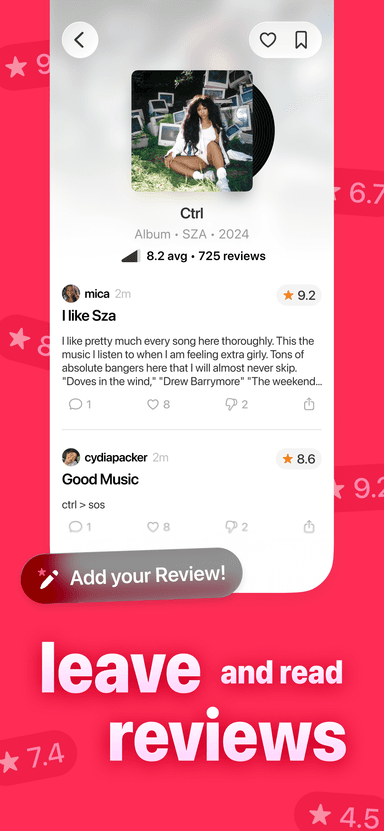
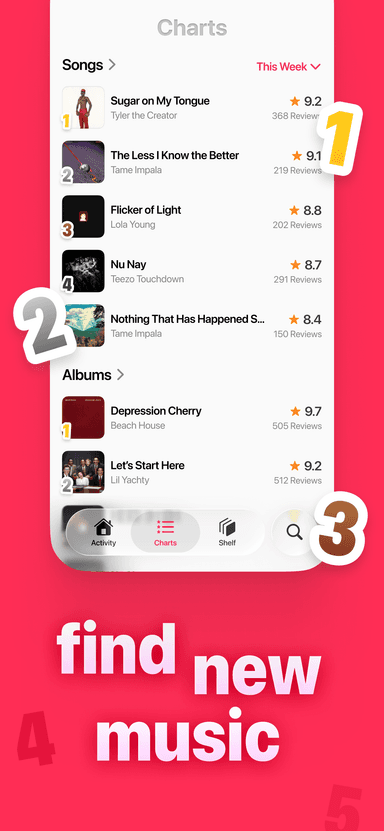
Rate music on Wavelength

A free place to rate albums and write reviews with friends. Letterboxd-style, for music.

Download on the App Store