Wavelength
Wavelength
Rate and discover music with friends
pitchfork

pitchfork

Time Out of Mind

Time Out of Mind

Bob Dylan (1997)

9.4/ 10

Each Sunday, Pitchfork takes an in-depth look at a significant album from the past, and any record not in our archives is eligible. Today we explore Bob Dylan’s masterful comeback, 1997’s Time Out of Mind.

Not long after attending the California funeral of his friend Jerry Garcia, Bob Dylan found himself snowbound at his Minnesota farm. He would listen to the storms and write after the sun sank from the winter sky. Those songs turned the cold environment into a crystalline lens on the tiring world—a place that was “not dark yet, but getting there,” where “the blues [were] wrapped around my head.”

What Dylan had left to say or whether he had any enthusiasm left for saying it had, for a while, been unclear. Seven years had passed since he had released an original new tune, and that album, Under the Red Sky, was a near-catastrophe, scuttling what had seemed a comeback after Dylan crept through his polarizing ’80s evangelism. He had grown disillusioned with the cycle of writing and recording, he later said, and simply wanted to play.

During the ’90s, he issued two solo acoustic albums of earnest, sometimes poignant renditions of American standards, delighting those who had pined for the lost days of the folk kid from Greenwich Village. But coffeehouse covers hadn’t made Dylan a spark of resistance in the ’60s or a source of bittersweet reckonings with reality in the ’70s. He had become a legacy act, accruing lifetime achievement laurels and touring his hits for Boomers in khakis. Possibly for the first time in his career, Dylan was beginning to blend into the scenery.

But months after Garcia’s funeral, Dylan approached the audacious producer Daniel Lanois. Since helming the contentious sessions for what many had prematurely considered Dylan’s actual comeback, 1989’s half-stepping Oh Mercy, Lanois had cut U2’s Achtung Baby and Emmylou Harris’ Wrecking Ball, a wondrously atmospheric abstraction of the singer’s gorgeous and aging country vision. In a New York hotel room, Dylan read Lanois the lyrics and asked him if he had a record. “I said, ‘Yes, Bob, I think we’ve got a record,’” Lanois remembered with a sly laugh during a recent phone call.

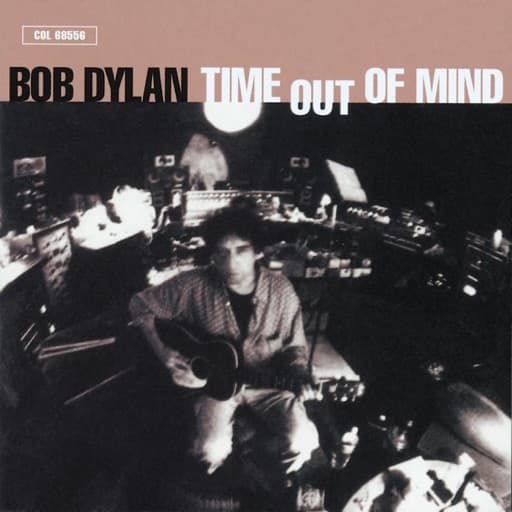
Dylan sent Lanois home with a list of reference records to study—Charley Patton, Little Walter, Little Willie John, a mix of ragged blues and primordial rock. “I listened to these records, and I understood,” Lanois wrote in his memoir, Soul Mining. “A new birth with the old dogs under your arm, like a stack of classic books.” In the end, that rebirth was Time Out of Mind, Dylan’s 30th album and one that doesn’t sound much like the basic blues at all. Instead, it is an essential post-modern reappraisal of them, an experimental consideration of what could become of the blues’ sound and spirit and a mutual communion of articulate, exquisite despair. At the last minute, Lanois took Dylan’s blurry snapshot for the cover of Time Out of Mind; on tape, that’s exactly how he had captured him.

The next year was a reminder of what Dylan said he despised about making records—extended seaside sessions on the Atlantic and the Pacific, guitars smashed in anger, a militia of Nashville crackerjacks and world-class session players who had to be told more than once to play a lot less. Lanois and Dylan fought like hell in the parking lot of the Miami studio where they recorded, but after more than half a year and many mixes, overdubs, and lyrical revisions, Time Out of Mind—11 songs that would transform Dylan from seemingly obsolete icon to wise, wizened visionary almost overnight—was finished. And then Dylan nearly died.

Four months before Time Out of Mind arrived and just days after his 56th birthday, Dylan was admitted into a Los Angeles hospital after persistent chest pains that suggested a heart attack. Instead, acute pulmonary histoplasmosis—a nasty fungal infection caused by bird-and-bat feces in the country’s most fertile river valleys—had inflamed the covering around his heart and nearly killed him. “I really thought I’d be seeing Elvis soon,” he said later. For weeks between his hospital release and the album’s release, Dylan was bedridden, emerging just in time to play for the pope in Rome and sit for a series of high-profile interviews that inquired not only about his near-death experience but also that of his career.

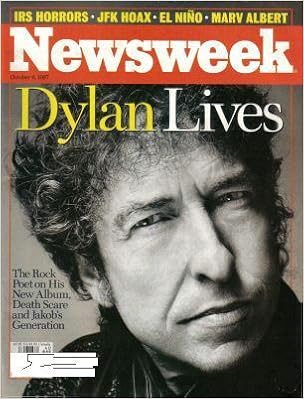
Dylan’s brush with Elvis made for an easy press hook, especially given the twilit misery of Time Out of Mind. In its four-star review, Rolling Stone noted the album “confront[-ed] his advancing years and the prospects of failing health.” In a moment of too-soon chicanery, Newsweek’s cover joked “Dylan Lives.”

But Time Out of Mind is not merely about death, though its inevitability looms at the periphery of these songs with the certainty of the setting sun; sometimes, death even seems for Dylan like the easy, desirous exit. Instead, Time Out of Mind is about dealing with life and its itinerant lows, knowing how it will all end, anyway. The blues become an emotional state of being. Through the cobwebs of his beleaguered voice, Dylan musters all the feelings of losing love, full of pride and insanity and lust and violence and humor, implicitly navigating the five stages of grief.

He writes with the hardened edge of Hemingway, trying to cloak feelings with callouses and sweetening his bitterness with a dash of wit. A portrait of the sometimes-awful truth about life and love, Time Out of Mind stands alongside Mark Rothko’s so-called Black Paintings, conceived in poor health just before he killed himself, for its ability to stand at the lip of an abyss and stare into it. If you look long enough at the Rothko or listen closely to the Dylan, the most unexpected shapes will eventually stumble out of the dark.

Dylan begins in a bout of denial. At the start of “Love Sick,” he shuffles through empty streets in the rain, a tangle of warped guitar, haunted organs, and faint drums aptly framing his bleak mood. He is mad at the world, judging its smiling people and castigating its illusion of happiness. “I’m sick of love/I wish I’d never met you,” he calmly seethes in the closing chorus, addressing his ire not at anyone in particular but at the idea of human connection at large. “I’m sick of love/I’m trying to forget you.”

But the first five minutes of “Love Sick,” which sound so preternaturally cool and ultimately unaffected that the song was immortalized in a Victoria’s Secret advertisement, are purely a pose. After Dylan sashays through that last refrain, he collapses into the confession that sets the tone for most of Time Out of Mind: “Just don’t know what to do/I’d give anything to be with you,” he sings, his voice now curdled. The band pulls back from the pulse and lets the melody dangle against the open air, as if they too are surprised by the sudden candor of their maestro. This is the moment where we get to the heart of Time Out of Mind, where Dylan crawls inside his own depression.

For most of the next 70 minutes, that’s where he stays: Dylan’s misery is so exhaustive that, during “Dirt Road Blues,” he turns the sight of a rainbow into an instance of pain. Elsewhere, parties give him headaches. He is alternately cold and broke, hot and aimless. “It’s such a sad thing to see beauty decay,” he half-howls during “Cold Irons Bound,” an aired litany of grievances that finds him losing most everything he holds sacred. “It’s sadder still to feel your heart turn away.”

Dylan hits rock-bottom during a duo of creeping existential crises, mercifully separated here by a swaggering barroom prowl. During “Not Dark Yet,” he tells us he has been to “London… and ‘gay Paree,’” reminders that he is a worldly sort who has had success and lived well. But here he is, shattered by the most pedestrian of things—love, or the loss of it—and tragically concluding “There’s not even room enough to be anywhere.” A decade before, he was coming down from his great Christian awakening. Now, he doesn’t “even hear the murmur of a prayer.” How could he fall further?

Lanois’ production has often been criticized for warping Dylan’s voice too much, for burying it in a cloud of effects. In early Time Out of Mind demos and outtakes, after all, Dylan practically sounds like Etta James, riding on top of his blues; on the record itself, he is pushing the words upward as an act of mere survival, letting them out so he can breathe back in. But the pervading murk of “Not Dark Yet” is exactly what these lyrics demand. As with the transmuted blues of Loren Connors or Grouper, Lanois lets Dylan flicker at the threshold of existence here, giving his troubles a sense of mortal urgency.

“Trying to Get to Heaven” is about being uncomfortable with everything and everyone everywhere—kicked out of Missouri, given false consolation in New Orleans, taken for a ride to nowhere in Baltimore. In the end, he simply falls asleep to escape inside his dreams, a world that now seems as concrete and meaningful as the actual people around him.

Strange as it may sound, “Trying to Get to Heaven” has long felt inspirational, given the subsequent arc of Dylan’s career. “When you think that you’ve lost everything/You find out you can always lose a little more,” he half-grunts toward the end, reaching the apogee of his sadness. But Time Out of Mind won three Grammys and kick-started Dylan’s true second coming—a string of self-produced, hyper-stylized albums that turned his love of the blues, standards, and literature into impressionistic, intricate Americana and helped him on his way to a Pulitzer. In your grimmest moments, just remember how near-death Dylan sounds here—and exactly how much life he actually had left.

Even deep in his own hurt, Dylan maintains a sense of pride, hoping to preserve some dignity as he approaches his end. Amid the sad, stately waltz of “Standing in the Doorway,” he tells his best lie: “I would be crazy if I took you back,” he sings, the slide guitars curling beneath him like confused question marks. “It would go up against every rule.” This is what he is supposed to say, of course, to save face when the entire album is about how not getting her back will be his ruin. Who hasn’t been here before—completely despondent, but trying to pretend you’ve got the upper hand in some romantic standoff?

This is the softer, more playful side of Dylan’s anger, but it occasionally flashes into hints of violence. When he croons “Don’t know if I saw you, if I’d kiss you or kill you” early in the album, it feels like a lonely abstraction, a what-if penned from a distance. By record’s end, though, it has morphed into real menace. Breathing fast, pulse racing, he’s doing his best to hold himself together during “Can’t Wait,” trying not to lash out or do something he will live to regret. The guitars slash, and the organs roar, fighting the same urge to explode. “If I ever saw you comin’, I don’t know what I might do,” he yells as best he can. “I’d like to think I could control myself, but it isn’t true.” His sadness, at last, has beaten his civility.

In spite of its presiding gloom, Time Out of Mind actually delivered a new Dylan standard—his first hit in decades and a song that has become almost as ubiquitous as “Like a Rolling Stone” or “Forever Young,” even if he mostly hasn’t been the one to sing it. A month before Time Out of Mind arrived, Billy Joel turned the spare ballad “Make You Feel My Love” into a bombastic, string-swept single, shouting the lyrics and howling behind the harmonica like it was he who stepped onstage at Newport in 1965. Twin versions by Garth Brooks and Trisha Yearwood soundtracked the 1998 rom-com Hope Floats, while takes from Neil Diamond, Ed Sheeran, and Kelly Clarkson have followed. But it was Adele’s piano-and-cello lament—and its subsequent appearance on “Britain’s Got Talent”—that turned Dylan’s ostensible love song into an international standard and, according to Adele, made Dylan at least a million pounds in a year.

Not long after attending the California funeral of his friend [Jerry Garcia](https://pitchfork.com/artists/22079-jerry-garcia/), [Bob Dylan](https://pitchfork.com/artists/1177-bob-dylan/) found himself snowbound at his Minnesota farm. He [would listen](https://www.nytimes.com/1997/09/28/arts/pop-jazz-a-wiser-voice-blowin-in-the-autumn-wind.html) to the storms and write after the sun sank from the winter sky. Those songs turned the cold environment into a crystalline lens on the tiring world—a place that was “not dark yet, but getting there,” where “the blues [were] wrapped around my head.” What Dylan had left to say or whether he had any enthusiasm left for saying it had, for a while, been unclear. Seven years had passed since he had released an original new tune, and that album, [Under the Red Sky](https://en.wikipedia.org/wiki/Under_the_Red_Sky), was a near-catastrophe, scuttling what had seemed a comeback after Dylan crept through his polarizing ’80s evangelism. He had grown disillusioned with the cycle of writing and recording, he later said, and simply wanted to play. During the ’90s, he issued two [solo acoustic albums](https://www.bobdylan.com/albums/world-gone-wrong/) of earnest, sometimes poignant renditions of American standards, delighting those who had pined for the lost days of the folk kid from Greenwich Village. But coffeehouse covers hadn’t made Dylan [a spark of resistance in the ’60s](https://www.youtube.com/watch?v=OeP4FFr88SQ) or a source of [bittersweet reckonings with reality](https://vimeo.com/216989930) in the ’70s. He had become a legacy act, accruing lifetime achievement laurels and touring his hits for Boomers in khakis. Possibly for the first time in his career, Dylan was beginning to blend into the scenery. But months after Garcia’s funeral, Dylan approached the audacious producer [Daniel Lanois](https://pitchfork.com/artists/2577-daniel-lanois/). Since helming the contentious sessions for what many had prematurely considered Dylan’s actual comeback, 1989’s half-stepping [Oh Mercy](https://www.rollingstone.com/music/lists/100-best-albums-of-the-eighties-20110418/bob-dylan-oh-mercy-20110323), Lanois had cut [U2](https://pitchfork.com/artists/4404-u2/)’s [Achtung Baby](https://en.wikipedia.org/wiki/Achtung_Baby) and [Emmylou Harris’ ](https://www.youtube.com/watch?v=yZLOtcUXq_k)[Wrecking Ball](https://www.youtube.com/watch?v=yZLOtcUXq_k), a wondrously atmospheric abstraction of the singer’s gorgeous and aging country vision. In a New York hotel room, Dylan read Lanois the lyrics and asked him if he had a record. “I said, ‘Yes, Bob, I think we’ve got a record,’” Lanois remembered with a sly laugh during a recent phone call. Dylan sent Lanois home with a list of reference records to study—[Charley Patton](https://pitchfork.com/artists/12657-charley-patton/), [Little Walter](https://pitchfork.com/artists/25196-little-walter/), Little Willie John, a mix of ragged blues and primordial rock. “I listened to these records, and I understood,” Lanois wrote in his memoir, *Soul Mining*. “A new birth with the old dogs under your arm, like a stack of classic books.” In the end, that rebirth was *Time Out of Mind*, Dylan’s 30th album and one that doesn’t sound much like the basic blues at all. Instead, it is an essential post-modern reappraisal of them, an experimental consideration of what could become of the blues’ sound and spirit and a mutual communion of articulate, exquisite despair. At the last minute, Lanois took Dylan’s [blurry snapshot](https://www.grammy.com/sites/com/files/7142z9w777l._sl1500_.jpg) for the cover of *Time Out of Mind*; on tape, that’s exactly how he had captured him. The next year was a reminder of what Dylan said he despised about making records—extended seaside sessions on the Atlantic and the Pacific, guitars smashed in anger, a militia of Nashville crackerjacks and world-class session players who had to be told more than once to play a lot less. Lanois and Dylan fought like hell in the parking lot of the Miami studio where they recorded, but after more than half a year and many mixes, overdubs, and lyrical revisions, *Time Out of Mind*—11 songs that would transform Dylan from seemingly obsolete icon to wise, wizened visionary almost overnight—was finished. And then Dylan nearly died. Four months before *Time Out of Mind* arrived and just days after his 56th birthday, Dylan was [admitted into a Los Angeles hospital](https://www.independent.co.uk/news/bob-dylan-in-hospital-after-heart-scare-1263950.html) after persistent chest pains that suggested a heart attack. Instead, [acute pulmonary histoplasmosis](https://www.mayoclinic.org/diseases-conditions/histoplasmosis/symptoms-causes/syc-20373495)—a nasty fungal infection caused by bird-and-bat feces in the country’s most fertile river valleys—had inflamed the covering around his heart and nearly killed him. “I really thought I’d be seeing Elvis soon,” he said later. For weeks between his hospital release and the album’s release, Dylan was bedridden, emerging just in time to play for [the pope in Rome](https://longandwastedyear.files.wordpress.com/2014/09/s1-reutersmedia.jpg) and sit for a series of high-profile interviews that inquired not only about his near-death experience but also that of his career. Dylan’s brush with [Elvis](https://pitchfork.com/artists/22874-elvis-presley/) made for an easy press hook, especially given the twilit misery of *Time Out of Mind*. In its four-star review, *Rolling Stone* [noted](https://www.rollingstone.com/music/albumreviews/time-out-of-mind-20010522) the album “confront[-ed] his advancing years and the prospects of failing health.” In a moment of too-soon chicanery, *Newsweek*’s cover joked [“Dylan Lives.”](https://images-na.ssl-images-amazon.com/images/I/41a%2BK02DCAL._SL500_SX302_BO1,204,203,200_.jpg) But *Time Out of Mind* is not merely about death, though its inevitability looms at the periphery of these songs with the certainty of the setting sun; sometimes, death even seems for Dylan like the easy, desirous exit. Instead, *Time Out of Mind* is about dealing with life and its itinerant lows, knowing how it will all end, anyway. The blues become an emotional state of being. Through the cobwebs of his beleaguered voice, Dylan musters all the feelings of losing love, full of pride and insanity and lust and violence and humor, implicitly navigating the five stages of grief. He writes with the hardened edge of Hemingway, trying to cloak feelings with callouses and sweetening his bitterness with a dash of wit. A portrait of the sometimes-awful truth about life and love, *Time Out of Mind* stands alongside Mark Rothko’s so-called [Black Paintings](https://www.guggenheim.org/blogs/checklist/inside-the-collection-untitled-black-on-gray), conceived in poor health just before he killed himself, for its ability to stand at the lip of an abyss and stare into it. If you look long enough at the Rothko or listen closely to the Dylan, the most unexpected shapes will eventually stumble out of the dark. Dylan begins in a bout of denial. At the start of “Love Sick,” he shuffles through empty streets in the rain, a tangle of warped guitar, haunted organs, and faint drums aptly framing his bleak mood. He is mad at the world, judging its smiling people and castigating its illusion of happiness. “I’m sick of love/I wish I’d never met you,” he calmly seethes in the closing chorus, addressing his ire not at anyone in particular but at the idea of human connection at large. “I’m sick of love/I’m trying to forget you.” But the first five minutes of “Love Sick,” which sound so preternaturally cool and ultimately unaffected that [the song was immortalized in a Victoria’s Secret advertisement](https://www.youtube.com/watch?v=ZUSG9vRWl60), are purely a pose. After Dylan sashays through that last refrain, he collapses into the confession that sets the tone for most of *Time Out of Mind*: “Just don’t know what to do/I’d give anything to be with you,” he sings, his voice now curdled. The band pulls back from the pulse and lets the melody dangle against the open air, as if they too are surprised by the sudden candor of their maestro. This is the moment where we get to the heart of *Time Out of Mind*, where Dylan crawls inside his own depression. For most of the next 70 minutes, that’s where he stays: Dylan’s misery is so exhaustive that, during “Dirt Road Blues,” he turns the sight of a rainbow into an instance of pain. Elsewhere, parties give him headaches. He is alternately cold and broke, hot and aimless. “It’s such a sad thing to see beauty decay,” he half-howls during “Cold Irons Bound,” an aired litany of grievances that finds him losing most everything he holds sacred. “It’s sadder still to feel your heart turn away.” Dylan hits rock-bottom during a duo of creeping existential crises, mercifully separated here by a swaggering barroom prowl. During “Not Dark Yet,” he tells us he has been to “London… and ‘gay Paree,’” reminders that he is a worldly sort who has had success and lived well. But here he is, shattered by the most pedestrian of things—love, or the loss of it—and tragically concluding “There’s not even room enough to be anywhere.” A decade before, he was coming down from his great Christian awakening. Now, he doesn’t “even hear the murmur of a prayer.” How could he fall further? Lanois’ production has often been criticized for warping Dylan’s voice too much, for burying it in a cloud of effects. In early *Time Out of Mind* [demos and outtakes](https://itunes.apple.com/us/album/cant-wait-alternate-version/293209884?i=293210003), after all, Dylan practically sounds like [Etta James](https://pitchfork.com/artists/23485-etta-james/), riding on top of his blues; on the record itself, he is pushing the words upward as an act of mere survival, letting them out so he can breathe back in. But the pervading murk of “Not Dark Yet” is exactly what these lyrics demand. As with the transmuted blues of [Loren Connors](https://pitchfork.com/artists/15877-loren-connors/) or [Grouper](https://pitchfork.com/artists/6134-grouper/), Lanois lets Dylan flicker at the threshold of existence here, giving his troubles a sense of mortal urgency. “Trying to Get to Heaven” is about being uncomfortable with everything and everyone everywhere—kicked out of Missouri, given false consolation in New Orleans, taken for a ride to nowhere in Baltimore. In the end, he simply falls asleep to escape inside his dreams, a world that now seems as concrete and meaningful as the actual people around him. Strange as it may sound, “Trying to Get to Heaven” has long felt inspirational, given the subsequent arc of Dylan’s career. “When you think that you’ve lost everything/You find out you can always lose a little more,” he half-grunts toward the end, reaching the apogee of his sadness. But *Time Out of Mind* won [three Grammys](https://www.grammy.com/grammys/artists/bob-dylan) and kick-started Dylan’s true second coming—a string of self-produced, hyper-stylized albums that turned his love of the blues, standards, and literature into impressionistic, intricate Americana and [helped him on his way to a Pulitzer](https://www.nytimes.com/2008/04/13/weekinreview/13Itzkoff.html). In your grimmest moments, just remember how near-death Dylan sounds here—and exactly how much life he actually had left. Even deep in his own hurt, Dylan maintains a sense of pride, hoping to preserve some dignity as he approaches his end. Amid the sad, stately waltz of “Standing in the Doorway,” he tells his best lie: “I would be crazy if I took you back,” he sings, the slide guitars curling beneath him like confused question marks. “It would go up against every rule.” This is what he is supposed to say, of course, to save face when the entire album is about how *not* getting her back will be his ruin. Who hasn’t been here before—completely despondent, but trying to pretend you’ve got the upper hand in some romantic standoff? This is the softer, more playful side of Dylan’s anger, but it occasionally flashes into hints of violence. When he croons “Don’t know if I saw you, if I’d kiss you or kill you” early in the album, it feels like a lonely abstraction, a what-if penned from a distance. By record’s end, though, it has morphed into real menace. Breathing fast, pulse racing, he’s doing his best to hold himself together during “Can’t Wait,” trying not to lash out or do something he will live to regret. The guitars slash, and the organs roar, fighting the same urge to explode. “If I ever saw you comin’, I don’t know what I might do,” he yells as best he can. “I’d like to think I could control myself, but it isn’t true.” His sadness, at last, has beaten his civility. In spite of its presiding gloom, *Time Out of Mind* actually delivered a new Dylan standard—his first hit in decades and a song that has become almost as ubiquitous as “Like a Rolling Stone” or “Forever Young,” even if he mostly hasn’t been the one to sing it. A month before *Time Out of Mind* arrived, [Billy Joel](https://pitchfork.com/artists/23567-billy-joel/) turned the spare ballad “Make You Feel My Love” into [a bombastic, string-swept single](https://www.youtube.com/watch?v=vEQGKY92KI4), shouting the lyrics and howling behind the harmonica like it was he who stepped onstage at Newport in 1965. Twin versions by [Garth Brooks](https://www.youtube.com/watch?v=L3SiHmdnioQ) and [Trisha Yearwood](https://www.youtube.com/watch?v=_A8x1jY3X1c) soundtracked the 1998 rom-com *Hope Floats*, while takes from [Neil Diamond](https://www.youtube.com/watch?v=AWGJU8woA7o), [Ed Sheeran](https://www.youtube.com/watch?v=9JKQRW6d7cc), and [Kelly Clarkson](https://www.youtube.com/watch?v=FgUAlWy70UQ) have followed. But it was [Adele’s piano-and-cello lamen](https://www.youtube.com/watch?v=0put0_a--Ng)t—and its subsequent appearance on [“Britain’s Got Talent”](https://www.youtube.com/watch?v=PZkrU4KbPbY)—that turned Dylan’s ostensible love song into an international standard and, according to Adele, made Dylan [at least a million pounds](https://www.independent.ie/entertainment/music/this-girls-sure-got-the-blues-and-it-shows-26658241.html) in a year.

Rate music on Wavelength

Download Wavelength to share your own reviews and see what your friends think.

Rate music on Wavelength

A free place to rate albums and write reviews with friends. Letterboxd-style, for music.

Download on the App Store