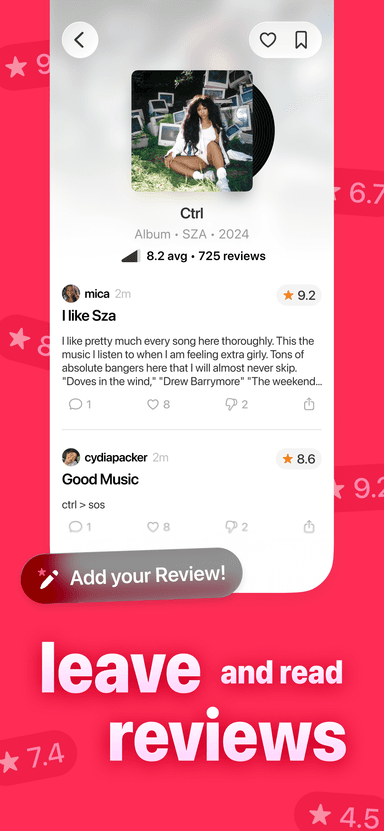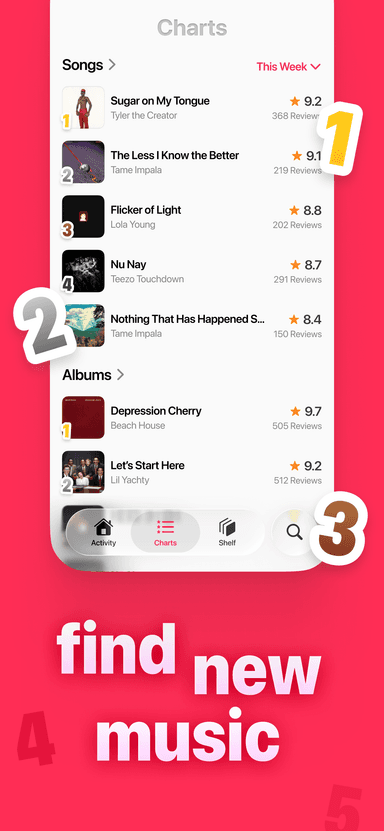
Wavelength
Wavelength
Rate and discover music with friends
pitchfork

pitchfork

Boys for Pele (Deluxe)

Boys for Pele (Deluxe)

Tori Amos (1996)

9.2/ 10

Each Sunday, Pitchfork takes an in-depth look at a significant album from the past, and any record not in our archives is eligible. Today, we revisit Tori Amos’ divisive third album: a strange and unsettling amalgam of distorted harpsichord and bloody revenge fantasies born of ayahuasca, Mary Magdalene, and the blues.

In the early hours of June 23, 1993, after her husband, John Bobbitt, raped her, Lorena Bobbitt reached under the covers for his penis, grabbed it, then cut it clean off with a kitchen knife. With the severed penis in hand, she drove to a nearby field, threw it out the window, and called the police, telling them where to find it. She was jailed for “malicious wounding.”

Over 1.3 million column inches were dedicated to the subsequent trial, and for a brief period, American culture underwent a reckoning with male authority and phallic sovereignty. Tori Amos read every piece on the trial she could find. She celebrated the final verdict in Bobbitt’s trial, in 1994: not guilty by reason of temporary insanity. Amos told Hot Press soon after: “I’m mad, mad at myself to this day that I didn’t kill the man who raped me.” Her third album, 1996’s Boys for Pele, plays out the fantasy: What if she had?

Two years before, Amos had released “Me and a Gun,” the a cappella retelling of her own sexual assault that—amazingly—launched her solo career. The song mimicked the meditative cadence of psalms as Amos recounted the unholiness of the act. It reflected the emerging third wave of feminism, part of a cultural reckoning with sexual violence that had produced Tracy Chapman’s 1988 song “Behind the Wall,” Suzanne Vega’s 1992 song “Bad Wisdom,” and Hole’s “Asking for It,” in 1994. That year, when Rolling Stone asked what Amos’ fans told her when they got the chance to speak to her, she replied: “That they’ve been raped.”

In order to survive your body being stolen from you, you have to take an active role. For Amos, that meant reviewing her own capacity for violence and violation, whether toward herself or others. On the Boys for Pele cover, Amos grips the weapon she once sang about, while a barnyard cock hangs dead from the rafters and a live snake curls behind her foot. With Amos now pointing the gun herself, Boys for Pele is her visceral and symbolically rich exploration of the fantasy of violent reprisal. While her previous albums, 1992’s Little Earthquakes and 1994’s Under the Pink, were more carefully wound and filled with an almost unrealistic clarity, Boys for Pele is a bristling, terrifying, and often inhuman affront in which Amos is an unholy brat on the edge of nonexistence, singing about clit-eating chickens, lacing ratatouille with poison, and coaxing men to kill themselves.

Through Boys for Pele, Amos finally found in herself a quality she had envied in her friend Trent Reznor. “I love the screaming male aggression of his music, because I’m not in touch with that part of myself so much,” she told Spin in 1994, eight months before she started work on her third album. On Boys for Pele, Amos brays bull-like with an open throat, her lyrics a revolt against the strictures of language. It is so strange, unsettling, and outside the bounds of any prevailing canons of good taste or common sense that it at once summons and repulses you. It is also extraordinarily beautiful.

Amos began working on Boys for Pele soon after ending her seven-year relationship with Eric Rosse, with whom she had co-produced her previous albums. During the album’s writing, she transformed the breakup into a mythic quest, one that aligned tightly with the concept as defined by Joseph Campbell, a writer Amos occasionally quoted in interviews (“a culture that doesn’t know its mythology is powerless,” she paraphrased to Spin). Campbell posited that the mythic quest involves a healer who can aid the hero in exposing that which is buried in the psyche, thus revealing society’s fantasies and fears.

On Boys For Pele, Amos finds the border where language fractures and the psyche begins to speak in symbols—where private experience becomes mythic narrative. Across its 70-minute runtime, she refracts her most hidden thoughts into an archetypal drama.

Boys for Pele takes its name from the volcano goddess Pele, of Hawaiian mythology. Pele has long been a source of fascination for tourists, who write to her and send gifts, including sands extracted from the islands. Because the sand is believed to be Pele’s body, scholars have interpreted its removal as a symbolic act of female violation. Before Amos, painter Enoch Wood Perry and explorer Isabella Bird likewise portrayed Goddess Pele as a symbol of the dark feminine.

Naturally, Amos went on an ayahuasca retreat in Hawaii shortly after her breakup. During her 16-hour trip, she drank tea with the devil and learned how to tango. She recounts the experience on Boys for Pele, whose mythic quest is ultimately a quest for provenance—tracing bloodlines back to the origins of music, femininity, and religion. In doing so, Amos seeks to understand herself and her own capacity for violence, much as a culture must confront its myths in order to understand its soul.

Amos’ own bloodlines presented a neat conflict between the Christianity on her paternal side (her father was a Methodist minister) and her mother’s Native American heritage. Within that lineage lay a story that she perceived as one of female triumph: Her Cherokee great-great-grandmother married the man who owned the plantation where she was enslaved. This was the side Amos sought to understand and claim.

Amos has said that 14 of the album’s songs represent the dismembered body parts of the Egyptian god Osiris; she notes that each track also embodies a part of herself she had not yet embraced. “As I wrote the songs for Boys for Pele, I started valuing myself through my own eyes, instead of valuing me through the eyes of others,” she told the Dallas Morning News. To arrive at herself, she not only had to reconfigure her relationship with men but also her relationship with the piano.

Amos struggled to disentangle herself from the instrument. As a child prodigy, she derived her sense of self-worth from the piano, believing that she was only as good as how she played. At two, she had stacked up a pile of phone books and lifted herself onto the stool by the family’s black upright piano, playing by ear the tunes her older brother and sister had practiced in their piano lessons that afternoon. Amos could not yet talk. By three, she was playing back in full the songs the family heard on the radio. By four, she could play Mozart and the entire songbook of Oklahoma! By five, she had composed her first song and auditioned for the prestigious Peabody Conservatory in Baltimore, where she became the youngest student in the Conservatory’s history.

Despite the Conservatory’s strictly classical curriculum, she grew obsessed with Led Zeppelin while studying there. After school, she studied Jimmy Page’s tones and phrasings and translated his guitar playing to the piano, figuring she had found the bridge between classical music and popular rock. She learned to view the piano as an instrument of synthesis, capable of uniting conflicting traditions and ideas. With her right hand, she played grand, stately, and studied filigrees; with her left, jazzier, funkier voicings.

At 11, after she started stitching too much Beatles into her Beethoven and the school withdrew her scholarship (Amos melodramatically claims she was “kicked out”), she began performing across Washington’s lounge circuit. A gay bar took her in. There, she played almost nightly while the waiters taught her about men and the ways to please them. They gave her a cucumber to practice on: Teeth marks meant an extra late-night; a clean cucumber granted her a cup of chocolate milk. Around the same time, she began recording herself and sending the tapes to record executives in Los Angeles. Of the responses she did receive, most relayed the same sentiment: The girl-and-piano thing had died with Carole King. It was the early ’80s, and the piano was considered a sexless instrument that bore associations with obsequiousness, dowdiness: long gray skirts and pinafores. Amos didn’t so much sex the piano up as turn it into an instrument of masturbation.

The most succinct way to describe what it is like to witness Amos playing is to compare it to walking in on someone fucking themself. When she sings, she tugs at her own hair, throws back her neck, rocks back and forth on her stool in rapture—inspiring this all-time great Bob’s Burgers bit. She made the link explicit in an interview with Mojo: “[masturbation] kept me alive! It’s where I practice my piano licks.”

The word “masturbatory” is often applied to male musicians who take too much pleasure in their own virtuosity without troubling themselves with making sense or entertaining anyone else. That has some bearing on what Amos is doing, but she manages to invite others into her own world of self-gratification. Ultimately, her music asks: What if masturbation were generative?

Amos’ music is autoerotic and sealed off from public life; her fans are known to listen to it in a fundamentally private, even antisocial fashion. Toriphiles come to her shows not as a unified collective but as multiplied egos. Insulating themselves in Amos’ world, they have learned how to become fluent in Tori-speak, a lingua franca made up of illogical associations, overextended metaphors, and pop Jungianisms, that is almost unintelligible to anyone other than its speakers. Amos says things like: “Deep-sea dive with my male muses to explore new coral reefs,” and her fans say things like, “She tastes like a magical leader pied-piping us into the new millennium.” Inhabiting Amos’ world feels like taking pleasure in the paroxysms of tantrum. Standing outside of it is akin to watching a grown adult wail in the supermarket. What is hallowed to insiders can be, to outsiders, annoying or even disgusting.

What is almost certainly the longest written piece on Boys for Pele, Amy Gentry’s 33 ⅓ book on the album, also functions as a sociological treatise on disgust. “Disgust is a biological response onto which learned responses are easily grafted, both by way of and as a means of social reinforcement,” she writes, emphasizing disgust’s gendered aspect as a policing instrument that restricts girlish norms.

Embarrassment and disgust are common reactions to Boys for Pele. Upon its release, critics wrote about the album with a sense of self-evident aversion: “I just don’t like her,” wrote a reviewer in the Courier-Journal. “At 18 tracks, the album’s way too self-indulgent,” wrote Evelyn McDonnell for Rolling Stone in the most infamous pan of Peles press cycle, highlighting its “supposedly mystical” lyrics as “well, bad.” Yet these writers showed little desire to investigate this strong dislike. As forms of aesthetic (dis)engagement, embarrassment and disgust shut down critical faculties because they are so embodied—in the blush, the cringe, the gag.

Boys for Pele was met with one of the frostiest receptions of Amos’ career when she first unveiled it to her inner circle. She went out to dinner while her team at Atlantic Records held their first listening session. When she returned and poked her head into the studio, she discovered them outraged. “It was really just vicious,” Amos later told Stereogum, “the most vicious, shocking things you could hear from people.”

In the early hours of June 23, 1993, after her husband, John Bobbitt, raped her, Lorena Bobbitt reached under the covers for his penis, grabbed it, then cut it clean off with a kitchen knife. With the severed penis in hand, she drove to a nearby field, threw it out the window, and called the police, telling them where to find it. She was jailed for “[malicious wounding](https://www.nytimes.com/1994/01/22/us/lorena-bobbitt-acquitted-in-mutilation-of-husband.html).” Over 1.3 million column inches were dedicated to the subsequent trial, and for a brief period, American culture underwent a reckoning with male authority and phallic sovereignty. [Tori Amos](https://pitchfork.com/artists/83-tori-amos/) read every piece on the trial she could find. She celebrated the final verdict in Bobbitt’s trial, in 1994: not guilty by reason of temporary insanity. Amos told [Hot Press](https://www.yessaid.com/int/1994-02-05_Melody_Maker.html) soon after: “I’m mad, mad at myself to this day that I didn’t kill the man who raped me.” Her third album, 1996’s *Boys for Pele*, plays out the fantasy: What if she had? Two years before, Amos had released “[Me and a Gun](https://www.youtube.com/watch?v=RN3zdTXOQAM),” the a cappella retelling of her own sexual assault that—amazingly—launched her solo career. The song mimicked the meditative cadence of psalms as Amos recounted the unholiness of the act. It reflected the emerging third wave of feminism, part of a cultural reckoning with sexual violence that had produced [Tracy Chapman](https://pitchfork.com/artists/33193-tracy-chapman/)’s 1988 song “Behind the Wall,” [Suzanne Vega](https://pitchfork.com/artists/4463-suzanne-vega/)’s 1992 song “Bad Wisdom,” and [Hole](https://pitchfork.com/artists/6162-hole/)’s “Asking for It,” in 1994. That year, when [Rolling Stone](https://www.yessaid.com/int/1994-11_Rolling_Stone.html) asked what Amos’ fans told her when they got the chance to speak to her, she replied: “That they’ve been raped.” In order to survive your body being stolen from you, you have to take an active role. For Amos, that meant reviewing her own capacity for violence and violation, whether toward herself or others. On the *Boys for Pele* cover, Amos grips the weapon she once sang about, while a barnyard cock hangs dead from the rafters and a live snake curls behind her foot. With Amos now pointing the gun herself, *Boys for Pele* is her visceral and symbolically rich exploration of the fantasy of violent reprisal. While her previous albums, 1992’s [Little Earthquakes](https://pitchfork.com/reviews/albums/20384-little-earthquakes-under-the-pink/) and 1994’s [Under the Pink](https://pitchfork.com/reviews/albums/20384-little-earthquakes-under-the-pink/), were more carefully wound and filled with an almost unrealistic clarity, *Boys for Pele* is a bristling, terrifying, and often inhuman affront in which Amos is an unholy brat on the edge of nonexistence, singing about clit-eating chickens, lacing ratatouille with poison, and coaxing men to kill themselves. Through *Boys for Pele*, Amos finally found in herself a quality she had envied in her friend [Trent Reznor](https://pitchfork.com/artists/6209-trent-reznor/). “I love the screaming male aggression of his music, because I’m not in touch with that part of myself so much,” she told [Spin](http://www.thanatopsic.org/music/trivial/tori-trent-rmta.html) in 1994, eight months before she started work on her third album. On *Boys for Pele*, Amos brays bull-like with an open throat, her lyrics a revolt against the strictures of language. It is so strange, unsettling, and outside the bounds of any prevailing canons of good taste or common sense that it at once summons and repulses you. It is also extraordinarily beautiful. Amos began working on *Boys for Pele* soon after ending her seven-year relationship with Eric Rosse, with whom she had co-produced her previous albums. During the album’s writing, she transformed the breakup into a mythic quest, one that aligned tightly with the [concept](https://www.youtube.com/watch?v=aL0V1MsOeFM) as defined by Joseph Campbell, a writer Amos occasionally quoted in interviews (“a culture that doesn’t know its mythology is powerless,” she paraphrased to *Spin*). Campbell posited that the mythic quest involves a healer who can aid the hero in exposing that which is buried in the psyche, thus revealing society’s fantasies and fears. On *Boys For Pele*, Amos finds the border where language fractures and the psyche begins to speak in symbols—where private experience becomes mythic narrative. Across its 70-minute runtime, she refracts her most hidden thoughts into an archetypal drama. *Boys for Pele* takes its name from the volcano goddess Pele, of Hawaiian mythology. Pele has long been a source of fascination for tourists, who write to her and send gifts, including sands extracted from the islands. Because the sand is believed to be Pele’s body, scholars have interpreted its removal as a symbolic act of female violation. Before Amos, painter Enoch Wood Perry and explorer Isabella Bird likewise portrayed Goddess Pele as a symbol of the dark feminine. Naturally, Amos went on an ayahuasca retreat in Hawaii shortly after her breakup. During her 16-hour trip, she drank tea with the devil and learned how to tango. She recounts the experience on *Boys for Pele*, whose mythic quest is ultimately a quest for provenance—tracing bloodlines back to the origins of music, femininity, and religion. In doing so, Amos seeks to understand herself and her own capacity for violence, much as a culture must confront its myths in order to understand its soul. Amos’ own bloodlines presented a neat conflict between the Christianity on her paternal side (her father was a Methodist minister) and her mother’s Native American heritage. Within that lineage lay a story that she perceived as one of female triumph: Her Cherokee great-great-grandmother married the man who owned the plantation where she was enslaved. This was the side Amos sought to understand and claim. Amos has said that 14 of the album’s songs represent the dismembered body parts of the Egyptian god Osiris; she notes that each track also embodies a part of herself she had not yet embraced. “As I wrote the songs for *Boys for Pele*, I started valuing myself through my own eyes, instead of valuing me through the eyes of others,” she told the [Dallas Morning News](https://albumism.com/features/tribute-celebrating-25-years-of-tori-amos-boys-for-pele). To arrive at herself, she not only had to reconfigure her relationship with men but also her relationship with the piano. Amos struggled to disentangle herself from the instrument. As a child prodigy, she derived her sense of self-worth from the piano, believing that she was only as good as how she played. At two, she had stacked up a pile of phone books and lifted herself onto the stool by the family’s black upright piano, playing by ear the tunes her older brother and sister had practiced in their piano lessons that afternoon. Amos could not yet talk. By three, she was playing back in full the songs the family heard on the radio. By four, she could play Mozart and the entire songbook of *Oklahoma!* By five, she had composed her first song and auditioned for the prestigious Peabody Conservatory in Baltimore, where she became the youngest student in the Conservatory’s history. Despite the Conservatory’s strictly classical curriculum, she grew obsessed with [Led Zeppelin](https://pitchfork.com/artists/2439-led-zeppelin/) while studying there. After school, she studied Jimmy Page’s tones and phrasings and translated his guitar playing to the piano, figuring she had found the bridge between classical music and popular rock. She learned to view the piano as an instrument of synthesis, capable of uniting conflicting traditions and ideas. With her right hand, she played grand, stately, and studied filigrees; with her left, jazzier, funkier voicings. At 11, after she started stitching too much [Beatles](https://pitchfork.com/artists/546-the-beatles/) into her Beethoven and the school withdrew her scholarship (Amos melodramatically claims she was “[kicked out](https://www.interviewmagazine.com/culture/tori-amos-the-light-princess)”), she began performing across Washington’s lounge circuit. A gay bar took her in. There, she played almost nightly while the waiters taught her about men and the ways to please them. They gave her a cucumber to practice on: Teeth marks meant an extra late-night; a clean cucumber granted her a cup of chocolate milk. Around the same time, she began recording herself and sending the tapes to record executives in Los Angeles. Of the responses she did receive, most relayed the same sentiment: The girl-and-piano thing had died with [Carole King](https://pitchfork.com/artists/22898-carole-king/). It was the early ’80s, and the piano was considered a sexless instrument that bore associations with obsequiousness, dowdiness: long gray skirts and pinafores. Amos didn’t so much sex the piano up as turn it into an instrument of masturbation. The most succinct way to describe what it is like to witness Amos playing is to compare it to walking in on someone fucking themself. When she sings, she tugs at her own hair, throws back her neck, rocks back and forth on her stool in rapture—inspiring this all-time great *Bob’s Burgers* [bit](https://www.youtube.com/watch?v=wmy9CTn6xMs). She made the link explicit in an interview with [Mojo](http://www.yessaid.com/int/1994-03_Mojo.html): “[masturbation] kept me alive! It’s where I practice my piano licks.” The word “masturbatory” is often applied to male musicians who take too much pleasure in their own virtuosity without troubling themselves with making sense or entertaining anyone else. That has some bearing on what Amos is doing, but she manages to invite others into her own world of self-gratification. Ultimately, her music asks: What if masturbation were generative? Amos’ music is autoerotic and sealed off from public life; her fans are known to listen to it in a fundamentally private, even antisocial fashion. Toriphiles come to her shows not as a unified collective but as multiplied egos. Insulating themselves in Amos’ world, they have learned how to become fluent in Tori-speak, a lingua franca made up of illogical associations, overextended metaphors, and pop Jungianisms, that is almost unintelligible to anyone other than its speakers. Amos says things [like](https://www.yessaid.com/int/1996-02-11_London_Observer_Service.html): “Deep-sea dive with my male muses to explore new coral reefs,” and her fans say things [like](https://ew.com/article/1996/07/12/fans-love-tori-amos/?srsltid=AfmBOoojVFBuCl4Nm4MbdNLAuQtjkiJfkmCIaj1UeywIO42ZZKPs-BO2), “She tastes like a magical leader pied-piping us into the new millennium.” Inhabiting Amos’ world feels like taking pleasure in the paroxysms of tantrum. Standing outside of it is akin to watching a grown adult wail in the supermarket. What is hallowed to insiders can be, to outsiders, annoying or even disgusting. What is almost certainly the longest written piece on *Boys for Pele*, Amy Gentry’s [33 ⅓](https://www.bloomsbury.com/us/tori-amoss-boys-for-pele-9781501321313/) book on the album, also functions as a sociological treatise on disgust. “Disgust is a biological response onto which learned responses are easily grafted, both by way of and as a means of social reinforcement,” she writes, emphasizing disgust’s gendered aspect as a policing instrument that restricts girlish norms. Embarrassment and disgust are common reactions to *Boys for Pele*. Upon its release, critics wrote about the album with a sense of self-evident aversion: “I just don’t like her,” wrote a reviewer in the *Courier-Journal*. “At 18 tracks, the album’s way too self-indulgent,” wrote Evelyn McDonnell for *Rolling Stone* in the most [infamous pan](https://www.rollingstone.com/music/music-album-reviews/boys-for-pele-205333/) of *Pele*’*s* press cycle, highlighting its “supposedly mystical” lyrics as “well, bad.” Yet these writers showed little desire to investigate this strong dislike. As forms of aesthetic (dis)engagement, embarrassment and disgust shut down critical faculties because they are so embodied—in the blush, the cringe, the gag. *Boys for Pele* was met with one of the frostiest receptions of Amos’ career when she first unveiled it to her inner circle. She went out to dinner while her team at Atlantic Records held their first listening session. When she returned and poked her head into the studio, she discovered them outraged. “It was really just vicious,” Amos later told [Stereogum](https://www.stereogum.com/1903677/qa-tori-amos-reflects-on-boys-for-pele-20-years-on-and-premieres-b-side-amazing-gracetil-the-chicken/interviews/), “the most vicious, shocking things you could hear from people.”

Rate music on Wavelength

Download Wavelength to share your own reviews and see what your friends think.

Other reviews of Boys for Pele (Deluxe)

Rate music on Wavelength

A free place to rate albums and write reviews with friends. Letterboxd-style, for music.

Download on the App Store