

As an artist he’s best known for the folktronica of Tunng, but his production credits go even deeper, from Songhoy Blues to Laura Marling to Jon Hopkins.
While none of that stuff is the most accurate comparison, the breadth of Lindsay’s tastes and experiences are present and correct on Supershapes. He cherrypicks and amalgamates, taking his inspiration not just from music and sounds but the profundity of daily life. There are songs sparked by belongings, ordinary pleasant memories, a recipe to share with a friend. The album encourages the listener to find magic in the quotidian. If that all sounds a bit precious, well, at times it is. But the record is elevated by the artist’s ear for loops, instrumentation, and collaboration.
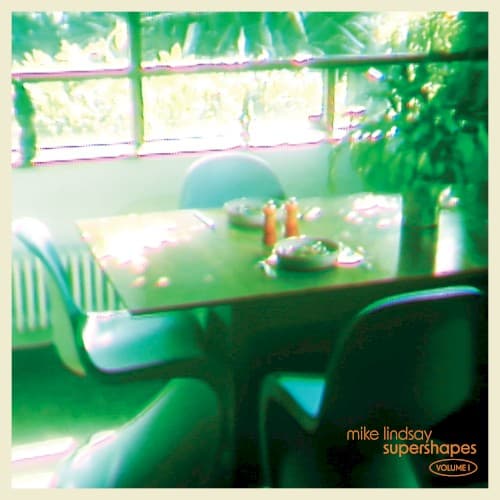
The starting point for the project was “Table”, inspired by Lindsay’s own aged piece of oak furniture. The song imagines those who have come before him and benefitted from the century-plus year old household item, “Smeared errant gravy off it with their finger tips,” “Had all their best friends round it / Cackles, shouts and showmanship.” Guest vocalist Anna B Savage’s vibrato invokes the ghosts of the past, kept front and centre above Lindsay’s bittersweet but homely backing. As the track picks up pace, duelling sax solos kick in, one low and calm, the other high and frantic. The coda brings in militaristic percussion and the lyric “what does the table think of you?” It’s repeated, becoming a chant, a challenge - we’re required to add our own experience to the inanimate object, or else break the chain.
With the caveat that tastes will vary, the more twee moments of the LP can rankle a tad. The one-two punch of “Pretender To Surrender” and “Kachumber” are quite a lot to take in succession. Instrumentally, the former is a welcome burst of energy, with vocals effectively piled up over handclaps and more of those lovely saxophones. Listen too closely, though, and you’ll hear lyrics like “Beans on toast / Super host / Sunday roast,” and chit chat about cucumbers.
That then continues into “Kachumber”, a song whose lyrics
are taken directly from a cookbook. Strangely, it’s an intensely
melancholic track, with vibes of David Bowie’s Blackstar, only instead of a piece about grappling with one’s own mortality, it’s about making a salad. It’s all a little bit say what you see - for the benefit of the album, Lindsay needs to get out of the kitchen.
Luckily, he does. The second half of Supershapes
is far more stripped back and experimental in a good way. The
glitch-jazz of “Two Blues” is warm and engaging, with soaring harmonies
and a restless beat. “It’s All For You” is even better, half chiptune,
half enchanted forest woodwind. There’s a little Ryuichi Sakamoto here,
music that’s simultaneously still and sweeping, peaceful but propulsive.
Best of the lot is “Ruins In Reverse”. One of the more
electronically minded compositions, here Lindsay finds the best hooks
and basslines in his collection, the kind of loops you can listen to
over and over without growing tired. To add to that meditative aura is
Anna B Savage again, this time bringing a mantra to the studio. She
sings the title of the song and a couple of names and that’s it. It’s
transcendental stuff; despite the modernity of the skittering drums and
electronic flourishes, the sticky melody could have been passed down the
line by gurus of yore.
For good and (to a much lesser extent) bad, you can hear
that this is the work of a chap who has worked primarily with or for
others, and now wishes to do precisely what he wants on his first solo
jaunt. If the odd idea doesn’t work or if the record is a touch too cute
at times, that’s really no bad thing. Like each day on Earth, there’s a
wealth of experience to be found if you’re open to it, or something a
little less saccharine than that.