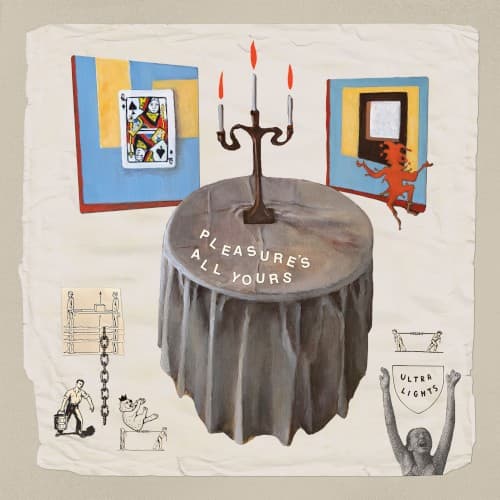


Hanoi’s Tran Uy Duc makes noisy assemblages that involve both the far reaches of experimental sound art and the instinctive drive of pop songwriting. Tran, founder of local event series hanoi bedroom shows, is at the forefront of a scene in Vietnam where thoughtful interdisciplinary chaos is the norm, associated with eclectic acts like the collective Rắn Cạp Đuôi and singer-songwriter Vĩ. In his unpredictable music, which often soundtracks open-ended multimedia projects involving poetry, film, and live performance, Tran stacks layers of dry, tawdry sounds—samples of smoggy Auto-Tuned vocal fry, guitar fuzz, or basic drum presets—then riles them up with effects and shifts them in and out of quantized structure, creating mish-mashes that track his unruly emotions. ByyShh is both Tran’s most expansive project and his most focused; it’s a busted-up, corrugated gem that’s as fun as it is provocative.
Releasing ByyShh through opaque avant-pop queen Lolina’s Relaxin Records marks a torch-passing moment for Tran. You can hear signatures from her music in Tran’s. He makes his beats from a few Casios’ worth of unrefined samples and loops that knock against one another with clashing fidelities; his blithe, cryptic, half-spoken vocals convey sly femininity alongside the lump-in-your-throat reticence that creeps up when you’re sharing something difficult. Artists from Tran’s generation have canonized Hype Williams’ era of “hypnagogic” music, which investigated the alienation at the heart of post-everything online culture. The best acts raised in this vacant sprawl (Tran and his friends in Vietnam, or other kids from SoundCloud and RateYourMusic like the Sidepeices and quinn) collate their hundreds of browser tabs to pursue relatively immediate songwriting with a definite sense of place. Tran, who’s hung around Vietnam’s sound-art scene since his teens, uses his fluency in different musical modes to get raw and direct, avoiding the air of detachment some cut-and-paste music can lapse into.
ByyShh is efficient and expressive. There’s no cagey conceptual ethos swirling around Tran’s grab-bag of tracks, and he doesn’t glower at you to make a point. Often, he’s downright jubilant, wringing barely-contained glee out of every sound source. Trebly, Elephant 6-ish MIDI strings and keys get theatrically beaten to a pulp on “Deserver,” whose dexterous arrangement allows for two simultaneous visions of musical bliss (flowery nostalgia; red-lining DAW abuse). Tran embraces the limitations of stock sounds and analog tech, only to blow past them whenever he’s excited by his next idea. “R3” begins as an uncanny attempt at the more elaborate side of rigid ’80s electro, then gives way to glossy, frantic dancehall, as if being hijacked by its digital schmaltz. It’s a joy to watch Tran find ways to contort cheap textures into variegated colors and sticky motifs, and the levity of his process grounds his uneasy emotional landscape. “Emmie (Madonna Stabbed Me and I Turned Into a Flower)” sounds like a manic spew of voice notes (“I’m a crazy bitch,” “I want you to kill me if you understand me”) forced into melody by spontaneous filters. A few of the campy, “look what I can do” turns on ByyShh remind me of Toby Fox’s winkingly-retro Undertale soundtrack—note “Do It,” which sequences a beat from dog barks.
As weird as ByyShh might be, you can totally imagine these tracks playing well in front of the right crowd. Tran records his vocals on AirPods, and the album was probably mixed on headphones, too, but it sounds primed to accompany one of Tran’s multimedia performances and bounce off the walls of some dingy DIY venue. That has a lot to do with the beats— threadbare loops that plod through straight-out-of-the-box drum presets and assert themselves with sheer inertia. The songs don’t hew to any predetermined structures, but they keep moving, shimmering, and pelting loops at you, so they discover new possibilities in the moment. “Tommy” establishes a clammy spin on diva-driven dance pop, then falls off the edge of the catwalk into a nightmare, where Tran’s chants to another man (“Hey, sexy boy”) almost feel like he’s taunting himself, caught in an avalanche of intrusive thoughts, artificial vocal formants, and aggravated synth clatter. Juxtaposing garish textures and walloping beats against Tran’s erratic inner world creates a facsimile of club music that churns through the psyche while it gratifies the body, leading to an ambivalent portrait of queer identity. This is music that sweats, both by building up stress and relieving it.
Tran manages his chaos with the fidgety precision of a modern producer, but his core method—stapling available tech effects and beat templates together into new, makeshift forms, making passionate performance art from sonic detritus—is time-tested. The immediacy of Tran’s process makes the most complex constructions feel strangely intimate—almost like an encouragement to the listener that they could make something similar themselves. Through the fledgling scene they’ve built, Tran and his peers in Vietnam are giving voice to their unique tastes and experiences: sampling traditional Vietnamese chamber ensembles, or threading pop sung in both English and Vietnamese into vivid field recordings. Who is experimental music? Anybody with a pulse who’s brazen enough to make it.