Wavelength
Wavelength
Rate and discover music with friends
pitchfork

pitchfork

Bloodless

Bloodless

Samia (2025)

7.0/ 10

On her flinty third album, the Minneapolis singer sharpens her storytelling, lacing deceptively bright folk pop with small, evocative details.

Samia Finnerty is unafraid of revealing her innermost thoughts on record. Her debut, 2020’s The Baby, was an introspective indie-pop coming-of-age tale from a sharply sardonic point of view, while its follow-up, Honey, zeroed in on the buoyant highs and nihilistic lows of her early 20s. Bloodless, the Minneapolis-based singer-songwriter’s flinty third album, finds solace in scattered confrontations and developing self-realizations. Using deceptively bright folk pop and Americana, Samia crafts an album about coming into your own by tearing yourself apart.

Bloodless is inspired in part by the inexplicable phenomena of bovine excision, a favorite subject of conspiracy theorists: Cows, horses, and other livestock have been found mutilated and drained of blood worldwide, with early reports dating back to the 1960s. Using that unsettling image as a metaphor for unsolvable emptiness lends unexpected drama to Samia’s indie pop. Once again working with longtime producers Caleb Wright and Jake Luppen, Samia has evolved her music into a steelier version of her soft-focus early work, just as her lyrics have progressed from bare-bones refrains toward more evocative storytelling. Early highlight “Hole in a Frame,” for example, draws its title from a 1978 incident when Sid Vicious punched through the wall at Cain’s Ballroom in Tulsa during a chaotic Sex Pistols tour, a hole that has since been framed and turned into a tourist attraction; Samia turns the image inside out against a breezy Rilo Kiley-style country-folk blend, contemplating the celebration of an absence as a form of self-empowerment.

Samia’s voice alternates between plainspoken and liltingly melodic, occasionally suggesting doubt and ambivalence. But an edge often enlivens her bittersweet, uneasy lyrics. “I just wanted to be your friend/Cup of tea in your cold hand/And drained, drained bloodless,” she sings in a sprightly tone on “Bovine Excision,” adding depth to the disappointment. Later, her voice is filtered into a stutter on the 2010s pop-rock throwback “Lizard,” where she circles an ex at a party and, seeing herself through his eyes, threatens to set it all on fire. “I didn’t come here to make you look/But intentions are for the guilty,” she sings; “I’m worth my weight in your image/Dancing to something sweet.” In the pinwheeling “Carousel,” she sketches out the specifics of an intimate romance: how much she looks like her lover’s celebrity crushes; she and her lover pretending to sleep in separate beds, to hoodwink her parents. These small, impactful details quickly add up; by the time the song erupts into a beatific crescendo of power chords to match the intense high she feels, Samia is howling right alongside the torrent.

Nevertheless, Samia still occasionally slips in vague lyrics that don’t hold the same power. The wispy “Spine Oil” trades in purple scenes of “a salmon in the silhouette” and “Jesus in my rosettes” that don’t connect; couched in a dry, folksy shuffle, it’s wallpaper compared to the album’s stronger tracks. “Proof,” which recalls her early acoustic outings, also teeters between affecting and awkward. “To be loved like a child’s toy or cigarette/Is to die a funny feeling in a chest,” she sings over sleepy fingerpicking, an intriguing idea undercut by the song’s blunt, “You don’t know me, bitch” chorus. Compared to the earlier “Sacred,” when she sings “You never loved me like you hate me now,” swathed in surfy guitar, the difference in pointed admissions is striking.

Where open sadness often fueled Samia’s first two albums, the acceptance of things that can’t be changed gives her music a new lightness of touch, even in its most conflicted moments. The six-minute closer “Pants” shapeshifts from hushed indie pop to an arena-sized chorus and back down to a quiet respite, an effective configuration for a song that uses a pair of pants to excavate the weight of men’s expectations on her. “Who was I when I bought these pants?” she asks in a gentle singsong, “They’re nonrefundable/Now I’m questioning everything I am.” It’s an unexpected emotional purge that courses throughout Bloodless, offering cathartic sighs of relief along the way.

[Samia](https://pitchfork.com/artists/samia/) Finnerty is unafraid of revealing her innermost thoughts on record. Her debut, 2020’s [The Baby](https://pitchfork.com/reviews/albums/samia-the-baby/), was an introspective indie-pop coming-of-age tale from a sharply sardonic point of view, while its follow-up, [Honey](https://pitchfork.com/reviews/albums/samia-honey/), zeroed in on the buoyant highs and nihilistic lows of her early 20s. *Bloodless*, the Minneapolis-based singer-songwriter’s flinty third album, finds solace in scattered confrontations and developing self-realizations. Using deceptively bright folk pop and Americana, Samia crafts an album about coming into your own by tearing yourself apart. *Bloodless* is inspired in part by the inexplicable phenomena of [bovine excision](https://en.wikipedia.org/wiki/Cattle_mutilation), a favorite subject of conspiracy theorists: Cows, horses, and other livestock have been found mutilated and drained of blood worldwide, with early reports dating back to the 1960s. Using that unsettling image as a metaphor for unsolvable emptiness lends unexpected drama to Samia’s indie pop. Once again working with longtime producers Caleb Wright and Jake Luppen, Samia has evolved her music into a steelier version of her soft-focus early work, just as her lyrics have progressed from bare-bones refrains toward more evocative storytelling. Early highlight “Hole in a Frame,” for example, draws its title from a 1978 incident when Sid Vicious [punched through the wall](https://www.atlasobscura.com/places/cains-ballroom) at Cain’s Ballroom in Tulsa during a chaotic [Sex Pistols](https://pitchfork.com/artists/3749-sex-pistols/) tour, a hole that has since been framed and turned into a tourist attraction; Samia turns the image inside out against a breezy [Rilo Kiley](https://pitchfork.com/artists/3575-rilo-kiley/)-style country-folk blend, contemplating the celebration of an absence as a form of self-empowerment. Samia’s voice alternates between plainspoken and liltingly melodic, occasionally suggesting doubt and ambivalence. But an edge often enlivens her bittersweet, uneasy lyrics. “I just wanted to be your friend/Cup of tea in your cold hand/And drained, drained bloodless,” she sings in a sprightly tone on “Bovine Excision,” adding depth to the disappointment. Later, her voice is filtered into a stutter on the 2010s pop-rock throwback “Lizard,” where she circles an ex at a party and, seeing herself through his eyes, threatens to set it all on fire. “I didn’t come here to make you look/But intentions are for the guilty,” she sings; “I’m worth my weight in your image/Dancing to something sweet.” In the pinwheeling “Carousel,” she sketches out the specifics of an intimate romance: how much she looks like her lover’s celebrity crushes; she and her lover pretending to sleep in separate beds, to hoodwink her parents. These small, impactful details quickly add up; by the time the song erupts into a beatific crescendo of power chords to match the intense high she feels, Samia is howling right alongside the torrent. Nevertheless, Samia still occasionally slips in vague lyrics that don’t hold the same power. The wispy “Spine Oil” trades in purple scenes of “a salmon in the silhouette” and “Jesus in my rosettes” that don’t connect; couched in a dry, folksy shuffle, it’s wallpaper compared to the album’s stronger tracks. “Proof,” which recalls her early acoustic outings, also teeters between affecting and awkward. “To be loved like a child’s toy or cigarette/Is to die a funny feeling in a chest,” she sings over sleepy fingerpicking, an intriguing idea undercut by the song’s blunt, “You don’t know me, bitch” chorus. Compared to the earlier “Sacred,” when she sings “You never loved me like you hate me now,” swathed in surfy guitar, the difference in pointed admissions is striking. Where open sadness often fueled Samia’s first two albums, the acceptance of things that can’t be changed gives her music a new lightness of touch, even in its most conflicted moments. The six-minute closer “Pants” shapeshifts from hushed indie pop to an arena-sized chorus and back down to a quiet respite, an effective configuration for a song that uses a pair of pants to excavate the weight of men’s expectations on her. “Who was I when I bought these pants?” she asks in a gentle singsong, “They’re nonrefundable/Now I’m questioning everything I am.” It’s an unexpected emotional purge that courses throughout *Bloodless*, offering cathartic sighs of relief along the way.

Rate music on Wavelength

Download Wavelength to share your own reviews and see what your friends think.

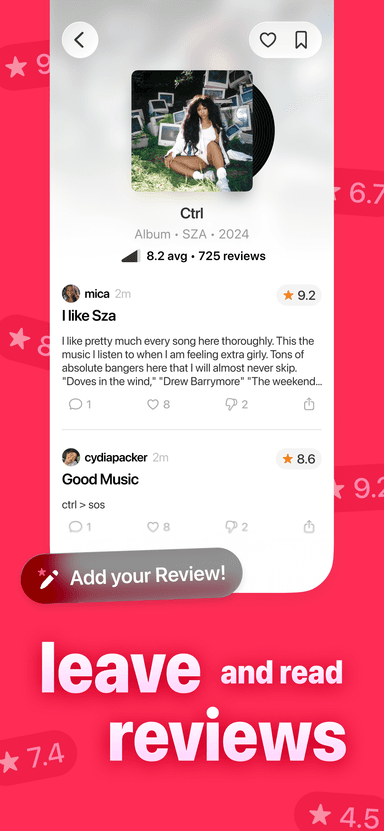
Rate music on Wavelength

A free place to rate albums and write reviews with friends. Letterboxd-style, for music.

Download on the App Store