
Jimi Hendrix did not want to be onstage at the Hollywood Bowl. A month earlier, in late July 1967, he and arguably England’s hottest new band—The Jimi Hendrix Experience, a riotous power trio formed in London only 10 months earlier—had bailed on their first full American run after opening for the squeaky-clean heartthrobs of the Monkees for eight disastrous dates. Though they were, by many reports, the loudest and most aggressive band on earth—with Noel Redding on bass and Mitch Mitchell on drums—they had not been able to compete with the hormonal pleas of American pubescence for the headliners.
Maybe, though, this silence was worse. Just before releasing their debut album in the States, the Experience had accepted the invitation to warm up the audience at the Bowl for The Mamas & The Papas, the sweet-singing “California Dreamin’” quartet so afraid to offend they’d cropped their first album cover to bowdlerize the toilet originally left in the frame. The Experience seemed to shock almost everyone into submission, the crowd so quiet Hendrix wondered if anyone was there at all.
“Right now, we’d like to continue on—drearily—with a song named ‘Foxey Lady,’” he said near the set’s middle, a moment that must have reminded him of trying to win over fans of Englebert Humperdinck’s saccharine numbers during one early European tour. Hendrix forgot the second verse to “The Wind Cries Mary” and barely bothered trying to recover. A bit later, he sighed: “Well, dig: We’ve got two more records to do, thank god.” The trio slashed into “Purple Haze.”
It was the Summer of Love, sure, but it was also the Long, Hot Summer, with ubiquitous race riots providing a warped mirror of the overseas escalation in Vietnam. The moment was charged. And so, this lilywhite crowd was having none of the Black man in his butter-yellow pants and bejeweled jacket, even if he was letting them off easy. The Experience had opened with “Sgt. Pepper’s Lonely Hearts Club Band,” maybe the biggest song in the world at the moment, then covered Howlin’ Wolf, Muddy Waters, and Bob Dylan. They’d omitted the murder ballad that became their first overseas smash, “Hey Joe,” and didn’t come close to the despondent candor of “Manic Depression” or the astral slink of “Third Stone From the Sun.”
Sure, he played the guitar with his teeth and between his legs, but he didn’t set the thing on fire, smash it to bits, or, as best as anyone remembers, even pretend to fuck it. The most aggressive Hendrix got was to tell whoever happened to be listening to put their hand over their heart for “the American and British anthem”—a feedback-flooded assault on “Wild Thing.” Folks had spent their $1.50, however, to sing along to “Monday, Monday” on a Friday night, not to be confronted with a coming revolution. Hendrix was happy to be done with them, too.
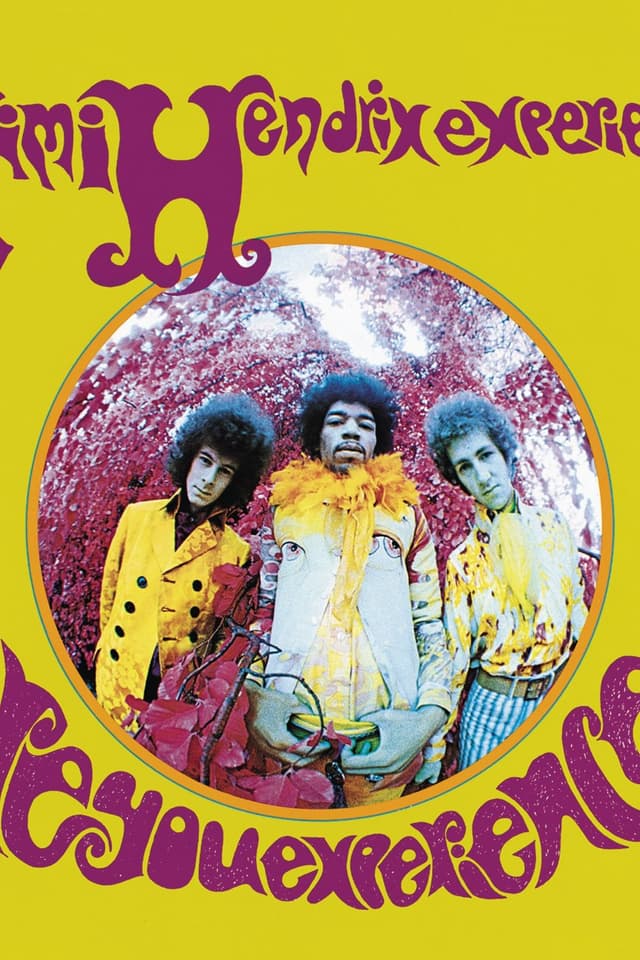
Only five days later, the revolution would arrive, anyway: As they tried to make Frank Sinatra’s label relevant and solvent again, Reprise would finally release the American edition of Are You Experienced, 11 tracks that grafted the possibilities of The Information Age and the psychedelic counterculture onto the primal oomph of rock’n’roll. (A housekeeping note: From here on, I’ll refer to the 1997 American edition of Are You Experienced, expanded to include that moment’s singles and B-sides, as the definitive version; its sequence is simply sharper than its British counterpart.) At the Hollywood Bowl in August 1967, The Mamas & The Papas had swayed pleasantly to a corroding image of the present. Hendrix had tried to confront the crowd with the future and failed. Regardless, it was here now.
The Experience, of course, were not absolute outliers. Though Bob Dylan sat in upstate exile, he’d flipped his own amplifier switch two years earlier and already issued three snarling electric albums. In England, the Who were coaxing chaos from guitars that Pete Townshend would soon smash, and Cream were beautifully mean. The Beatles and the Stones were becoming stranger studio creatures. The Grateful Dead and Jefferson Airplane had provided the soundtrack to Owsley Stanley’s potent acid at the Human Be-In that January in California, and, on the other American coast, the Velvet Underground were fusing noise and rock in real time. The Mothers of Invention, Sandy Bull, Albert Ayler, James Brown, the Fugs, Pink Floyd: They were all pushing into the unknown by that summer of 1967.
But no other album presented a map so full of new possibilities, opportunities for exploration that were rooted in the past but unafraid of the unknown quite like Are You Experienced. In an hour, Hendrix the songwriter moves from mental illness to sci-fi dreams, from sexual celebration to existential despair, from beatnik individualism to collective liberation. And then there’s Hendrix the guitarist and bandleader, moving between barroom blues and a more elegant update, between lysergic mischief and relentless rock singles, between guitar solos so heroic they feel godly and noise passages so harsh they feel drawn from the gutter. Sixty years later, Jimi Hendrix remains history’s only perfect rock star; in a career that was shorter than a single presidential term, he showed the rest of the world what they’d missed and suggested how to get there. Are You Experienced is his first and best explosion of brilliance, so mighty that we’re still sorting through its pieces and meanings and implications.
Hendrix’s American reintroduction had, at least, started strong. In the early months of 1967, a consortium of well-connected and well-heeled industry types began to plot the Monterey International Pop Festival, hoping to elevate rock’s cultural cachet by mirroring the decade-old jazz fest along California’s coastline. Both Paul McCartney and the Stones’ manager and producer, Andrew Loog Oldham, insisted that the organizers bring the Experience over for their stateside debut, though their first single, “Hey Joe,” had flatlined in the country. Brian Jones flew to California to introduce Hendrix as “the most exciting guitarist I have ever heard.”
In England, Hendrix had become such a sensation that his verve even forced the Who’s Townshend and Cream’s Eric Clapton into a short-lived friendship, inspired by an admixture of admiration, jealousy, and fear. Backstage at Monterey, Hendrix, knowing that he was going on after the Who, taunted Townshend, since this was his chance to upstage his rival forever. (He also jammed with the Dead backstage, playing bass alongside Phil Lesh.) It became one of rock’n’roll’s epiphanic performances, less for its mauling take on “Like a Rolling Stone” and italicized “Purple Haze” and solos played with his teeth than for its destructive finale—Hendrix hovering above his guitar with a bottle of lighter fluid, setting it on fire until he broke it to bits. He sanctified and sacrificed rock’n’roll in a single frame.
Hendrix had won the battle with Townshend, but everyone wasn’t sure it was worth the war. Mo Ostin, who had signed Hendrix to Reprise, hated the stunt, as did Michelle Phillips of The Mamas & The Papas. “Practically everybody at the festival came out of folk music,” she later remembered, admitting she didn’t want Hendrix at that Hollywood Bowl show, either. “You wouldn’t dream of abusing your instrument to get a reaction from the audience, like setting your guitar on fire and pretending to ejaculate off of your guitar.”
The States had always been an uneasy fit for Hendrix; that’s why, after all, he had needed to come back to play Monterey. Born in Seattle as World War II raged in Europe, he was Black and Cherokee, descended from two of this country’s most persecuted groups. His parents were quarreling alcoholics who split when he was 9. His father, a veteran named Al, took custody; his mom, Lucille, died when he was 15. After learning a few Elvis songs on a ukulele he salvaged in a trash heap, Hendrix got his first electric guitar at 16 and played alongside Al, who worked a cheap saxophone that eventually got repossessed.
After run-ins with the law, Hendrix enlisted in the Army at 19, shipping off to Fort Campbell on the Tennessee-Kentucky border. He loved training as a paratrooper, the adrenaline and solitude of ripping through the sky. “When you first jump it’s really outta sight,” he later said. “Physically it was a falling-over-backwards feeling, like in your dreams.”
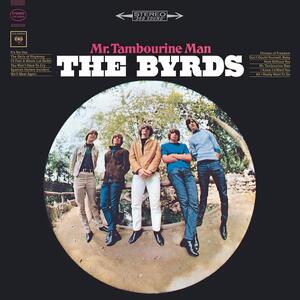
But Hendrix despised the rules and how little music he could play in the service. Discharged in 1962 after reportedly breaking his ankle, he formed a band, moved to Nashville, and toured the South relentlessly, picking up gigs with the likes of Ike & Tina Turner and Wilson Pickett before joining the Isley Brothers. (“I got tired of playing in the key of F all the time,” he joked of that last gig, “so I turned in my white mohair silk suit.”) Speaking of suits, Hendrix and the rest of Little Richard’s band stole the Byrds’ suits and ties backstage in Los Angeles in 1965, Roger McGuinn once told me, smartly forcing the band to look cool in street clothes on the cover of their 1965 debut. After quarreling over money and Hendrix’s uncanny ability to rival the bandleader, he left Little Richard, too, and headed for Harlem.
Hendrix was there for only a year, toggling between bands of his own and stints as a sideman, when his break materialized. Linda Keith, a model and the girlfriend of Keith Richards, had become his fan and booster, bringing her famous friends to Hendrix’s tiny shows and even pilfering Keef’s pearly white Stratocaster as a gift for the upstart. Keith convinced Chas Chandler, a bassist in town to play one of his last shows with the Animals, to see Hendrix on a Wednesday afternoon.
Keith had tipped Hendrix that Chandler loved “Hey Joe,” a murder ballad that had been floating through the folk and rock scenes on both American coasts for five years. (Jason Schneider’s new book, That Gun in Your Hand, offers a fascinating play-by-play of the song’s saga, using it as a window on the history of popular music for the last 60 years.) “Wow, I’m gonna find an act and record that song in England,” Chandler had vowed. “That’s going to be a hit.” It was the first song Hendrix and his Blue Flames played that day at Café Wha? Chandler asked Hendrix to come to England and make that hit.
Three weeks after Hendrix landed at Heathrow, he was off to France for four shows supporting Johnny Hallyday, a national hero and a coiffed crooner with a slight edge. This time, he had the Experience. Noel Redding had responded to an audition ad for the Animals, but Chandler hoodwinked the guitarist into playing bass for the first time. Hendrix liked his hair, which matched his own, and he liked how he played bass like a lead guitar, meaning he could fly right alongside Hendrix. Chandler had asked Mitch Mitchell only to do the forthcoming shows in France, but he had the hair, too, and Hendrix liked what he heard. He was in, too. “He played me a record by Elvin Jones once,” Hendrix later said, “and I went, ‘Damn, that’s you!’”
By the time the France run was done, they were ready to make good on Chandler’s wish to turn “Hey Joe” into a hit. At their fourth show, in Paris, the song was a prime mix of doom and equivocation. Hendrix wrestled with the anger and cowardice of a friend who’d killed his lover and was preparing to flee. Redding’s bassline felt oversized, like a tell-tale heart threatening to burst through a rib cage, while Mitchell kept pushing and pulling the meter, as if nervous about the narrative. They cut it later that month, sorting through assorted sets of background vocalists until they found the Breakaways. They intone the melody like they’re whistling from the grave, the dead woman haunting Joe’s gusto. It sounded simple but felt complicated. “Hey Joe” was out by the end of 1966, a British hit in early 1967.
The success emboldened Chandler and the band, who cut “Purple Haze” early that year. Chandler had turned Hendrix on to science fiction. Hendrix long insisted that the song wasn’t about drugs but instead mirrored a dream about walking beneath the sea, likely prompted by a Philip José Farmer tale about life in space he’d recently read.
The song’s permanent association with an acid trip, though, didn’t just stem from that distorted lyrical reality. In early 1967, Hendrix met an electrical engineer named Roger Mayer, who soon stopped by with a guitar pedal he’d been perfecting, the Octavia. (Back in New York, the Fugs had hipped Hendrix to his first fuzz pedal.) When Hendrix played the Octavia on the “Purple Haze” solos, it sounded as if the world had splintered into crystal fragments, the expected sound of his guitar split into a million prismatic pieces. Where the Who soon co-opted Terry Riley’s kaleidoscopic sounds with a heap of pretense, Hendrix casually predicted them with the coda of his second single.