

I am possibly the only person alive who enjoys hearing about other people’s experiences doing drugs, so much so that I once spent a lot of time going on long walks and listening to a niche podcast in which two men regaled each other with various substance stories. The single most memorable anecdote was one of the hosts describing doing a large amount of ketamine, putting In Rainbows From the Basement on his television, and locking into the concert film so hard that he sincerely believed Radiohead was inside his house, performing the songs just for him.
This story, deep-fried as it may be, struck me as one of the realest interpretations of Radiohead as a live band I’ve ever heard. In the studio, they craft their music with the morbid fastidiousness of Dutch masters painting still lives of rotten fruit and buzzing insects. Onstage, they break the glass in the painting’s frame, bring the insects to life, and let them swarm freely. Studio recordings of Radiohead are hermetic, intricate worlds; live recordings of Radiohead bring those worlds to your doorstep. Cue up the right bootleg (Berlin ’00? Glastonbury ’97?) and the band is indeed in your living room, all prior austerity replaced with electric immediacy—ketamine optional, of course.
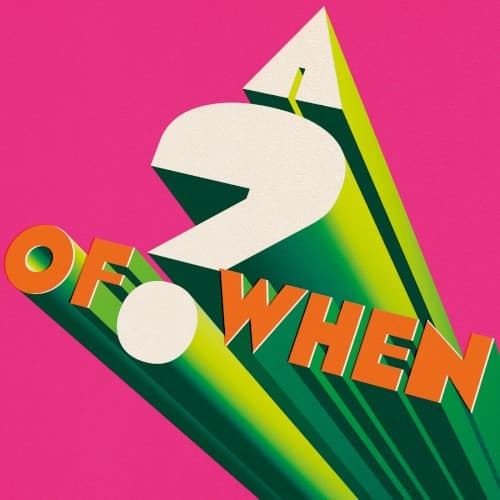
Welcome, then, Hail to the Thief (Live Recordings 2003-2009), Radiohead’s second-ever live album. (The first was 2001’s I Might Be Wrong, featuring songs from Kid A and Amnesiac). Here we have stadium versions of 12 of the 14 tracks from 2003’s Hail to the Thief, culled from performances in London, Amsterdam, Buenos Aires, and Dublin. Twentyish years ago, the band honed these songs in the shadow of a swelling wave of global fascism, squirming in the center of a burgeoning digital panopticon, experiencing the thousand unnatural shocks of televised war, tabloid sleaze, hawkish warmongers, and mass hysteria. Today, none of that stuff is relatable at all, and we’re all quite relieved we nipped those problems in the bud.
Within Radiohead’s discography, Hail to the Thief bears the lingering distinction of “transitional album” (not to mention the more thorny label of “political album”… more on that later). But with the passing years, its place in history feels a little more nuanced. It contains some snarling dissonance from OK Computer, some unorthodox electronic frenzy from Kid A, and at least a hint of the melodic experimentation to come on In Rainbows. Lyrically, it’s almost unrelentingly bleak, a violent dispatch bursting with Orwellian zombies, automatons incapable of seeing warning signs, “accidents waiting to happen”—as bitter a vision of society as you could expect from a band that has, in multiple songs, compared fellow citizens to pigs. Among its predecessors and successors, Hail to the Thief seems to crouch like a gargoyle on a Gothic church: a grotesque representation of a hellish, endless present, blighting whatever beauty might be observed in the past. OK Computer’s car and plane crashes were at least survivable—here, there’s no luck to be had at all.
Thom Yorke apparently revisited these particular live recordings while preparing for Hamlet Hail to the Thief, a Royal Shakespeare Company production of the classic tragedy that hit the stage this past spring, set to a “deconstructed score” based on the album. “I was shocked by the kind of energy behind the way we played,” Yorke said of listening to the live recordings from the aughts. “I barely recognized us.” Energy is correct—the magic of this live album is the mutation of the acrid mood on the studio album into something immense, constructive, and cathartic.
From the first crackling expansion of “2+2=5,” we meet a Radiohead who are very much cooking. Though the band more or less commits to replicating their studio arrangements, their attention to detail (the whining synth harmonies on “Where I End and You Begin,” the melodramatic backing chords of “Sail to the Moon”) feels grandly ambitious, rather than stodgily clinical. At least several songs feel greater than the sum of their already formidable parts. “Go to Sleep” gains a manic buzz that culminates in a delightfully pixelated Jonny Greenwood guitar freakout; “Myxomatosis,” groovy but kind of nauseous on record, gets juiced here to wild levels of power, its main riff practically growing legs and galloping off into the distance. And the dour monologue on album closer “A Wolf at the Door” is enlivened by a caustic, almost buoyant Yorke, who spits out his list of Hollywood grievances (“Investments and dealers/Cold wives and mistresses”) with theatrical panache.
The rhythm section is also pretty astonishing: Colin Greenwood and Philip Selway unite their basslines and drum patterns to convince everyone that it’s OK to shake ass to Radiohead songs. And though nothing on Hail to the Thief inspires the stadium roar of a “Karma Police” sing-a-long, the audience on the live recordings nail the intermittent handclaps on “We Suck Young Blood,” and yell at full lung capacity for the duration of album highlight “There, There.” By the time Yorke wails the final choruses into existence, the crowd sounds less like a passive audience and more like an active revolt.
It’s an interesting time to be revisiting Radiohead’s most overtly political album. At this moment, anyone who was alive and at least a little conscious in 2003 recognizes depressingly familiar territory: “Yesterday’s headlines, blown by the wind,” as “Scatterbrained” goes. George W. Bush, the album’s titular thief, has seen his reputation slowly rehabilitated in the years after his career by certain amnesiacs; at last measure, his post-presidential approval rating had nearly doubled (just last week, his “now watch this drive” moment recirculated online, prompting fond sentiments like “this clip has insane aura”). Trump’s attack on Iran, made without a whiff of congressional approval or even discussion, spurred a mainstream media hawkishness so acute it had people dusting off decades-old Get Your War On comics. The ultra-low-rise jeans and horny Carl’s Jr. hamburger commercials of the previous era are even back, bookending reports of the latest war crimes with various displays of succulent flesh.
Against this backdrop, a revitalization of Hail to the Thief makes lots of sense. The misalignment that’s hard to ignore—the 2 plus 2 equaling 5, if you will—is of course the band’s knotty response to the ongoing Palestinian genocide, which has marred their public perception as of late. It all came to a head after an incident at an Australian Thom Yorke solo show in October of last year; Yorke reacted to an audience member/protestor demanding he “condemn the Israeli genocide of Gaza” by exiting the stage. He returned to play “Karma Police,” and six months later made a Notes app statement on social media that one could read as either surprisingly supportive of Palestine (he calls the situation a “humanitarian catastrophe”), disappointingly mealymouthed re: Palestine (he cannot help but condemn Hamas a couple paragraphs later), or, perhaps most accurately, just deeply unhappy about using social media statements as vectors for any kind of political praxis at all. No one left this situation satisfied, as is generally the case with anything involving the genre of a Notes app screenshot.
Still, it feels impossible to write about a newly released live version of Hail to the Thief without wondering how artists once able to conjure imagery so evocative of the horrors of lopsided military annihilation—“Hey, we can wipe you out anytime,” or, “I will lay me down/In a bunker underground/I won’t let this happen to my children”—could end up in such an ambiguous political position during a “catastrophe” that feels less and less ambiguous each day.
“Conscience does make cowards of us all,” as Hamlet once said, talking about the doubts that arise when you overthink things. Which, funny enough, is not something that seems to have happened in the making of Hail to the Thief! About 80% of the album was recorded in just two weeks (OK Computer, in comparison, took nearly a year, and Kid A/Amnesiac even longer than that), with as many elements captured live in the studio as possible. In a 2003 interview with Yahoo! Music, Yorke said, “I was writing stuff that I wouldn’t normally write lyrically, ’cause I really didn’t have time to think about it”; in a Rolling Stone interview from the same year, Yorke was asked to explain the opening lines of the album (“Are you such a dreamer/To put the world to rights”) to which he responded, “I don’t know where those words came from.”
So when Yorke writes in this new live album’s press release that he “barely recognized” the band on the live recordings, I don’t think he’s exaggerating. The bitterness and rage captured in the studio and expanded upon in these live performances isn’t carefully crafted after all—it’s instinctive, unconscious. This is not a carefully worded political statement, but an energy gathered from the band’s surroundings and channeled into dense, difficult, exhilarating sound. The timing even reflects this: Though billed as an Iraq War protest album, Hail to the Thief was written, recorded, and even performed live months before the surprise invasion of Baghdad began. “I think it’s a death knell for any piece of work to be described as ‘political’ and then be cornered forevermore having to contextualize that,” Yorke said recently. His perpetual discomfort with external attempts to define the abstraction in his songwriting is baked right into “Myxomatosis: “I sat in the cupboard and wrote it down in neat… But it got edited, fucked up/Strangled, beaten up.” I can see why he feels so tongue-tied, even after all these years.
It’s not very satisfying to think of Radiohead as a conduit rather than a changemaker, especially right now. People say “don’t shoot the messenger” because the messenger often delivers a message that makes you want to shoot something. I don’t want to let them off the hook so easy—look at my consciousness, making a coward of me!—but Hail to the Thief (Live Recordings 2003-2009) does feel like a particularly authentic musical expression of what the band truly is, and maybe always has been: not a band making protest music with a particular call to action, just a band checking the barometers and pointing out how fucked we already are. There is much dissatisfaction in confronting absolute doom, and maybe that’s the point. “Your alarm bells, they should be ringing,” Yorke yelps on “The Gloaming,” whose live version is underscored throughout by a diced-up sample of one of the lyrics: funny, ha ha, funny, how. By the end, the sample gets triggered over and over again. The laughs become mere syllables. The repetition feels sinister, then senseless, then sinister all over again.