Wavelength
Wavelength
Rate and discover music with friends
pitchfork

pitchfork

The Dark Side of the Moon

The Dark Side of the Moon

Pink Floyd (1973)

9.3/ 10

Each Sunday, Pitchfork takes an in-depth look at a significant album from the past, and any record not in our archives is eligible. Today, we revisit one of the biggest albums of all time: its origins, its impact, and why it remains a permanent fixture in the rock canon.

When Pink Floyd first premiered what would become the most successful rock album of all time, it was quite literally too big for the system to handle. A half-hour into the band’s concert in Brighton on January 20, 1972—the live debut of what was then called “Eclipse: A Piece for Assorted Lunatics”—the band started to play “Money,” which required synchronizing their performance to a pre-recorded sound collage of jingling coins and ka-ching-ing cash registers. But coupled with the band’s power-sucking sound system and lighting rig, the show slowly ground to a halt. After a brief break, bassist Roger Waters came to the mic to explain: “Due to severe mechanical and electronic horror, we can’t do any more of that bit, so we’ll do something else.” Less than a month later, the band had to abandon a performance at the Manchester Free Trade Hall when the same thing happened.

Over the prior half-decade, Pink Floyd had established themselves as, if not the best psychedelic rock band, then certainly the most technologically extravagant. From late 1966 through the fabled Summer of Love, they were the house band at the UFO, the Swinging London rock club/art space/drug den, which gave them free rein to blend their droning jams with trippy visuals, sound effects, fog machines, and extreme volume. That August, Waters told Melody Maker that he wanted Pink Floyd to travel from city to city with a circus-style big top. “We’ll have a huge screen 120 feet wide and 40 feet high inside and project films and slides.”

His prediction never came to be, but for an invite-only gig at Queen Elizabeth Hall in May 1967, the band installed a joystick dubbed “The Azimuth Co-ordinator” on top of Richard Wright’s keyboard to send the band’s potent, droning sound and sci-fi effects careening around the first-of-its-kind quadraphonic playback system in the venue. For the back cover photo of the 1969 double album Ummagumma, drummer Nick Mason arranged the band’s road gear to resemble an aircraft carrier, a concise reversal of one philosopher’s claim that rock music is not much more than “a misuse of military equipment.” Waters told Melody Maker that Pink Floyd’s gear fixation was a matter of going where no band had gone. “We’re trying to solve problems that haven’t existed before.”

So, too, was NASA, whose decade-long effort to put men on the moon was coming to fruition at the same time. It was a perfect match: Around 10 p.m., Pink Floyd appeared on the BBC’s marathon telecast of the Apollo 11 landing and jammed on a song they called “Moonhead.” Along with the requisite panels of astronomers and physicists, the quartet was joined by space-themed poetry readings from Ian McKellen and Judi Dench, and recordings of Richard Strauss’ “Also Sprach Zarathustra”—prominently featured in Stanley Kubrick’s sci-fi opus 2001: A Space Odyssey—and the new single “Space Oddity,” released to capitalize on moon mania by ambitious 22-year-old folkie David Bowie.

Though Bowie was just beginning to explore the cosmos, Pink Floyd had been traveling the spaceways since their inception: The first track on their debut album was “Astronomy Dominé,” a slab of B-movie sci-fi cheese masterminded by the band’s co-founder, songwriter, and frontman Syd Barrett, which, along with “Interstellar Overdrive,” landed them the “space rock” sobriquet from critics. Though no band likes to be classified so generically, they grew to embrace the idea. Eighteen years later, the band’s official tour t-shirt read “Pink Floyd: Still First in Space.”

Barrett watched the moon landing at his Wetherby Mansion flat in London with a group of friends and hangers-on. By 1969, Barrett had disappeared into a haze of quaaludes and LSD that eroded his already-fragile mental health. There was a depressing irony in the fact that Barrett had churned out the whimsical art-pop character studies “Arnold Layne” and “See Emily Play” that got the group signed by EMI, then immediately soured on the non-stop promotional requirements that came along with hit singles. When Barrett showed up to live gigs in 1967, he was more of a distraction than a contributor. Forced to lip-sync on TV, he barely moved.

The band hired Barrett’s childhood mate David Gilmour as a live replacement, and one day they simply headed to a gig without picking up their singer. While Barrett was a master of making quotidian things charmingly weird, Roger Waters—who’d become Pink Floyd’s leader by dint of his forceful personality and big ideas—was honest about his careerist impulses and grand aims. “That was always my big fight,” Waters later said, “to try and drag it kicking and screaming back from the borders of space, from the whimsy that Syd was into, to my concerns, which were much more political and philosophical.” It would take a half-decade after splitting with Barrett for Waters to reroute his obsession with outer space into a grand treatise on—as he’d later call it—inner space.

In the five years between Barrett’s departure and the 1973 release of The Dark Side of the Moon, Pink Floyd wandered the hinterlands as European psychedelia fractured into the high-minded progressive rock of the Moody Blues, the Nice, Procol Harum, Yes, King Crimson, and Jethro Tull; the jazz-fusion experiments of John McLaughlin and Soft Machine; the rock-operatic pretensions of the Who and Genesis; fellow space-rock travelers Hawkwind; and the synth-obsessed German bohemians Kraftwerk, Neu!, Tangerine Dream, and Popol Vuh. Without their putative leader and most charismatic member, Pink Floyd recorded a string of low-budget film soundtracks, released the classically gassy concept albums Ummagumma and Atom Heart Mother, helped Barrett record his 1970 solo debut Madcap Laughs, and toured the world. They earned enough money from their elaborate live shows—which journalists were beginning to describe in terms of tonnage—to make up for their paltry album sales.

With 1971’s Meddle, the band finally settled into a studio groove. The best of the new songs was the side-long “Echoes,” over 20 minutes of airtight studio jamming, a bit of jazz and folk, a single, repeating piano note fed through a Leslie speaker, and Waters’ newfound lyrical focus on the riddles of social alienation. Gilmour and Wright’s serenely harmonized voices intone Waters’ lyrics: “Strangers passing in the street/By chance, two separate glances meet/And I am you and what I see is me.” This recognition of a stranger’s shared humanity and pessimistic view that empathy is an impossible thing to communicate was rooted in Waters’ regret at being increasingly unable to reach his friend Syd. But as “Echoes” demonstrated, that fear could be blown out to galactic proportions.

There’s a good chance that Waters was among the billion or so humans who first saw the far side of the moon on Christmas Eve 1968, when Apollo 8 beamed the first detailed images of the mysterious lunar surface to televisions around the world. As astronomers have stressed for decades, “far side” is the accurate scientific term, but the spooky indeterminacy of “dark side” allows everyone else to tap into the same stoned undergraduate awe of learning that “lunatic” is derived from the 13th-century notion that some forms of mental illness were caused by adverse reactions to the moon’s phases. For Waters, the dark side of the moon was an inaccessible psychic space to which Barrett had retreated, perhaps forever, ingesting immeasurable amounts of psychedelics to cope with the unbearable stresses that accompany life on Earth, let alone one lived in the luminous glare of the public eye.

On the penultimate Dark Side track “Brain Damage,” he leads the band on a quest to find their wayward friend. There are elements of old Floyd on the verses: Gilmour alternates between major and minor chords, Waters sings of creeping madness like a seance leader while a man’s deep voice emits a maniacal haunted-house laugh. But on the choruses, the band soars skyward into a gospel-rock echo of “You Can’t Always Get What You Want” and “Let It Be,” with Waters making an even grander attempt toward cosmic connection: “And if the band you’re in starts playing different tunes/I’ll see you on the dark side of the moon.”

Pink Floyd’s expansion of the interpersonal to the intergalactic materialized at a moment when the record industry was more than ready to accommodate it. Waters’ ambition toward art-rock as gestalt—records, packaging, films, and concerts combined into an overwhelming whole—accelerated the rapid growth of the rock-industrial complex of the 1970s. In 1972, Pink Floyd introduced Dark Side’s songs in 3,000-capacity theaters. By 1975, they and their arena-rock contemporaries were playing 60,000-seat stadiums. Like the post-Sgt. Pepper’s Beatles, Led Zeppelin, and many of their prog peers, Pink Floyd viewed the album as the paragon of rock meaning, and Dark Side is the culmination of rock’s transformation into sacred druggie ritual and the elaborately packaged rock album’s transmutation into a rockist totem, a bearer of secrets, something to be decoded. With the help of their Cambridge friends Aubrey Powell and Storm Thorgerson of design firm Hipgnosis, the Dark Side album’s prism-on-black design ushered in a new era for rock iconography, as stark and suggestive as 2001’s obelisk.

The Dark Side of the Moon is by just about any measure rock’s most overdetermined album: It can be hard to talk about the music itself, and not the stats and legends accreting around the eighth-highest-selling album of all time. The music’s sense of scale and gravity communicates importance, but 741 consecutive weeks on the album chart is something else entirely. Dark Side’s unhurried tempos and swells of emotion are grandly cinematic, and the band maintained mystery by avoiding the press, but that’s true for lots of bands that don’t generate widespread conspiracy theories about secretly composing their music to sync up with The Wizard of Oz. In truth, Dark Side’s music didn’t sound much like Pink Floyd’s previous work, and went places that firmly separated the band from its peers. Few 1973 bands were blending rock with jazz, sound montages, electronic sequencers, and interviews with average people about their deepest fears and secrets. Overwhelming earnestness and statement-making are tough for a band to pull off at the same time, and attempts at making profound alienation sound beautiful that aren’t Dark Side or OK Computer inevitably fail.

Though Waters himself has described Dark Side’s theme as a simple battle between darkness and light with outer space as a backdrop, he’s actually underselling the album’s elegant doomerism—apropos of, well, everything that was happening at the time. Some light bleeds through, but not much. From the moment your lungs draw air your innocence is lost, and your life is spent fighting against the forces of time, money, religion, death, and politics, culminating in a sizable psychic (“Brain Damage”) and existential (“Eclipse”) collapse. If the real subject of English psychedelia, as the Beatles’ chronicler Ian Macdonald has it, is neither drugs nor love, but the lost innocence of childhood, then The Dark Side of the Moon could reasonably be called the end of the 1960s countercultural dream. The vivid spectrum of refracted light surrounded by depthless pitch black. The sun is eclipsed by the moon.

Dark Side was the No. 1 album in the U.S. for a week in April 1973, pushed to the top by incessant FM radio airplay of the single “Money.” Preceded by the same coin-and-cash register montage that melted down their 1972 Brighton concert, Waters’ spongy introductory bassline marks a tonal shift in the album’s mood and flow. Even with the necessity of a side-flip between tracks, the decision to follow the orgasmic death-wail of “The Great Gig in the Sky” with the crass sounds of commerce counts as the album’s lone wanly humorous moment. In interviews, Gilmour has implied that he took Waters’ demo as an opportunity to make a kind of prog-rock “Green Onions,” but the closest comparison to a blues in 7/4 with a sarcastic lyric about grotesque greed, complete with a fiery sax solo and a three-part guitar solo, was Steely Dan’s July 1973 single “Show Biz Kids” (the following year, the O’Jays would issue the definitive take, with the definitive bassline, on the topic).

Though Pink Floyd had to be talked into even releasing “Money” as a single, the programmers in the Album-Oriented Rock radio format wouldn’t have minded either way. The most successful new format of the decade, AOR was a corporatized, data-driven update of the late-’60 “free-form” model of radio programming. Free-form merged the anti-establishment tenor of the era with the FM band’s sonic superiority over AM (the home of transistor radio-friendly Top 40) to merge political progressivism and progressive rock, eschewing standardized playlists and constant advertisements in favor of the Ummagumma version of “A Saucerful of Secrets” and plugs for local head shops and third-party candidates. But in the same capitalist metamorphosis that turned field festivals into arena shows, AOR engulfed free-form, replacing the DJ’s ear with demographic research and point-of-sale polling. Rock album sales exploded: Apart from Dark Side’s week at No. 1, 39 weeks of 1973’s Billboard 200 album chart were topped by AOR-programmed acts: the Moody Blues, Alice Cooper, Led Zeppelin, the Beatles, Wings, George Harrison, Chicago, Jethro Tull, the Allman Brothers Band, the Rolling Stones, and Elton John.

That list underscores two effects of the AOR revolution: the final cleavage of (white) “rock” from (Black) rock’n’roll, R&B, funk, and soul; and AOR’s blatant preference for music made by men. One of Dark Side’s greatest tricks is making sure that suburban stoners could find their way into songs like “Money” or “Us and Them” through their countercultural aura, while Wright’s modal jazz tints, Gilmour’s tone, and Parsons’ lush quadraphonic engineering could just as easily rope in the “high-fidelity first-class traveling set” of pseudo-cosmopolitan Playboy readers (who voted it fourth in their 1973 Jazz and Pop poll in the “small combo” category, behind Chicago IV, Mahavishnu Orchestra’s Birds of Fire, and Jethro Tull’s A Passion Play).

During production, Waters advocated for a drier sound, and more intense psychological exploration inspired by Plastic Ono Band, an idea that was thankfully nixed in favor of what Gilmour called a “big and swampy and wet” mix. “Breathe,” “On the Run,” and “Time” are the exemplars of this approach, forming the sonic and theoretical core of the album’s Side A. “Breathe” dramatically blooms into existence out of the album’s opening sound collage with Gilmour’s placid Fender 1000 twin neck pedal steel at the fore. Though the steel guitar was a mainstay in Jerry Garcia’s country-rock arsenal at the time, Gilmour’s open-G tuning hewed closer to the languid tones of the Hawai’ian islands where it was born. Combined with the vibrato effect of the Uni-Vibe pedal on his Stratocaster, the track is both impossibly tranquil and gently unnerving. The recommendation to simply “breathe” can be said to someone giving birth, meditating, or having a panic attack or bad trip, and Waters moves the story quickly through the beginnings of life through an existence marked by tireless labor, then a premature death.

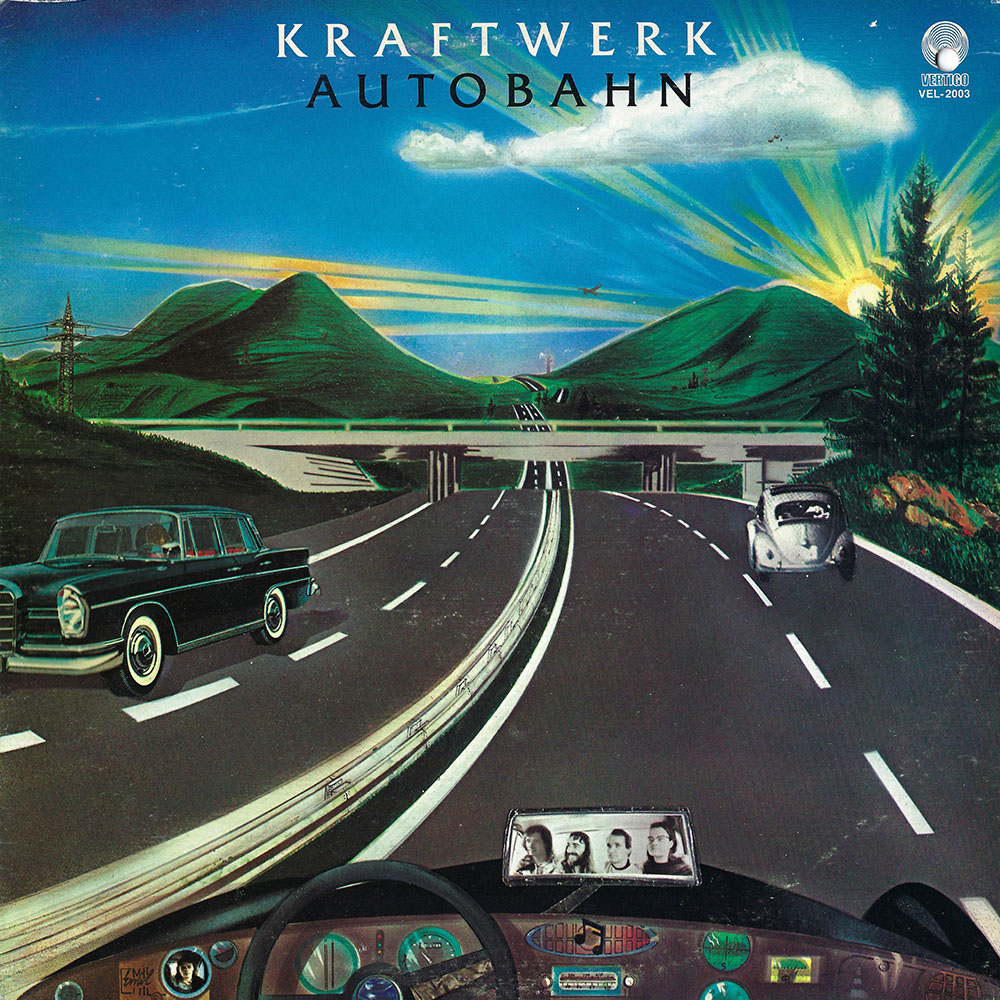
When Pink Floyd entered the studio in May 1972, they’d road-tested their new material for a year; the songs were all fairly far along, leaving ample time for production and experimentation. On Meddle and the Obscured by Clouds soundtrack they recorded in France a few months prior, they’d deployed one of Wright’s new gizmos: a synthesizer and primitive sequencer made by the English company EMS Synthi-A that he had bought from the BBC Radiophonic Workshop. They were all the rage in 1973—John Paul Jones fed his piano through one to create the eerie mood of Led Zeppelin’s dirge “No Quarter” and Brian Eno used one on the Roxy Music song where Brian Ferry sings about having sex with a robot. For Waters, however, the Synthi’s eight-note sequencer generated an inhuman, hyper-modern sound-swirl that, when mixed with the recorded sounds of airport terminal announcements, mimicked the intense travel panic that he was increasingly experiencing as a touring musician. Life as he saw it was not a matter of wrangling modern technology toward a sunny future, like Kraftwerk a year later, but a numbing cycle of alienated labor and idle, wasted moments.

Introduced with its own two-minute overture that moves from Parsons’ clock-sounds montage and Nick Mason’s roto-tom solo, “Time” is Dark Side’s grooviest and simplest song, with Gilmour’s taut riffs backing Waters’ best set of lyrics—a far more serious take on the sardonic Kinks-glam of Obscured’s “Free Four.” About as close to a Marxian statement on industrial capitalism as one could hear on FM radio, “Time” combines with “Breathe” to evoke Marx’s well-traveled claim that capital’s institution of tight factory clock regulations caused a psychic rupture in the human understanding of time, and a took a physical toll on our bodies. When you are young and time is long, your days are occupied “killing” time, but as you age, you increasingly focus on “saving” and “spending” it—until, all of a sudden, it runs out. “Time” gives way to a brief “Breathe” reprise introducing the opioid effects of softly spoken magic spells.

When [Pink Floyd](https://pitchfork.com/artists/3319-pink-floyd/) first premiered what would become the most successful rock album of all time, it was quite literally too big for the system to handle. A half-hour into the band’s concert in Brighton on January 20, 1972—the live debut of what was then called “[Eclipse: A Piece for Assorted Lunatics](https://www.neptunepinkfloyd.co.uk/pictures/1972-eclipse-a-piece-for-assorted-lunatics-pink-floyd-tour-programme)”—the band started to play “Money,” which required synchronizing their performance to a pre-recorded sound collage of jingling coins and *ka-ching*-ing cash registers. But coupled with the band’s power-sucking sound system and lighting rig, the show slowly ground to a halt. After a brief break, bassist Roger Waters [came to the mic](https://www.youtube.com/watch?v=svz1bEy6oSw&ab_channel=OaksMA) to explain: “Due to severe mechanical and electronic horror, we can’t do any more of that bit, so we’ll do something else.” Less than a month later, the band had to abandon a performance at the Manchester Free Trade Hall when the same thing happened. Over the prior half-decade, Pink Floyd had established themselves as, if not the best psychedelic rock band, then certainly the most technologically extravagant. From late 1966 through the fabled Summer of Love, they were the house band at the UFO, the Swinging London rock club/art space/drug den, which gave them free rein to blend their droning jams with trippy visuals, sound effects, fog machines, and extreme volume. That August, Waters told *Melody Maker* that he wanted Pink Floyd to travel from city to city with a circus-style big top. “We’ll have a huge screen 120 feet wide and 40 feet high inside and project films and slides.” His prediction never came to be, but for [an invite-only gig](https://www.southbankcentre.co.uk/blog/articles/revisiting-pink-floyds-iconic-games-may) at Queen Elizabeth Hall in May 1967, the band installed a joystick dubbed “[The Azimuth Co-ordinator](https://en.wikipedia.org/wiki/Azimuth_Co-ordinator)” on top of Richard Wright’s keyboard to send the band’s potent, droning sound and sci-fi effects careening around the first-of-its-kind quadraphonic playback system in the venue. For the back cover photo of the 1969 double album *Ummagumma*, drummer Nick Mason [arranged the band’s road gear](https://sfae.com/Artists/Storm-Thorgerson/Pink-Floyd-em-Ummagumma-em-Back-Cover-1969) to resemble an aircraft carrier, a concise reversal of [one philosopher’s claim](https://www.degruyter.com/document/doi/10.1515/9780804792622-011/html?lang=en) that rock music is not much more than “a misuse of military equipment.” Waters told *Melody Maker* that Pink Floyd’s gear fixation was a matter of going where no band had gone. “We’re trying to solve problems that haven’t existed before.” So, too, was NASA, whose decade-long effort to put men on the moon was coming to fruition at the same time. It was a perfect match: Around 10 p.m., Pink Floyd appeared on the BBC’s marathon telecast of the Apollo 11 landing and jammed on a song they called “[Moonhead](https://www.youtube.com/watch?v=i2HHT7txFQ0&ab_channel=AnhalterUdo).” Along with the requisite panels of astronomers and physicists, the quartet was joined by space-themed poetry readings from Ian McKellen and Judi Dench, and recordings of Richard Strauss’ “Also Sprach Zarathustra”—prominently [featured in](https://www.youtube.com/watch?v=P3F99KzP3cg&ab_channel=HDFilmTributes) Stanley Kubrick’s sci-fi opus *2001: A Space Odyssey*—and the new single “Space Oddity,” released to capitalize on moon mania by ambitious 22-year-old folkie David Bowie. Though Bowie was just beginning to explore the cosmos, Pink Floyd had been traveling the spaceways since their inception: The first track on their debut album was “[Astronomy Dominé](https://www.youtube.com/watch?v=kli9oJVU3Ro&ab_channel=NosferatusCoffin),” a slab of B-movie sci-fi cheese masterminded by the band’s co-founder, songwriter, and frontman Syd Barrett, which, along with “Interstellar Overdrive,” landed them the “space rock” sobriquet from critics. Though no band likes to be classified so generically, they grew to embrace the idea. Eighteen years later, the band’s official tour t-shirt read “[Pink Floyd: Still First in Space](https://www.etsy.com/listing/1293777307/1987-pink-floyd-still-first-in-space).” Barrett watched the moon landing at his Wetherby Mansion flat in London with a group of friends and hangers-on. By 1969, Barrett had disappeared into a haze of quaaludes and LSD that eroded his already-fragile mental health. There was a depressing irony in the fact that Barrett had churned out the whimsical art-pop character studies “[Arnold Layne](https://www.youtube.com/watch?v=H3DGpINHX5Q)” and “[See Emily Play](https://www.youtube.com/watch?v=7c0EDM-Yu9o&ab_channel=PinkFloyd)” that got the group signed by EMI, then immediately soured on the non-stop promotional requirements that came along with hit singles. When Barrett showed up to live gigs in 1967, he was more of a distraction than a contributor. Forced to lip-sync on TV, [he barely moved](https://youtu.be/H6ci4pAYiUw?t=251). The band hired Barrett’s childhood mate David Gilmour as a live replacement, and one day they simply headed to a gig without picking up their singer. While Barrett was a master of [making quotidian things charmingly weird](https://www.youtube.com/watch?v=POlaR26dD1Y&ab_channel=PinkFloyd), Roger Waters—who’d become Pink Floyd’s leader by dint of his forceful personality and big ideas—was honest about his careerist impulses and grand aims. “That was always my big fight,” Waters later said, “to try and drag it kicking and screaming back from the borders of space, from the whimsy that Syd was into, to my concerns, which were much more political and philosophical.” It would take a half-decade after splitting with Barrett for Waters to reroute his obsession with outer space into a grand treatise on—as he’d later call it—inner space. In the five years between Barrett’s departure and the 1973 release of *The Dark Side of the Moon*, Pink Floyd wandered the hinterlands as European psychedelia fractured into the high-minded progressive rock of the Moody Blues, the Nice, Procol Harum, Yes, King Crimson, and Jethro Tull; the jazz-fusion experiments of John McLaughlin and Soft Machine; the rock-operatic pretensions of the Who and Genesis; fellow space-rock travelers Hawkwind; and the synth-obsessed German bohemians Kraftwerk, Neu!, Tangerine Dream, and Popol Vuh. Without their putative leader and most charismatic member, Pink Floyd recorded a string of low-budget film soundtracks, released the classically gassy concept albums *Ummagumma* and *Atom Heart Mother*, helped Barrett record his 1970 solo debut *Madcap Laughs,* and toured the world. They earned enough money from their elaborate live shows—which journalists were beginning to describe in terms of tonnage—to make up for their paltry album sales. With 1971’s *Meddle,* the band finally settled into a studio groove. The best of the new songs was the side-long “[Echoes](https://pitchfork.com/reviews/albums/pink-floyd-meddle/),” over 20 minutes of airtight studio jamming, a bit of jazz and folk, a single, repeating piano note fed through a Leslie speaker, and Waters’ newfound lyrical focus on the riddles of social alienation. Gilmour and Wright’s serenely harmonized voices intone Waters’ lyrics: “Strangers passing in the street/By chance, two separate glances meet/And I am you and what I see is me.” This recognition of a stranger’s shared humanity and pessimistic view that empathy is an impossible thing to communicate was rooted in Waters’ regret at being increasingly unable to reach his friend Syd. But as “Echoes” demonstrated, that fear could be blown out to galactic proportions. There’s a good chance that Waters was among the billion or so humans who first saw the [far side of the moon](https://www.pbs.org/wgbh/americanexperience/features/moon-looking-moon-apollo-8/) on Christmas Eve 1968, when Apollo 8 beamed the first detailed images of the mysterious lunar surface to televisions around the world. As astronomers have stressed for decades, “far side” is the accurate scientific term, but the spooky indeterminacy of “dark side” allows everyone else to tap into the same stoned undergraduate awe of learning that “lunatic” is derived from the 13th-century notion that some forms of mental illness were caused by adverse reactions to the moon’s phases. For Waters, the dark side of the moon was an inaccessible psychic space to which Barrett had retreated, perhaps forever, ingesting immeasurable amounts of psychedelics to cope with the unbearable stresses that accompany life on Earth, let alone one lived in the luminous glare of the public eye. On the penultimate *Dark Side* track “Brain Damage,” he leads the band on a quest to find their wayward friend. There are elements of old Floyd on the verses: Gilmour alternates between major and minor chords, Waters sings of creeping madness like a seance leader while a man’s deep voice emits a maniacal haunted-house laugh. But on the choruses, the band soars skyward into a gospel-rock echo of “You Can’t Always Get What You Want” and “Let It Be,” with Waters making an even grander attempt toward cosmic connection: “And if the band you’re in starts playing different tunes/I’ll see you on the dark side of the moon.” Pink Floyd’s expansion of the interpersonal to the intergalactic materialized at a moment when the record industry was more than ready to accommodate it. Waters’ ambition toward art-rock as gestalt—records, packaging, films, and concerts combined into an overwhelming whole—accelerated the rapid growth of the rock-industrial complex of the 1970s. In 1972, Pink Floyd introduced *Dark Side*’s songs in 3,000-capacity theaters. By 1975, they and their arena-rock contemporaries were playing 60,000-seat stadiums. Like the post-*Sgt. Pepper’s* Beatles, Led Zeppelin, and many of their prog peers, Pink Floyd viewed the album as the paragon of rock meaning, and *Dark Side* is the culmination of rock’s transformation into sacred druggie ritual and the elaborately packaged rock album’s transmutation into a rockist totem, a bearer of secrets, something to be decoded. With the help of their Cambridge friends Aubrey Powell and Storm Thorgerson of design firm Hipgnosis, the *Dark Side* album’s prism-on-black design ushered in a new era for rock iconography, as stark and suggestive as *2001*’s obelisk. *The Dark Side of the Moon* is by just about any measure rock’s most overdetermined album: It can be hard to talk about the music itself, and not the stats and legends accreting around the eighth-highest-selling album of all time. The music’s sense of scale and gravity communicates importance, but 741 consecutive weeks on the album chart is something else entirely. *Dark Side*’s unhurried tempos and swells of emotion are grandly cinematic, and the band maintained mystery by avoiding the press, but that’s true for lots of bands that don’t generate widespread conspiracy theories about secretly composing their music to sync up with *The Wizard of Oz*. In truth, *Dark Side*’s music didn’t sound much like Pink Floyd’s previous work, and went places that firmly separated the band from its peers. Few 1973 bands were blending rock with jazz, sound montages, electronic sequencers, and interviews with average people about their deepest fears and secrets. Overwhelming earnestness and statement-making are tough for a band to pull off at the same time, and attempts at making profound alienation sound beautiful that aren’t *Dark Side* or [OK Computer](https://pitchfork.com/reviews/albums/radiohead-ok-computer-oknotok-1997-2017/) inevitably fail. Though Waters himself has described *Dark Side*’s theme as a simple battle between darkness and light with outer space as a backdrop, he’s actually underselling the album’s elegant doomerism—apropos of, [well](https://en.wikipedia.org/wiki/Watergate_scandal), [everything](https://en.wikipedia.org/wiki/1973%E2%80%931975_recession) that was happening at the time. Some light bleeds through, but not much. From the moment your lungs draw air your innocence is lost, and your life is spent fighting against the forces of time, money, religion, death, and politics, culminating in a sizable psychic (“Brain Damage”) and existential (“Eclipse”) collapse. If the real subject of English psychedelia, as the Beatles’ chronicler Ian Macdonald [has it](https://www.chicagoreviewpress.com/revolution-in-the-head-products-9781556527333.php), is neither drugs nor love, but the lost innocence of childhood, then *The Dark Side of the Moon* could reasonably be called the end of the 1960s countercultural dream. The vivid spectrum of refracted light surrounded by depthless pitch black. The sun is eclipsed by the moon. *Dark Side* was the No. 1 album in the U.S. for a week in April 1973, pushed to the top by incessant FM radio airplay of the single “Money.” Preceded by the same coin-and-cash register montage that melted down their 1972 Brighton concert, Waters’ spongy introductory bassline marks a tonal shift in the album’s mood and flow. Even with the necessity of a side-flip between tracks, the decision to follow the orgasmic death-wail of “The Great Gig in the Sky” with the crass sounds of commerce counts as the album’s lone wanly humorous moment. In interviews, Gilmour has implied that he took Waters’ demo as an opportunity to make a kind of prog-rock “[Green Onions](https://www.youtube.com/watch?v=0oox9bJaGJ8&ab_channel=RHINO),” but the closest comparison to a blues in 7/4 with a sarcastic lyric about grotesque greed, complete with a fiery sax solo and a three-part guitar solo, was Steely Dan’s July 1973 single “[Show Biz Kids](https://www.youtube.com/watch?v=E7XXEO1aADM&ab_channel=SteelyDan-Topic)” (the following year, the O’Jays would issue [the definitive take](https://www.youtube.com/watch?v=GXE_n2q08Yw&ab_channel=TheOJaysVEVO), with the definitive bassline, on the topic). Though Pink Floyd had to be talked into even releasing “Money” as a single, the programmers in the Album-Oriented Rock radio format wouldn’t have minded either way. The most successful new format of the decade, AOR was a corporatized, data-driven update of the late-’60 “free-form” model of radio programming. Free-form merged the anti-establishment tenor of the era with the FM band’s sonic superiority over AM (the home of transistor radio-friendly Top 40) to merge political progressivism and progressive rock, eschewing standardized playlists and constant advertisements in favor of [the Ummagumma version](https://www.youtube.com/watch?v=IW2TslVcpWU&ab_channel=PinkFloyd-Topic) of “A Saucerful of Secrets” and plugs for local head shops and third-party candidates. But in the same capitalist metamorphosis that turned field festivals into arena shows, AOR engulfed free-form, replacing the DJ’s ear with demographic research and point-of-sale polling. Rock album sales exploded: Apart from *Dark Side*’s week at No. 1, 39 weeks of [1973’s Billboard 200 album chart](https://en.wikipedia.org/wiki/List_of_Billboard_200_number-one_albums_of_1973) were topped by AOR-programmed acts: the Moody Blues, Alice Cooper, Led Zeppelin, the Beatles, Wings, George Harrison, Chicago, Jethro Tull, the Allman Brothers Band, the Rolling Stones, and Elton John. That list underscores two effects of the AOR revolution: the final cleavage of (white) “rock” from (Black) rock’n’roll, R&B, funk, and soul; and AOR’s blatant preference for music made by men. One of *Dark Side*’s greatest tricks is making sure that suburban stoners could find their way into songs like “Money” or “Us and Them” through their countercultural aura, while Wright’s modal jazz tints, Gilmour’s tone, and Parsons’ lush quadraphonic engineering could just as easily rope in the “high-fidelity first-class traveling set” of pseudo-cosmopolitan *Playboy* readers (who voted it fourth in their 1973 Jazz and Pop poll in the “small combo” category, behind *Chicago IV*, Mahavishnu Orchestra’s *Birds of Fire*, and Jethro Tull’s *A Passion Play*). During production, Waters advocated for a drier sound, and more intense psychological exploration inspired by [Plastic Ono Band](https://pitchfork.com/artists/24824-plastic-ono-band/), an idea that was thankfully nixed in favor of what Gilmour called a “big and swampy and wet” mix. “Breathe,” “On the Run,” and “Time” are the exemplars of this approach, forming the sonic and theoretical core of the album’s Side A. “Breathe” dramatically blooms into existence out of the album’s opening sound collage with Gilmour’s placid Fender 1000 twin neck pedal steel at the fore. Though the steel guitar was a mainstay in Jerry Garcia’s [country](https://www.youtube.com/watch?v=VWY4hyIlsqQ&ab_channel=GratefulDead)-[rock](https://www.youtube.com/watch?v=EkaKwXddT_I&ab_channel=TomPage) arsenal at the time, Gilmour’s open-G tuning hewed closer to [the languid tones of the Hawai’ian islands](https://pitchfork.com/thepitch/the-story-of-slack-key-guitar-in-9-albums/) where it was born. Combined with the vibrato effect of the Uni-Vibe pedal on his Stratocaster, the track is both impossibly tranquil and gently unnerving. The recommendation to simply “breathe” can be said to someone giving birth, meditating, or having a panic attack or bad trip, and Waters moves the story quickly through the beginnings of life through an existence marked by tireless labor, then a premature death. When Pink Floyd entered the studio in May 1972, they’d road-tested their new material for a year; the songs were all fairly far along, leaving ample time for production and experimentation. On [Meddle](https://www.youtube.com/watch?v=48PJGVf4xqk&ab_channel=PinkFloyd-Topic) and the [Obscured by Clouds](https://www.youtube.com/watch?v=o876axae4VE&ab_channel=PinkFloyd-Topic) soundtrack they recorded in France a few months prior, they’d deployed one of Wright’s new gizmos: a synthesizer and primitive sequencer made by the English company EMS Synthi-A that he had bought from the BBC Radiophonic Workshop. They were all the rage in 1973—[John Paul Jones](https://www.youtube.com/watch?v=_vG_mTt6hCs&ab_channel=LedZeppelin) fed his piano through one to create the eerie mood of Led Zeppelin’s dirge “No Quarter” and Brian Eno [used one](https://www.youtube.com/watch?v=XCzhAeukF1A&ab_channel=BryanFerry) on the Roxy Music song where Brian Ferry sings about having sex with a robot. [For Waters, however](https://www.youtube.com/watch?v=3bzhS6z7iDA&t=241s&ab_channel=YourFavMusic), the Synthi’s eight-note sequencer generated an inhuman, hyper-modern sound-swirl that, when mixed with the recorded sounds of airport terminal announcements, mimicked the intense travel panic that he was increasingly experiencing as a touring musician. Life as he saw it was not a matter of wrangling modern technology toward a sunny future, [like Kraftwerk](https://insheepsclothinghifi.com/wordpress/wp-content/uploads/2022/02/kraft_front.jpg) a year later, but a numbing cycle of alienated labor and idle, wasted moments. Introduced with its own two-minute overture that moves from Parsons’ clock-sounds montage and Nick Mason’s roto-tom solo, “Time” is *Dark Side*’s grooviest and simplest song, with Gilmour’s taut riffs backing Waters’ best set of lyrics—a far more serious take on the sardonic Kinks-glam of *Obscured*’s “[Free Four](https://www.youtube.com/watch?v=FPSb5QjgjAc&ab_channel=PinkFloyd-Topic).” About as close to a Marxian statement on industrial capitalism as one could hear on FM radio, “Time” combines with “Breathe” to evoke Marx’s well-traveled claim that capital’s institution of tight factory clock regulations caused a psychic rupture in the human understanding of time, and a took a physical toll on our bodies. When you are young and time is long, your days are occupied “killing” time, but as you age, you increasingly focus on “saving” and “spending” it—until, all of a sudden, it runs out. “Time” gives way to a brief “Breathe” reprise introducing the opioid effects of softly spoken magic spells.

Rate music on Wavelength

Download Wavelength to share your own reviews and see what your friends think.

Other reviews of The Dark Side of the Moon

Rate music on Wavelength

A free place to rate albums and write reviews with friends. Letterboxd-style, for music.

Download on the App Store