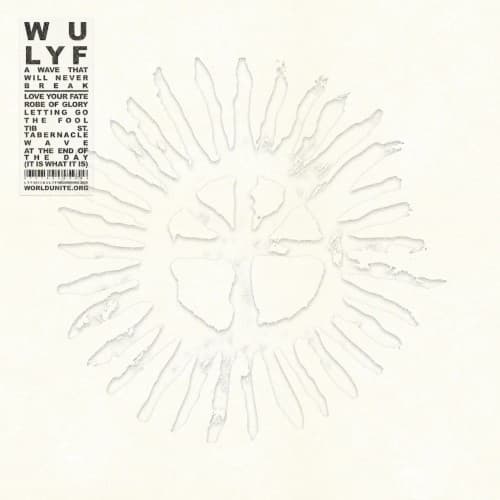
"Epic" is often used when people really mean theatrical. Most music described as epic is simply not that; rather, it's long or bombastic or, as is the case with Manchester's WU LYF, it's just real big: in emotions, in melodies and in themes. WU LYF have always been a pretty conceptual band. From their initial formation in 2008, the members — led by singer Ellery James Roberts — kept personal information separate from their music, refusing to deal with press and declining interviews. The pretension has always been strong with this one (their name is actually an acronym for World Unite Lucifer Youth Foundation and their website is worldunite.org), but so has their overwhelming need to "let the music speak for itself." Unless you're Kate Bush, that's always been next to impossible, and the mysteries surrounding WU LYF's origins and opinions have at times threatened to overshadow their output. Very little was known about them because very little was released about them. And yet, it's all there in the music: their beliefs, dreams, politics, thoughts and feelings. On the long-awaited follow-up to 2011's Go Tell Fire on the Mountain, A Wave That Will Never Break, the band have taken their compositions and aspirations into ever-more expansive and refined directions. Unfortunately, this new approach has also removed much of their grit, guts and personality, resulting in a mediocre album that does little to justify its existence.The album peaks early with opener "Love Your Fate" a searing indictment of violence, hate, old ways of thinking, and the darkness that is slowly enveloping the world and extinguishing the light; it's immolation as change, the song's urgent drums rolling and crashing throughout. This insistent roll is also present throughout "Letting Go," the mallets and light cymbals driving and yearning. There's a sense of movement — of running, of force and fluctuation — which melds with a soaring, fuzzed out guitar whose lines ache for the rafters.The album isn't shy about its post-rock aspirations, its shimmering guitars, extended song lengths, synth soundscapes, and melodrama cresting and crescendoing, culminating in the brooding, 10-plus-minute centrepiece, "Tib St. Tabernacle." Here, the wave does in fact break, the stately piano and Roberts's distant howling leading to avant-funk verses that never settle.As all WU LYF songs, "Tib St. Tabernacle" is poetic and cryptic, but there's also a distinct lack of metaphor, with lines about polluted air, furious dancing-as-resistance, and calls for freedom and liberation presented without ambiguity; at one point, Roberts sings, "Who are we / But sons and daughters of generational trauma?" He ain't wrong, but what are we supposed to do with this?Sometimes overwhelming, sometimes overbearing and sometimes just exhausting, the record fluctuates in moods, tones and approaches, and thus, it isn't always as successful as it wants to be. Their debut was more art-pop, even agit-pop, than anthemic rock, and the new material tries to retain some of that record's bite and experimentation. The overall polish removes any semblance of an edge, resulting in something a lot less sharp and even less impactful.Roberts's voice has a raspiness that complements the lilt, but what he's saying isn't nearly as powerful or profound as his delivery might suggest. His lofty ambitions on some of the more political tracks end up feeling like performative activism, the illusion of engagement rather than meaningful confrontation. For Roberts, most faults and fractures in society result from a lack of love, an over-simplistic correlation that lacks any real messaging.The last couple of songs on the album, "Wave" and "At The End of the Day (It Is What It Is)," are hollow attempts at rumbled Nick Cave-ian gravitas, while the extended Biblical allegory explored in the bouncy "The Fool" has a naïveté that's instantly grating. A derivative, trite love song with a dollop of sincerity that ends up saying nothing, it's saccharine fluff at best. "Robe of Glory" plods and dirges along, even if there is some interesting noise work during the climax. It also features some pretty terrible lyrics: "You're very sexy in your robe of glory"? Ugh. But it's somehow nowhere near as bad as, "Feel your body's sweat on mine / As we go beyond the mind."Ultimately, WU LYF's attempts at creating something more accessible and universal stand in stark contrast to the image the band have so ardently tried to present, one rooted in integrity, mystery and import. In the process, A Wave That Will Never Break ends up feeling not only insincere, but unnecessary.Much of what set WU LYF apart from other UK pop-rockers has been dulled to match their ambitions and ages. It's maximalist minimalism (or is that minimalist maximalism?) at its most heartfelt and bland, similar to other heartsick stadium "rockers" like Coldplay and Imagine Dragons. In the end, one thing is clear: none of us should aspire to be U2.

Wavelength
Rate and discover music with friends